A high-temperature muffle furnace is the essential catalyst for converting insulating graphene oxide into conductive reduced graphene oxide (rGO) through thermal reduction and exfoliation. This equipment provides the rapid, high-heat environment—typically ranging from 300°C to 900°C—necessary to violently decompose oxygen-containing functional groups. This decomposition generates internal gas pressure that physically forces graphite layers apart, resulting in a high-surface-area material with restored electrical properties.
The muffle furnace serves as the primary tool for thermal exfoliation, using intense heat to strip away oxygen groups and restore the carbon lattice. This dual process of chemical reduction and physical separation is what transforms low-value precursors into high-performance rGO.
The Mechanics of Thermal Exfoliation
Rapid Decomposition of Oxygen Groups
Graphene Oxide (GO) is heavily populated with oxygen-containing functional groups like hydroxyl, carboxyl, and epoxy groups. When placed in a preheated muffle furnace (e.g., at 500°C), these groups undergo violent decomposition.
Generating Internal Gas Pressure
The instantaneous decomposition of these groups releases a massive volume of gases between the individual layers of the material. This creates immense internal pressure that overcomes the Van der Waals forces holding the layers together.
Expanding Surface Area and Volume
This "thermal shock" leads to the intense exfoliation of the graphite layers. The result is a significant increase in the material's specific surface area and a dramatic expansion in volume, creating the nanosheet structure characteristic of high-quality rGO.
Restoring Electrical and Structural Performance
Rebuilding the Conjugated sp2 Network
The thermal energy provided by the muffle furnace allows the carbon atoms to rearrange into a stable sp2 hybridized structure. By removing the insulating oxygen groups, the furnace restores the conjugated network required for electron transport.
Transformation of Material Properties
The process induces a visible and functional change in the material, often shifting from a brown powder or film to a metallic gray state. This transition marks the change from an electrical insulator to a high-performance electron transport medium suitable for catalysts and energy storage.
Precision Control for Specific Applications
Muffle furnaces allow for the precise control of heating rates and isothermal holding times. This level of control is critical when loading metal catalysts, such as manganese dioxide, onto the rGO substrate to ensure a uniform and stable final product.
Understanding the Trade-offs
Temperature Sensitivity and Structural Integrity
While higher temperatures (up to 900°C) ensure more complete exfoliation, they can also cause structural defects if not managed correctly. Conversely, lower temperatures (around 150°C to 300°C) may require longer processing times or chemical aids like hydrazine vapor to achieve sufficient reduction.
The Drying vs. Reduction Conflict
Muffle furnaces are also used at much lower temperatures (approximately 60°C) for the initial drying phase of GO powder. It is critical to distinguish between the drying phase and the reduction phase, as unintended heating during drying can lead to premature and uncontrolled thermal changes.
Atmospheric Requirements
Thermal reduction often requires a nitrogen or inert gas atmosphere within the furnace to prevent the carbon from combusting in the presence of oxygen. Failure to control the atmosphere at high temperatures can result in the loss of material rather than its reduction.
Making the Right Choice for Your Goal
How to Apply This to Your Project
- If your primary focus is maximizing electrical conductivity: Utilize higher furnace temperatures (above 500°C) to ensure the comprehensive restoration of the sp2 carbon lattice.
- If your primary focus is achieving high surface area: Prioritize "thermal shock" by placing samples directly into a preheated furnace at 350°C-900°C to trigger maximum gas expansion and layer separation.
- If your primary focus is preparing a substrate for catalysts: Use a controlled heating rate and specific isothermal holds (around 500°C) to create a consistent surface for loading materials like manganese dioxide.
- If your primary focus is simple moisture removal: Set the furnace to a stable, low temperature (60°C) to dry the powder without triggering the reduction process.
By mastering the thermal environment of the muffle furnace, researchers can precisely tune the physical and electrical characteristics of reduced graphene oxide for any industrial or laboratory application.
Summary Table:
| Process Phase | Temperature Range | Key Function in rGO Production |
|---|---|---|
| Drying | ~60°C | Removes moisture without triggering premature reduction. |
| Reduction | 150°C - 300°C | Initial decomposition of oxygen groups; may require chemical aids. |
| Thermal Exfoliation | 350°C - 900°C | Rapid gas release to expand surface area and restore conductivity. |
| Atmosphere Control | Inert (N2/Ar) | Prevents material combustion and ensures high-purity carbon lattice. |
Elevate Your Graphene Research with KINTEK Precision
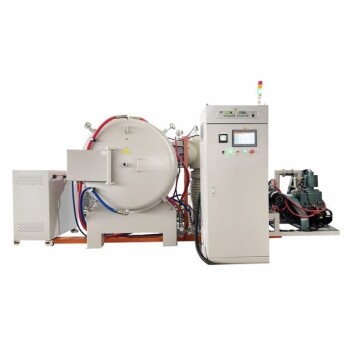
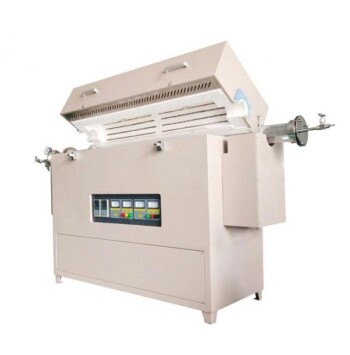
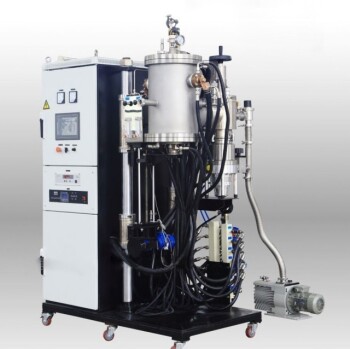
Achieving high-performance reduced graphene oxide requires the absolute precision of a controlled thermal environment. KINTEK specializes in advanced laboratory equipment, offering a comprehensive range of high-temperature furnaces—including muffle, tube, rotary, vacuum, CVD, and atmosphere furnaces—all customizable to meet your specific rGO synthesis needs.
Whether you are focusing on maximizing electrical conductivity or achieving superior surface area for catalysts, our furnaces provide the stability and rapid heating rates essential for successful thermal exfoliation.
Ready to optimize your lab’s heat treatment capabilities? Contact KINTEK today for a tailored solution that drives innovation.
References
- T. Rozmanowski, Kornelia Ratajczyk. New composite materials based on reduced graphite oxide for electrochemical sorption of hydrogen and methanol electrooxidation. DOI: 10.1007/s11581-023-05354-8
This article is also based on technical information from Kintek Furnace Knowledge Base .
Related Products
- 1800℃ High Temperature Muffle Oven Furnace for Laboratory
- 1700℃ High Temperature Muffle Oven Furnace for Laboratory
- 1200℃ Muffle Oven Furnace for Laboratory
- 1400℃ Muffle Oven Furnace for Laboratory
- High Temperature Muffle Oven Furnace for Laboratory Debinding and Pre Sintering
People Also Ask
- What is the primary function of a high-temperature laboratory muffle furnace in chemical synthesis? Achieve Precision.
- How does a high-temperature laboratory muffle furnace affect material properties? Transform Anodic Oxide Films Fast
- What is the critical role of a laboratory high-temperature muffle furnace in TiO2/LDH? Unlock Superior Crystallization
- How is a laboratory high-temperature muffle furnace used to evaluate porous Co-Al materials? Precision Thermal Analysis
- Why is a laboratory high-temperature muffle furnace used for BaTiO3? Achieve Optimal Tetragonal Crystalline Phases