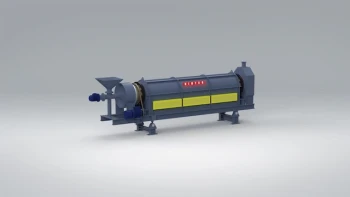
A high-temperature muffle furnace provides the controlled pyrolytic environment necessary to thermally desorb or carbonize contaminants trapped within spent biochar. By applying precise thermal energy—typically between 400°C and 600°C—the furnace clears active adsorption sites, effectively restoring the material's capacity for reuse.
The core function of the muffle furnace in regeneration is to use high-intensity heat to physically and chemically remove adsorbed pollutants, such as Azo dye molecules, from the biochar’s internal pore structure without destroying the carbon skeleton itself.
The Mechanics of Thermal Regeneration
Thermal Desorption and Carbonization
The furnace subjects the saturated biochar to temperatures that cause thermal desorption or carbonization of the adsorbed molecules. This process breaks the chemical bonds holding the contaminants to the biochar surface, either vaporizing them or converting them into stable carbon deposits.
Restoration of Active Adsorption Sites
As contaminants are removed or carbonized, the active adsorption sites within the biochar pores are cleared. This restoration of the internal surface area is what allows the "spent" material to regain its functional properties for subsequent treatment cycles.
Impact of Temperature Uniformity
The temperature uniformity and control precision of the muffle furnace are critical to the quality of the regenerated product. Inconsistent heating can lead to incomplete regeneration or localized overheating, which directly impacts the performance recovery rate and the cyclical usability of the adsorbent.
Critical Environmental Controls
Maintenance of an Oxygen-Limited Environment
To prevent the biochar skeleton itself from combusting into ash, the muffle furnace provides a strictly controlled oxygen-free or oxygen-limited environment. This ensures that the thermal energy focuses on the contaminants rather than the oxidation of the carbon-rich skeleton.
Regulation of Heating Rates
Precise control of heating rates (e.g., 10°C/min) allows for the effective regulation of the biochar's structural integrity. Gradual heating helps maintain the pore development and surface functional group characteristics that are essential for the biochar's original application.
Understanding the Trade-offs and Pitfalls
Structural Degradation vs. Cleaning Efficiency
While higher temperatures (approaching 600°C or more) are more effective at removing stubborn contaminants, they risk collapsing the delicate pore structure of modified biochar. If the temperature exceeds the material's stability threshold, the specific surface area may decrease, rendering the regeneration counterproductive.
Ash Accumulation and Secondary Byproducts
Repeated thermal cycles in a muffle furnace can lead to a gradual increase in ash content and inorganic residues. Over time, these residues can block pores or alter the chemical properties of the biochar, eventually necessitating the complete replacement of the material despite successful thermal cleaning.
How to Apply This to Your Regeneration Project
Recommendations for Effective Regeneration
Successful regeneration requires balancing the removal of pollutants with the preservation of the biochar’s physical structure.
- If your primary focus is maximum adsorption recovery: Prioritize higher temperatures within the 500°C–600°C range to ensure the complete carbonization of complex organic pollutants.
- If your primary focus is material longevity: Utilize lower heating rates and stay at the bottom of the effective temperature range (approx. 400°C) to prevent structural warping and minimize ash formation.
- If your primary focus is process consistency: Use a furnace with programmable heating stages to ensure the biochar is fully dehydrated before reaching peak pyrolytic temperatures.
By leveraging the precise thermal control of a muffle furnace, you can transform spent biochar from a waste product back into a high-performance functional material.
Summary Table:
| Feature | Mechanism | Benefit for Biochar |
|---|---|---|
| Thermal Desorption | Vaporizes or breaks bonds of contaminants | Clears internal pore structures |
| Oxygen Control | Maintains oxygen-limited environment | Prevents biochar skeleton combustion |
| Temp Uniformity | Precise control (400°C–600°C) | Ensures high performance recovery rate |
| Heating Rate | Programmable regulation (e.g., 10°C/min) | Preserves delicate pore development |
Ready to optimize your biochar regeneration process? KINTEK specializes in advanced laboratory equipment, offering a comprehensive range of high-temperature furnaces, including muffle, tube, vacuum, and atmosphere models. Our systems provide the precise temperature uniformity and atmosphere control essential for restoring adsorption sites while protecting material integrity. Whether you are conducting research or scaling production, our customizable solutions meet your unique thermal processing needs. Contact KINTEK today to discuss how our high-performance furnaces can enhance your lab's efficiency and results!
References
- Monica Nandini. Valorization of Annona reticulata biochar by chitosan for the adsorption of Azo dye from Textile effluent. DOI: 10.30955/gnj.004882
This article is also based on technical information from Kintek Furnace Knowledge Base .
Related Products
- 1700℃ High Temperature Muffle Oven Furnace for Laboratory
- 1800℃ High Temperature Muffle Oven Furnace for Laboratory
- 1200℃ Muffle Oven Furnace for Laboratory
- 1400℃ Muffle Oven Furnace for Laboratory
- High Temperature Muffle Oven Furnace for Laboratory Debinding and Pre Sintering
People Also Ask
- What is the primary function of a high-temperature laboratory muffle furnace in chemical synthesis? Achieve Precision.
- How does a high-temperature laboratory muffle furnace affect material properties? Transform Anodic Oxide Films Fast
- What role does a muffle furnace play in BCZY712 electrolyte powder production? Achieve Perfect Phase Purity
- What role does a muffle furnace play in sintering photocathodes? Enhance Electrode Conductivity & Catalytic Activity
- How does the two-stage sintering process contribute to the synthesis of MeCuFeO3 perovskite? Optimize crystal purity.