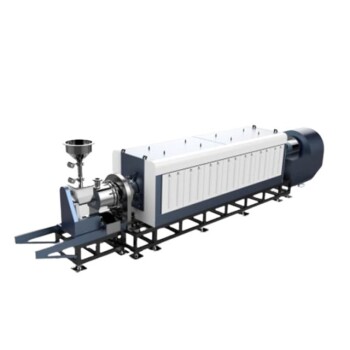
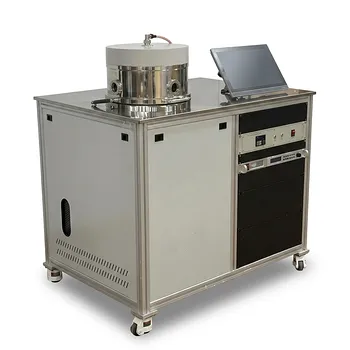
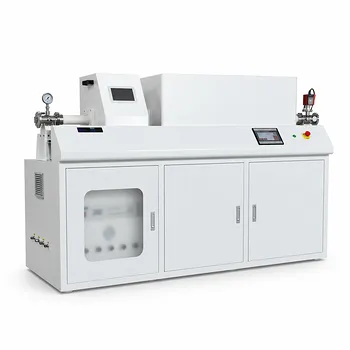
The laboratory electric tube furnace is the fundamental tool for biomass pyrolysis kinetics research. It provides a highly controlled environment where researchers can manipulate three core variables: precise linear heating rates (typically ranging from 5 to 40 K/min), stable isothermal conditions, and a strictly anaerobic atmosphere. These conditions allow for the accurate measurement of how biomass macromolecules—such as cellulose, hemicellulose, and lignin—decompose into bio-oil, bio-char, and gas without the interference of oxidative combustion.
A tube furnace serves as a precision-controlled reactor that isolates thermal decomposition from environmental variables. By providing a predictable heat conduction path and an inert gas shield, it enables the repeatable study of reaction pathways and kinetic parameters.
Precise Thermal Regulation and Programmability
Linear Heating and Ramping Rates
The primary function of the furnace is to deliver specific, programmable temperature increases, often between 1.5°C and 40°C per minute. This precise ramping is essential for "non-isothermal" kinetics research, where scientists observe how different heating speeds influence primary and secondary chemical reactions.
High-Accuracy Isothermal Environments
Once a target temperature is reached—often between 300°C and 1100°C—the furnace maintains a stable thermal plateau with high precision (typically ±1 °C). This stability is critical for measuring the residence time required for complete biomass conversion into bio-oil vapors or solid char.
Rapid Thermal Shock Capabilities
Advanced tube furnaces allow for the rapid insertion of samples into a pre-heated central reaction zone using quartz tubes. This capability facilitates "instantaneous" thermal shock, minimizing undesirable intermediate reactions that occur during slower heating phases.
Atmospheric Integrity and Gas Control
Strict Anaerobic Conditions
Biomass pyrolysis requires a completely oxygen-free environment to prevent the sample from burning (oxidation). The sealed tube structure facilitates a continuous flow of high-purity nitrogen, ensuring that the thermochemical decomposition occurs in a strictly inert field.
Controllable Gas Residence Times
By adjusting the flow rate of inert gases through the reaction tube, researchers can control how long volatile vapors remain in the heated zone. This allows for the study of secondary reactions, which are vital for optimizing the quality of liquid bio-oil.
Protection of Functional Groups
The airtight design and nitrogen shield prevent the oxidative loss of biomass at high temperatures. This ensures that the resulting bio-char retains specific oxygen-containing functional groups and developed pore structures needed for material science research.
Understanding the Trade-offs and Limitations
Heat Transfer Resistance in Samples
While the furnace provides a stable external heat source, the biomass itself may have low thermal conductivity. If the sample size is too large, internal temperature gradients can form, leading to inaccurate kinetic data that reflects heat transfer rather than true chemical reaction rates.
Atmospheric Purity Challenges
Maintaining a perfectly inert atmosphere depends heavily on the integrity of the furnace seals and the purity of the gas supply. Even trace amounts of oxygen can trigger partial combustion, which alters the mass loss data and skews the calculation of activation energies.
Wall Effects and Catalytic Interference
The material of the reaction tube (often quartz or ceramic) can sometimes interact with pyrolysis vapors. At very high temperatures, these surfaces may exert a slight catalytic effect on the cracking of tars, potentially complicating the analysis of the biomass’s inherent kinetic behavior.
How to Apply This to Your Research Project
Selecting Conditions for Your Goal
To achieve the most accurate results, you must align the furnace settings with your specific experimental objectives:
- If your primary focus is Kinetic Modeling: Prioritize multiple linear heating rates (e.g., 5, 10, and 20 K/min) to satisfy the requirements of multi-rate ISO-conversional methods.
- If your primary focus is Bio-oil Yield: Maintain the pyrolysis zone at approximately 500°C and use a high carrier gas flow rate to quickly sweep vapors out of the hot zone.
- If your primary focus is Carbonization or Torrefaction: Use slower heating rates (5-10 °C/min) and lower target temperatures (300°C to 600°C) to maximize the development of pore structures.
By mastering these experimental conditions, you can transform a laboratory furnace into a high-precision instrument for decoding the complex chemistry of biomass conversion.
Summary Table:
| Key Experimental Condition | Typical Parameter Range | Research Impact |
|---|---|---|
| Linear Heating Rate | 1.5°C to 40°C/min | Essential for non-isothermal kinetic modeling |
| Temperature Range | 300°C to 1100°C | Determines yield of bio-oil, bio-char, and gas |
| Temperature Stability | ±1 °C | Ensures accurate residence time measurements |
| Atmospheric Control | Strictly Anaerobic (Inert) | Prevents combustion and protects functional groups |
| Gas Residence Time | Controllable via Flow Rate | Allows study of secondary cracking reactions |
Elevate Your Pyrolysis Research with KINTEK
Achieve uncompromising precision in your kinetic modeling with KINTEK’s advanced thermal solutions. As specialists in laboratory equipment and consumables, we offer a comprehensive range of high-temperature furnaces—including muffle, tube, rotary, vacuum, CVD, atmosphere, dental, and induction melting models—all fully customizable to meet your unique experimental parameters.
Whether you require rapid thermal shock capabilities or strictly controlled anaerobic environments, KINTEK provides the reliability and expertise needed to drive your research forward.
Contact KINTEK today to discuss your custom furnace needs!
References
- Wusana Agung Wibowo, Arief Budiman. Modified Koufopanos' Mechanism in the Kinetics of in-situ Catalytic Pyrolysis of Co-pelletized Rice Husks and Ash. DOI: 10.3311/ppch.36920
This article is also based on technical information from Kintek Furnace Knowledge Base .
Related Products
- Electric Rotary Kiln Small Rotary Furnace Biomass Pyrolysis Plant Rotating Furnace
- Electric Rotary Kiln Continuous Working Small Rotary Furnace Kiln for Pyrolysis Plant Heating
- Electric Rotary Kiln Pyrolysis Furnace Plant Machine Small Rotary Kiln Calciner
- Magnesium Extraction and Purification Condensing Tube Furnace
- Slide PECVD Tube Furnace with Liquid Gasifier PECVD Machine
People Also Ask
- What are the key components of a rotary kiln electric furnace? Unlock Efficient Thermal Processing
- What is the significance of the refractory lining in a rotary kiln electric furnace? Unlock Efficiency and Longevity
- What are the main applications of a rotary kiln electric furnace? Achieve Uniform Heat Treatment for Powders
- What are the key components of a rotary kiln's construction? Discover the Essential Parts for Efficient Industrial Processing
- What are the differences between direct-heat and indirect-heat rotary kilns? Choose the Right Kiln for Your Process