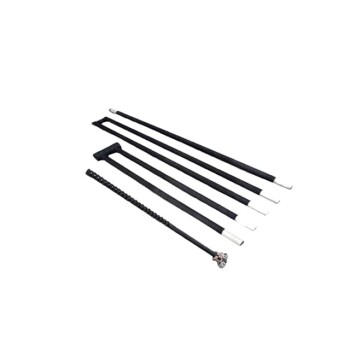
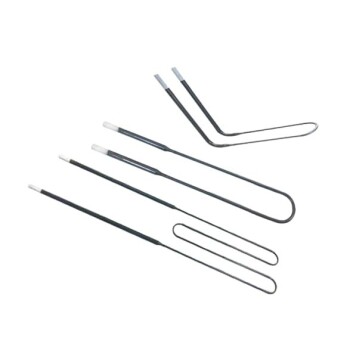
Electric furnaces equipped with Silicon Carbide (SiC) heating elements provide the critical high-temperature stability required for advanced glass synthesis. These systems can operate reliably up to 1500°C in air, directly facilitating the clarification and homogenization of sodium borosilicate glass, which typically demands temperatures exceeding 1450°C. By maintaining a uniform thermal field, SiC-based furnaces ensure the production of high-quality, bubble-free mother glass with a consistent chemical structure.
Core Takeaway: SiC heating elements are the technical foundation for sodium borosilicate preparation because they combine extreme temperature capabilities (1500°C) with superior thermal uniformity and chemical resistance, ensuring a structurally homogeneous and defect-free final product.
High-Temperature Capability and Stability
Reaching Critical Clarification Thresholds
Sodium borosilicate glass requires processing temperatures above 1450°C for proper clarification and homogenization. SiC elements are uniquely suited for this, as they operate stably in an air atmosphere at temperatures up to 1500°C.
Maintaining a Stable Thermal Field
The quality of the glass depends on a consistent temperature environment to prevent localized cooling or overheating. SiC elements provide a stable thermal field that is essential for the removal of gaseous inclusions, resulting in bubble-free glass.
Oxidation Resistance in Air
Unlike metallic elements that may degrade rapidly at extreme temperatures, SiC elements are designed to function effectively in oxidizing atmospheres. This allows for long-duration melts without the need for specialized inert gas shielding.
Process Efficiency and Precision Control
Rapid Thermal Response
SiC possesses high thermal conductivity, allowing the furnace to heat up and cool down much faster than traditional refractory-based systems. This rapid response time improves process efficiency and allows for tighter control over the sintering and melting cycles.
High Power Density
These elements deliver high power in a compact space, allowing for smaller furnace footprints without sacrificing performance. This high power density is vital for reaching the intense heat required for glass fusion quickly and maintaining it steadily.
Precise Mineral Phase Growth
The precise temperature control offered by SiC systems favors the stable growth and coexistence of specific oxide components. This ensures that the bismuth, zinc, or other additives in specialized borosilicate formulas are thoroughly and uniformly fused into the glass liquid.
Material Durability and Cleanliness
Chemical and Corrosive Resistance
The glass-making environment can be chemically aggressive due to the release of volatiles. SiC elements exhibit strong chemical resistance to many corrosive gases, preventing element degradation and protecting the purity of the melt.
Low Thermal Expansion
Silicon Carbide has a low thermal expansion coefficient, which reduces mechanical stress on the heating elements during cycling. This physical property significantly extends the service life of the elements and reduces the frequency of maintenance shutdowns.
Contamination-Free Operation
Because SiC elements are electric, they do not produce noxious fuel exhaust or combustion byproducts. This "clean" heating method eliminates the risk of fuel-based contaminants entering the glass melt and removes the need for complex exhaust ducting.
Understanding the Trade-offs
Resistance Aging
A primary characteristic of SiC elements is that their electrical resistance increases over time as they are used (a process known as aging). To maintain consistent power output, the furnace must be equipped with a variable voltage transformer or sophisticated controller to compensate for this change.
Physical Brittleness
While SiC is chemically and thermally robust, it is mechanically brittle. Elements are susceptible to breakage from physical impact or severe mechanical shock, requiring careful handling during installation and maintenance.
Initial Investment Costs
The sophisticated power control systems and the high-grade materials used in SiC furnaces often result in a higher initial capital expenditure compared to standard metallic element furnaces. However, this is usually offset by the increased lifespan and superior glass quality.
How to Apply This to Your Project
Choosing the Right System Configuration
The technical advantages of SiC are best realized when matched to your specific production goals and glass chemistry.
- If your primary focus is high-purity research: Prioritize SiC elements for their clean, exhaust-free operation to prevent any atmospheric contamination of your samples.
- If your primary focus is industrial throughput: Leverage the rapid heating and cooling cycles of SiC to reduce sintering times and increase batch frequency.
- If your primary focus is complex glass structures: Utilize the precise temperature control and uniform thermal field to ensure the complete fusion of all oxide components.
By integrating Silicon Carbide heating technology, you ensure that your sodium borosilicate glass preparation meets the highest standards of structural homogeneity and clarity.
Summary Table:
| Feature | Technical Advantage | Impact on Glass Production |
|---|---|---|
| High-Temp Stability | Operates up to 1500°C in air | Ensures complete clarification & homogenization |
| Thermal Uniformity | Stable thermal field | Produces bubble-free, structurally consistent glass |
| Chemical Resistance | Withstands corrosive volatiles | Maintains melt purity and extends equipment life |
| Rapid Response | High thermal conductivity | Enhances process efficiency and precise cycle control |
| Clean Operation | Electric heating (no combustion) | Eliminates fuel-based contamination and exhaust needs |
Elevate Your Glass Synthesis with KINTEK Precision
Achieve flawless structural homogeneity and clarity in your sodium borosilicate glass projects with KINTEK’s high-performance thermal solutions. As specialists in laboratory equipment and consumables, we provide a comprehensive range of high-temperature furnaces, including:
- Muffle & Tube Furnaces for precise heat treatment.
- Rotary & Vacuum Furnaces for specialized material processing.
- CVD & Atmosphere Furnaces for advanced synthesis.
- Dental & Induction Melting Furnaces for specific industrial applications.
All our systems are fully customizable to meet your unique laboratory needs, ensuring you get the exact power density and control your research demands. Don't compromise on glass quality—Contact KINTEK today to consult with our experts and find the perfect heating solution for your lab!
References
- M. Yu. Konon, Mikhail Alikin. Crystallization of Cristobalite in Sodium Borosilicate Glass in the Presence of Cr2O3. DOI: 10.3390/ma16145016
This article is also based on technical information from Kintek Furnace Knowledge Base .
Related Products
- Silicon Carbide SiC Thermal Heating Elements for Electric Furnace
- Molybdenum Disilicide MoSi2 Thermal Heating Elements for Electric Furnace
- 1400℃ Muffle Oven Furnace for Laboratory
- Spark Plasma Sintering SPS Furnace
- Electric Rotary Kiln Pyrolysis Furnace Plant Machine Small Rotary Kiln Calciner
People Also Ask
- What are the temperature capabilities and mounting options for silicon carbide heating elements? Unlock High-Temp Flexibility and Durability
- How do the different types of silicon carbide heating elements compare in terms of applications? Find the Best Fit for Your High-Temp Needs
- What are the unique properties of silicon carbide heating elements? Key Benefits for High-Temp Performance
- What are the advantages of using silicon carbide heating elements in industrial furnaces? Boost Efficiency and Durability
- What are the operational advantages of silicon carbide heating elements? Achieve High-Temp Efficiency and Durability