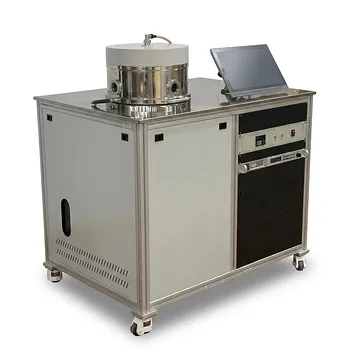
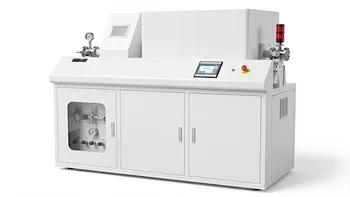
The technical superiority of multi-zone tube furnaces in graphene production lies in their ability to decouple the chemical stages of synthesis. By creating independent thermal environments, these systems allow for the precise separation of precursor gas decomposition and carbon atom crystallization, resulting in large-area graphene with high electronic mobility and controlled layer thickness.
A multi-zone furnace optimizes Chemical Vapor Deposition (CVD) by establishing precise temperature gradients that control reaction kinetics. This enables the production of high-purity, uniform graphene films while reducing defects and operational complexity.
Decoupling Reaction Kinetics for High-Quality Growth
Independent Precursor Cracking
In a multi-zone system, the first heating zone can be set to a specific temperature optimized for cracking hydrocarbon gases like methane. This ensures that the precursor is fully decomposed into reactive carbon species before reaching the growth substrate.
Optimized Deposition Environments
The subsequent zones can maintain a different, lower temperature that is ideal for the recombination of carbon atoms on metal catalysts. This separation prevents the uncontrolled nucleation that often leads to defects and non-uniform layers in single-zone systems.
Control Over Layer Count
By fine-tuning the temperature gradient between zones, researchers can manipulate the solubility and diffusion rates of carbon in substrates like nickel or copper. This level of control is essential for consistently producing either single-layer or multi-layer graphene according to specific requirements.
Enhancing Material Uniformity and Scale
Extended Isothermal Zones
When all zones are synchronized to the same temperature, a multi-zone furnace creates a significantly longer constant temperature zone than a single-zone furnace of the same size. This allows for the synthesis of graphene on much larger substrate areas without variations in grain size or film thickness.
Integrated Annealing and Growth
These systems facilitate a seamless transition between substrate annealing and the actual growth phase within a single vacuum cycle. This integrated workflow removes the need for sample transfers, which minimizes the risk of atmospheric contamination and surface oxidation.
Precise Gradient Temperature Control
The ability to maintain high heating rates and strict atmospheric conditions is a hallmark of laboratory tube furnaces. Multi-zone configurations enhance this by allowing for localized thermal profiles that can accommodate complex, multi-stage chemical reactions.
Understanding the Trade-offs
System Complexity and Calibration
Multi-zone furnaces require advanced control systems to manage the thermal interaction between adjacent zones. Precise PID tuning is necessary to ensure that heat from one zone does not cause "thermal bleed" and disrupt the temperature stability of the next.
Higher Initial Investment
These systems generally involve a higher capital cost and more intensive maintenance than single-zone alternatives. For basic research where precise temperature gradients are not required, the added complexity may outweigh the functional benefits.
Gas Flow Dynamics
The introduction of temperature gradients can influence the fluid dynamics of the precursor gases within the tube. If not properly managed through flow rate adjustments, these gradients can cause turbulence that negatively impacts the uniformity of the deposited film.
Choosing the Right Configuration for Your Research
To maximize the utility of a multi-zone CVD system, the configuration should align with the desired properties of the final graphene film.
- If your primary focus is high electronic mobility: Utilize the multi-zone capability to maximize precursor cracking efficiency in the first zone, ensuring a clean carbon supply for the growth zone.
- If your primary focus is large-scale industrial production: Set all zones to a uniform temperature to create the longest possible isothermal growth area for processing large copper foils.
- If your primary focus is specialized nanomaterials or heterostructures: Leverage the gradient control to synthesize materials that require different thermal environments for nucleation and propagation.
By mastering the thermal gradients provided by multi-zone systems, researchers can achieve a level of precision in graphene synthesis that is unattainable with standard heating equipment.
Summary Table:
| Feature | Technical Advantage | Research Benefit |
|---|---|---|
| Independent Zones | Decouples precursor cracking from deposition | High-purity films with significantly fewer defects |
| Isothermal Stability | Creates extended constant temperature zones | Large-scale uniformity across wide substrate areas |
| Gradient Control | Fine-tunes carbon solubility and diffusion | Precise control over single-layer vs. multi-layer growth |
| Integrated Workflow | Single-cycle annealing and growth phases | Minimal atmospheric contamination and surface oxidation |
Elevate Your Graphene Synthesis with KINTEK Precision
Unlock the full potential of your Chemical Vapor Deposition (CVD) research with KINTEK’s advanced thermal solutions. As specialists in laboratory equipment and consumables, we provide a comprehensive range of high-temperature furnaces—including multi-zone tube, vacuum, CVD, and muffle furnaces—all engineered for the rigorous demands of nanomaterial production.
Our systems offer the precise gradient control and atmospheric stability needed to produce high-mobility graphene with repeatable results. Whether you require standard lab configurations or fully customizable furnaces tailored to your unique experimental parameters, KINTEK delivers the reliability and technical excellence your research deserves.
Contact KINTEK Today for a Tailored Solution
References
- Abrham Sendek Belete, Minbale Admas Teshager. The Recent Advancement of Graphene-Based Cathode Material for Rechargeable Zinc–Air Batteries. DOI: 10.3390/pr12081684
This article is also based on technical information from Kintek Furnace Knowledge Base .
Related Products
- Multi Heating Zones CVD Tube Furnace Machine for Chemical Vapor Deposition Equipment
- Custom Made Versatile CVD Tube Furnace Chemical Vapor Deposition CVD Equipment Machine
- Split Chamber CVD Tube Furnace with Vacuum Station CVD Machine
- Multi Zone Laboratory Quartz Tube Furnace Tubular Furnace
- Slide PECVD Tube Furnace with Liquid Gasifier PECVD Machine
People Also Ask
- What is the function of a multi-zone tube furnace in CVD synthesis? Master 2D In2Se3 Nanosheet Precision
- Why are multi zone tube furnaces particularly useful for nanomaterial research? Unlock Precise Thermal Control for Advanced Synthesis
- What role do multi zone tube furnaces play in new energy research? Unlock Precise Thermal Control for Innovation
- What temperature-related capabilities make multi zone tube furnaces valuable for research? Unlock Precision Thermal Control
- What environmental protection applications utilize multi zone tube furnaces? Unlock Precision in Waste Treatment and Green Tech