
The implementation of a vacuum low-temperature microwave-assisted pyrolysis system offers a dual advantage of rapid processing and superior chemical preservation. By utilizing volumetric microwave heating in a vacuum environment, this method significantly shortens reaction times while preventing the degradation of valuable chemical compounds found in lignin.
This approach fundamentally changes the pyrolysis environment. By lowering boiling points and heating materials uniformly from the inside out, it enables the extraction of high-quality reactive substances that would otherwise be destroyed by conventional high-temperature methods.
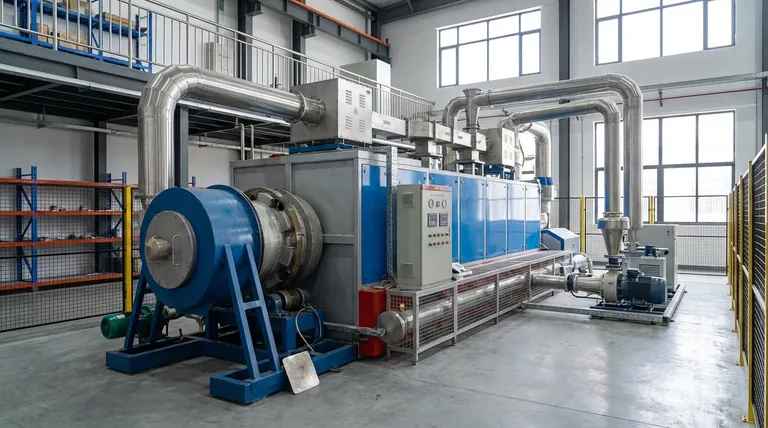
Optimizing Heat Transfer with Microwave Energy
Rapid and Uniform Volumetric Heating
Conventional heating methods often struggle with uneven temperature distribution. In contrast, this system utilizes the volumetric heating characteristics of microwaves.
This ensures the raw materials are heated internally and uniformly. The result is a consistent thermal breakdown of the lignin structure.
Significantly Shortened Reaction Times
Because microwave heating is direct and immediate, the system eliminates the lag time associated with thermal conduction.
This leads to significantly shortened reaction times. Faster processing increases throughput and improves the overall energy efficiency of the production cycle.
Preserving Chemical Integrity through Vacuum Conditions
Reducing Secondary Cracking
A major challenge in pyrolysis is "secondary cracking," where valuable vapors degrade into less useful compounds due to prolonged heat exposure.
Operating under vacuum conditions at low temperatures effectively reduces secondary cracking. This protection is vital for maintaining the complexity of the molecular structures being extracted.
Preserving Reactive Guaiacyl Substances
The primary chemical benefit of this system is the preservation of specific reactive compounds.
Notably, it retains guaiacyl substances such as 4-methylguaiacol. These compounds are highly reactive and are critical components for downstream chemical applications.
Enhancing Yield and Product Discharge
Lowering Boiling Points
The vacuum environment physically alters the thermodynamics of the reaction by lowering the boiling points of the pyrolysis products.
This allows chemical compounds to vaporize and exit the reactor at lower temperatures. This facilitates timely discharge, preventing the products from "baking" inside the reactor.
Improving Feedstock Quality for Resins
The combination of rapid heating and vacuum extraction directly improves both the yield and the quality of the Lignin Pyrolysis Products (LCP).
The resulting bio-oil is particularly rich in the specific compounds required for manufacturing lignin-modified phenolic resins, making this system ideal for high-value resin production.
Understanding the Operational Requirements
The Necessity of Vacuum Stability
To realize these advantages, the system relies heavily on the stability of the vacuum environment.
If the vacuum pressure fluctuates, the boiling points will rise, potentially leading to the very secondary cracking the system is designed to avoid. Consistent pressure control is essential to ensure the timely discharge of products.
Making the Right Choice for Your Goal
This technology is specifically optimized for scenarios where chemical specificity is more important than simple mass reduction.
- If your primary focus is production speed: Leverage the volumetric heating of microwaves to achieve rapid, uniform processing cycles that conventional heating cannot match.
- If your primary focus is chemical value: Prioritize the vacuum parameters to lower boiling points and maximize the recovery of high-value reactive substances like 4-methylguaiacol.
By synchronizing microwave energy with vacuum pressure, you transform lignin pyrolysis from a crude breakdown process into a precise chemical extraction method.
Summary Table:
| Feature | Advantage | Impact on LCP Quality |
|---|---|---|
| Microwave Heating | Volumetric & Uniform | Shortens reaction times; eliminates thermal lag |
| Vacuum Environment | Lowers Boiling Points | Enables timely discharge; prevents product baking |
| Thermal Management | Low Temperature | Reduces secondary cracking; preserves reactive compounds |
| Chemical Retention | High Guaiacyl Content | Retains 4-methylguaiacol for high-value resin production |
Elevate Your Chemical Extraction Precision with KINTEK
Are you looking to maximize the yield of high-value reactive substances like 4-methylguaiacol? KINTEK provides industry-leading thermal solutions designed for the most demanding research and production needs.
Backed by expert R&D and precision manufacturing, we offer a comprehensive range of Muffle, Tube, Rotary, Vacuum, and CVD systems, as well as specialized lab high-temp furnaces. Whether you are optimizing microwave-assisted pyrolysis or refining lignin-modified phenolic resins, our systems are fully customizable to meet your unique atmospheric and thermal requirements.
Ready to transform your pyrolysis efficiency? Contact our technical experts today to discuss your custom furnace requirements and discover the KINTEK advantage.
References
- Johannes Karthäuser, Holger Militz. Utilizing pyrolysis cleavage products from softwood kraft lignin as a substitute for phenol in phenol-formaldehyde resins for modifying different wood species. DOI: 10.1007/s00107-024-02056-4
This article is also based on technical information from Kintek Furnace Knowledge Base .
Related Products
- Electric Rotary Kiln Pyrolysis Furnace Plant Machine Small Rotary Kiln Calciner
- 915MHz MPCVD Diamond Machine Microwave Plasma Chemical Vapor Deposition System Reactor
- Electric Rotary Kiln Continuous Working Small Rotary Furnace Kiln for Pyrolysis Plant Heating
- Vacuum Induction Melting Furnace
- Electric Rotary Kiln Small Rotary Furnace Biomass Pyrolysis Plant Rotating Furnace
People Also Ask
- What are the advantages of electric rotary kilns compared to fuel-fired ones? Boost Precision and Efficiency in Your Process
- What advantages do electric rotary kilns offer over fuel-based kilns? Boost Efficiency and Purity in Your Process
- What materials can be processed in an electric rotary kiln? Versatile Solutions for Advanced Materials
- What is the significance of the refractory lining in a rotary kiln electric furnace? Unlock Efficiency and Longevity
- What are the key components of a rotary kiln electric furnace? Unlock Efficient Thermal Processing















