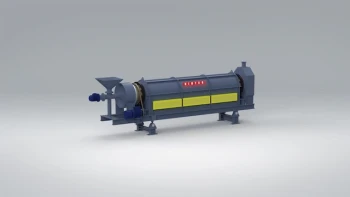
The high-temperature muffle furnace is the primary tool for ash content analysis because it facilitates complete oxidative combustion of organic material. By maintaining a stable, oxygen-rich environment at temperatures usually around 650°C, the furnace eliminates all carbonaceous substances from the activated carbon sample. The remaining non-combustible residue, known as ash, consists of inorganic minerals that are weighed to determine the sample's purity and potential adsorption performance.
The muffle furnace is indispensable for ash analysis because it ensures the total combustion of organic components, allowing for the precise quantification of inorganic impurities. This measurement serves as a critical proxy for evaluating the specific surface area and the development of the carbon's pore structure.
The Mechanism of Ash Determination
Achieving Complete Oxidative Combustion
The muffle furnace provides a controlled environment where activated carbon is heated to extreme temperatures, typically ranging from 500°C to 800°C. At these levels, the organic carbon reacts with oxygen to form gases, effectively "burning off" the carbon matrix.
This process ensures that only the inorganic mineral components—which cannot be combusted—remain in the ceramic crucible. Without the uniform and high heat of a muffle furnace, incomplete combustion would lead to inaccurate, inflated ash readings.
Precision Mass Measurement
The analysis relies on the mass difference between the original sample and the residual ash. Technicians heat the sample until it reaches a constant mass, meaning no further weight is lost through combustion.
By accurately weighing the inorganic residue, researchers can calculate the percentage of impurities present in the raw material. This precision is vital for characterizing biomass-derived carbons, such as those made from rice husks, which often contain high levels of silica.
The Impact of Ash on Activated Carbon Quality
Porosity and Adsorption Sites
Ash content is inversely related to the quality of the activated carbon's pore structure. High concentrations of inorganic ash can occupy or block active sites, significantly reducing the material's specific surface area.
Lower ash content generally indicates a more developed pore network and higher adsorption efficiency. This makes the muffle furnace a key gatekeeper in quality control for high-performance applications like water filtration or gas separation.
Evaluating Raw Material Purity
The furnace allows producers to screen raw materials and monitor the carbonization process. By analyzing the ash, manufacturers can determine the concentration of inorganic impurities introduced during modification or inherently present in the biomass.
This evaluation is critical for identifying high-performance conductive fillers. Excessive ash can impede conductivity and reduce the overall effectiveness of the carbon in electrochemical applications.
Understanding the Trade-offs and Pitfalls
Temperature Sensitivity
Selecting the wrong temperature can lead to volatile mineral loss or incomplete oxidation. While 650°C is a common standard, certain materials may require temperatures as low as 500°C or as high as 1000°C to ensure all carbon is removed without melting the inorganic residues.
Cooling and Contamination
Samples must be cooled in a desiccator before weighing to prevent the ash from absorbing atmospheric moisture. Failure to control the cooling environment can result in weight gain, leading to an overestimation of ash content and a false assessment of material purity.
How to Apply This to Your Project
Maximizing Analytical Accuracy
To ensure your ash content analysis provides the most actionable data, tailor your furnace settings to your specific material goals.
- If your primary focus is maximizing adsorption capacity: Target a low ash percentage by selecting high-purity raw materials and using the furnace to verify that inorganic residues are not clogging the pore structure.
- If your primary focus is screening biomass raw materials: Use a standard 650°C burn for an extended period (up to 6 hours) to fully quantify silica and other minerals inherent in the source material.
- If your primary focus is quality control for conductive fillers: Perform frequent constant-mass tests to ensure that residual ash is minimized, as high mineral content can degrade electrical performance.
Precise thermal processing in a muffle furnace remains the definitive method for ensuring activated carbon meets the rigorous purity standards required for industrial excellence.
Summary Table:
| Analytical Step | Furnace Role | Impact on Material Quality |
|---|---|---|
| Oxidative Combustion | Maintains 500°C–800°C oxygen-rich environment | Eliminates organic matter to isolate inorganic ash |
| Constant Mass Testing | Ensures uniform heating and stable temperature | Provides precise quantification of impurities |
| Quality Control | Facilitates screening of biomass raw materials | Correlates low ash with high adsorption efficiency |
| Process Monitoring | Regulates thermal carbonization environment | Identifies blockers affecting pore structure & surface area |
Elevate Your Lab's Analytical Precision with KINTEK
Is your activated carbon meeting the highest purity standards? At KINTEK, we specialize in high-performance laboratory equipment and consumables designed for rigorous material analysis. Our comprehensive range of high-temperature furnaces—including muffle, tube, rotary, vacuum, CVD, atmosphere, dental, and induction melting—are all fully customizable to meet your unique research and industrial requirements.
Whether you are screening biomass raw materials or optimizing conductive fillers, our furnaces deliver the uniform heat and precision needed for definitive ash content analysis. Contact KINTEK today to find the perfect thermal solution for your lab!
References
- Sakwe Adianimovie, Opololaoluwa Oladimarum Ogunlowo. Development of Micro Porous Materials (Activated Carbon) from Agricultural Products to be utilized for Environmental Remediation. DOI: 10.4314/fuoyejet.v9i3.19
This article is also based on technical information from Kintek Furnace Knowledge Base .
Related Products
- 1700℃ High Temperature Muffle Oven Furnace for Laboratory
- 1800℃ High Temperature Muffle Oven Furnace for Laboratory
- 1200℃ Muffle Oven Furnace for Laboratory
- High Temperature Muffle Oven Furnace for Laboratory Debinding and Pre Sintering
- 1400℃ Muffle Oven Furnace for Laboratory
People Also Ask
- What is the primary function of a high-temperature laboratory muffle furnace in chemical synthesis? Achieve Precision.
- How does a high-temperature laboratory muffle furnace affect material properties? Transform Anodic Oxide Films Fast
- What role does a muffle furnace play in BCZY712 electrolyte powder production? Achieve Perfect Phase Purity
- What is the role of a high-temperature muffle furnace in guava leaf carbonization? Master Precise Pyrolysis Control
- What role does a muffle furnace play in converting rice husk to ash? Achieve High-Purity Biogenic Silica Isolation