Superduralumin strength is forged in the furnace, not just in the alloy.
The mechanical properties of PA7 and PA8 are dictated by a precise interplay of alloy composition and solution treatment parameters. By selecting the correct Cu:Mg ratio and holding between 490–505°C before a rapid water quench, you create a supersaturated solid solution. This, after 5–7 days of natural aging, yields tensile strengths of 460–470 MPa. The primary difference is that PA8 relies on CuAl₂ for hardening, while PA7 depends on the S-phase (Al₂CuMg), each responding differently to thermal cycles.
The path to consistent 460+ MPa strength lies in tightly controlling solution temperature within ±5°C and ensuring a rapid quench. Even minor deviations or slow cooling can precipitate coarse phases, destroying ductility and yield strength. A laboratory-grade muffle or tube furnace with tight thermal stability is not optional — it’s the foundation of repeatable superduralumin performance.
Understanding Alloy Composition: PA7 vs. PA8
PA8: Lean Magnesium, Reliance on CuAl₂
PA8 contains sufficient copper but limited magnesium, so its primary hardening precipitate is CuAl₂ (θ-phase).
These particles are extremely effective at blocking dislocation movement after solutionizing and aging.
However, CuAl₂ can overage rapidly if the solution temperature is not tightly controlled.
PA7: Balanced Cu and Mg for S-Phase Hardening
PA7 possesses a higher Mg content, promoting the formation of S-phase (Al₂CuMg) precipitates.
S-phase provides a finer, more stable dispersion at room temperature, often yielding slightly better ductility for a given strength.
This composition alters the optimal solution temperature slightly, requiring precise matching of furnace soak times.
Why Composition Dictates Solution Temperature Sensitivity
The amount of soluble copper and magnesium directly determines how much supersaturation you can achieve.
An alloy with more solute needs higher solution temperatures to fully dissolve second phases, but exceeding the solidus leads to incipient melting.
Thus, the exact composition of your PA7 or PA8 batch dictates the safe operating window for solution treatment.
The Solution Treatment Window
The Critical 490–505°C Range
Both PA7 and PA8 must be heated to 490–505°C to dissolve CuAl₂ and S-phase into the aluminum matrix.
Straying below 490°C leaves undissolved particles that act as stress risers, dramatically reducing yield strength.
Exceeding 505°C risks localized melting of grain boundaries (eutectic burning), which cannot be repaired.
Time at Temperature: Dissolving Phases Without Grain Growth
The soak time at solution temperature must be long enough to completely dissolve hardening phases — typically 20 to 60 minutes, depending on section thickness.
However, excessive soak times promote grain growth, which lowers hardness and ductility with no benefit to strength.
A calibrated furnace with a controlled, uniform hot zone is essential to hit this balance.
The Overlooked Role of Pre-Annealing (340–370°C)
Prior to solutionizing, many superduralumin components undergo an intermediate anneal at 340–370°C.
This stage relieves residual stresses from forming operations and coarsens the initial precipitate structure, making the subsequent solution treatment more homogeneous.
Poor control during this step can exaggerate grain size variation, leading to inconsistent mechanical properties after final aging.
The Role of Quenching and Natural Aging
Water Quenching: Speed Is Everything
Immediately after solutionizing, the component must be water quenched to trap the maximum concentration of copper and magnesium in solid solution.
A delay of even a few seconds can allow uncontrolled precipitation of coarse CuAl₂ or S-phase, permanently capping the achievable strength below 460 MPa.
Cold water (below 30°C) with aggressive agitation is the standard to ensure a cooling rate exceeding 300°C/s.
Natural Aging: The 5–7 Day Path to Peak Strength
Following the quench, superduralumin naturally ages at room temperature as solute atoms cluster into Guinier-Preston zones and early precipitates.
Full tensile strengths of 460–470 MPa are reached after 5–7 days, with the majority of hardening occurring in the first 48 hours.
Artificial aging (heating above 100°C) is not typical for PA7/PA8, as it produces lower strength due to coarser S-phase.
Microstructural Legacy of Fast Quenching
The supersaturated matrix is highly unstable, but the resulting nanometer-scale precipitates provide a massive increase in dislocation pinning.
This is why a properly quenched and naturally aged PA7 yield strength can approach 0.2% offset values above 350 MPa, while still retaining 8–12% elongation.
Any quench delay converts that opportunity into soft, micron-sized equilibrium precipitates.
Furnace Requirements for Repeatable Results
Laboratory Muffle and Tube Furnaces: The Gold Standard
Industrial arc or reverberatory furnaces lack the spatial temperature uniformity needed for superduralumin.
A high-temperature muffle furnace or a tube furnace with a precise digital controller delivers the ±5°C stability essential for both solutionizing (490–505°C) and annealing (340–370°C).
The enclosed heating elements protect the workload from direct flame impingement, preventing local overheating.
Why Tight Thermal Stability Is Not a Luxury
Even a 10°C overshoot during solution treatment can cause grain boundary liquation, leading to brittle failure under load.
Conversely, a 10°C undershoot leaves CuAl₂ nucleated early, resulting in a 50 MPa loss in tensile strength.
The data is clear: only a furnace with proven thermal uniformity across the whole charge can reliably produce 460 MPa material.
Understanding the Trade-offs
Overheating: A One-Way Street to Property Loss
Once the solidus temperature is breached and eutectic melting occurs, no subsequent heat treatment can reverse the damage.
The component will exhibit intergranular fracture and low elongation, even if strength appears acceptable in a quick bend test.
This is why solution temperature must never exceed 505°C for any meaningful length of time.
Quench Distortion and Residual Stress
The violent temperature drop of a water quench introduces significant residual stress, especially in complex shapes.
These stresses can warp thin sections or cause dimensional instability during service life.
A post-quench straightening operation or a gradual aging step (still below 100°C) may be required to preserve geometry.
The Annealing Interstage Pitfall
An annealing temperature of 340–370°C is deliberately below the solvus; it coarsens precipitates but does not dissolve them.
If this step is hurried or the temperature drifts too high, partial solutionizing can occur, creating a heterogeneous microstructure that undermines the subsequent main solution treatment.
Consistency in this stage is critical to achieving uniform ductility across a production run.
How to Apply This to Your Project
Optimizing the mechanical properties of PA7 and PA8 is about aligning your heat treatment practice with your performance priorities. Use the following guidelines:
- If your primary focus is maximum tensile strength: Soak at exactly 500–505°C for the minimum time to dissolve all phases, quench in cold, agitated water within 3 seconds, and allow 7 days of natural aging. Use PA8 if you have tight copper control.
- If your primary focus is enhanced ductility and toughness: Select PA7 (S-phase) and bias toward the lower end of the solution temperature range (490–495°C) to keep grain size small, while still achieving full supersaturation.
- If your primary focus is process consistency and quality control: Invest in a calibrated muffle or tube furnace with documented thermal uniformity. Record and log annealing (340–370°C) and solutionizing profiles for every batch to eliminate outliers.
- If your primary focus is avoiding rework and scrap: Never exceed 505°C, never delay the quench, and always verify lot-specific composition before setting the oven profile. A small investment in thermal mapping saves tens of thousands in rejected parts.
Your understanding of the alloy’s inner life — the dance between composition, solution temperature, and quench speed — is the ultimate tool for turning a high-copper aluminum blank into a load-bearing marvel.
Summary Table:
| Parameter / Feature | PA7 Alloy | PA8 Alloy |
|---|---|---|
| Primary Hardening Phase | S-phase (Al₂CuMg) | CuAl₂ (θ-phase) |
| Solution Temperature Range | 490–505°C (Bias 490–495°C for ductility) | 490–505°C (Exact 500–505°C for max strength) |
| Pre-Annealing Range | 340–370°C | 340–370°C |
| Quench Requirement | Cold water (<30°C), transfer <3s, >300°C/s | Cold water (<30°C), transfer <3s, >300°C/s |
| Aging Process | Natural aging for 5–7 days | Natural aging for 5–7 days |
| Target Tensile Strength | 460–470 MPa | 460–470 MPa |
| Critical Risk Factor | Grain growth & soft equilibrium precipitates | Overaging & eutectic melting above 505°C |
Achieving repeatable 460+ MPa tensile strength in PA7 and PA8 superduralumin demands strict ±5°C furnace stability during solution treatment. KINTEK specializes in advanced laboratory equipment and consumables, offering a comprehensive range of high-temperature furnaces—including muffle, tube, rotary, vacuum, CVD, atmosphere, dental, and induction melting furnaces—all fully customizable to meet your unique metallurgical research and production standards. Eliminate thermal drift, prevent boundary melting, and optimize your alloy performance. Contact us today to upgrade your thermal processing capabilities!
Related Products
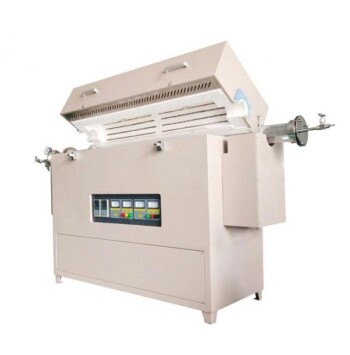
- Multi Zone Laboratory Quartz Tube Furnace Tubular Furnace
- High Temperature Muffle Oven Furnace for Laboratory Debinding and Pre Sintering
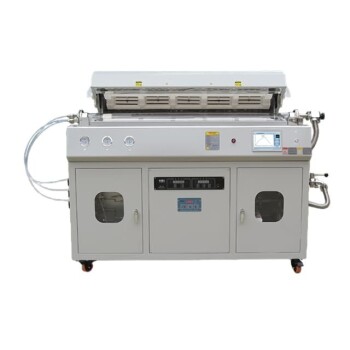
- Multi Heating Zones CVD Tube Furnace Machine for Chemical Vapor Deposition Equipment
- Ultra-High Vacuum Flange Aviation Plug Glass Sintered Airtight Circular Connector for KF ISO CF
- Vertical Laboratory Quartz Tube Furnace Tubular Furnace
People Also Ask
- What temperature-related capabilities make multi zone tube furnaces valuable for research? Unlock Precision Thermal Control
- What role do multi zone tube furnaces play in new energy research? Unlock Precise Thermal Control for Innovation
- Why are multi zone tube furnaces particularly useful for nanomaterial research? Unlock Precise Thermal Control for Advanced Synthesis
- What environmental protection applications utilize multi zone tube furnaces? Unlock Precision in Waste Treatment and Green Tech
- What are the main applications of multi zone tube furnaces in university laboratories? Unlock Precision in Material Science and Energy Research