Understanding how sintering additives and thermal profiles dictate performance is not just about following a recipe—it's about controlling the microstructural battle between domain wall motion and internal stress.
The initial permeability ($\mu_i$) and magnetic loss factor ($\tan\delta / \mu_i$) of MnZn soft ferrites are directly governed by grain size, grain boundary chemistry, and residual porosity. Sintering additives like $\text{Bi}_2\text{O}_3$ at very low concentrations (<0.03 wt%) combined with precise multi-stage thermal profiles can yield $\mu_i$ values exceeding 5000 with loss factors below $8 \times 10^{-6}$. However, the process operates on a knife's edge. Excess additive or poor temperature control creates thick, stiff grain boundaries that clamp magnetic domain walls, instantly collapsing permeability and spiking hysteresis losses.
The central challenge is managing the grain boundary phase. Additives and temperature must work in concert to sinter a dense, coarse-grained microstructure while keeping the intergranular material vanishingly thin and stress-free. Success means effortless domain wall motion; failure means a high-loss, low-permeability magnet locked in a rigid, glassy cage.
The Microstructural Goal: Unlocking High Permeability
To understand the powerful influence of processing, you must first see the ferrite component not as a solid, but as a dynamic battlefield for magnetic domain walls. These walls must move freely to create high initial permeability.
The Mechanism of Domain Wall Pinning
Magnetic loss is fundamentally resistance to this movement. When a magnetic field is applied, domain walls sweep through the crystal lattice to align magnetization. Anything that obstructs this motion—pores, non-magnetic second phases, or internal stress—acts as a pinning site. Every pinned domain wall requires more energy to unpin, which manifests directly as a higher coercive field and increased magnetic hysteresis loss.
The Ideal Microstructure
The target is a fully dense, chemically homogeneous ceramic with large grains. Large grains reduce the density of obstructive grain boundaries per unit volume. This creates long, unobstructed pathways for domain wall displacement, naturally maximizing $\mu_i$. Achieving this requires a meticulous balance of thermal energy and chemical dopants to drive atomic diffusion without creating secondary defects.
The Double-Edged Sword of Sintering Additives
Additives are the primary tool for engineering the grain boundary, but their window of effectiveness is narrow. They act as a liquid-phase during firing, fundamentally altering the transport mechanisms that build the ceramic.
Promoting Controlled Densification
At optimal concentrations, a sintering aid like $\text{Bi}_2\text{O}_3$ forms a thin, transient liquid film in the furnace. This liquid dramatically accelerates ion diffusion rates, pulling grains together and rapidly eliminating intergranular porosity. The result is a dense, uniform structure achieved with shorter firing times or lower temperatures. The additive must ultimately dissolve back into the spinel lattice or remain as an atomically thin, stress-free layer at the grain boundary for domain walls to pass through unimpeded.
The Peril of Coarse Crystallization
When the additive concentration crosses a critical threshold, the liquid phase becomes too voluminous. It persists as a thick, continuous glassy film coating every grain upon cooling. This rigid amorphous layer has a fundamentally different thermal expansion coefficient than the ferrite crystal, generating intense residual mechanical stress. This stress field is a powerful domain wall pinner, directly degrading initial permeability from thousands down to a small fraction of its potential.
Fine-Tuning the Furnace: Achieving the Ideal Thermal Profile
The furnace is not just an oven; it is a precision instrument for orchestrating solid-state chemistry. Temperature and atmosphere control the very atomic structure of the ferrite lattice.
The Role of Peak Temperature in Grain Growth
The peak sintering temperature is the master switch for grain size. In MnZn ferrites, a precise soak at the peak temperature provides the activation energy for grain boundary migration, consuming smaller grains and growing large ones. Undershooting this temperature leaves behind fine-grained material with excessive porosity, while overshooting can cause abnormal, discontinuous grain growth that traps pores inside crystals, both of which are detrimental to performance.
Atmospheric Control of Stoichiometry
For MnZn ferrites fired at high temperatures, the furnace atmosphere is just as critical as heat. A controlled low-oxygen (protective) atmosphere during heating prevents premature oxidation. The most critical moment is the peak soak, where an oxygen-rich environment is required to prevent zinc evaporation from the spinel lattice and ensure the formation of a single-phase, stoichiometric cubic spinel structure. A slight, controlled excess of $\text{Fe}_2\text{O}_3$ in the final chemistry is often engineered, as its presence helps lower magnetocrystalline anisotropy, further boosting $\mu_i$.
The Precipice of Excess: When Optimization Fails
The difference between a world-class ferrite component and a mediocre one is often a tiny miscalculation in additive weight percentage or a thermal gradient within the furnace. Objectively assessing the failure modes is critical for building a reliable process.
The Stiff Grain Boundary Problem
Excess additive content creates not just internal stress, but a mechanically rigid intergranular phase. This acts as a non-magnetic spacer between grains, severing the magnetic exchange coupling that allows domain walls to move continuously across the material. The result is not just a reduction in permeability, but a fundamental shift toward a high-loss, magnetically disconnected composite.
Process-Induced Porosity and Stress
An improper thermal profile—such as an overly aggressive heating ramp—can be equally destructive. It can cause rapid, non-uniform densification that seals off the pore network before gaseous byproducts have fully escaped. This traps intragranular porosity that is impossible to remove later. An uncalibrated furnace with a non-uniform hot zone is a common culprit, producing a batch of components with wildly varying properties and high internal stress, even if the global chemistry is perfect.
Making the Right Choice for Your Manufacturing Goal
Process optimization is not about chasing a single perfect number; it's about designing a holistic thermal and chemical protocol that aligns with your specific performance targets.
After a brief assessment of your design constraints, use these criteria to guide your development path.
- If your primary focus is maximizing initial permeability ($\mu_i > 5000$): Engineer a process using ultra-low additive concentrations (<0.03 wt%) and a precise, multi-stage atmospheric profile with a high-temperature soak in oxygen-rich conditions to grow large, stress-free, single-phase grains.
- If your primary focus is minimizing core loss at high frequency: Control the peak temperature and additive level to achieve a slightly finer, absolutely uniform grain size distribution, and fine-tune the post-sintering cooling ramp to precisely control oxygen vacancy concentration and Fe²⁺ content.
- If your primary focus is process speed and energy reduction: Explore advanced sintering techniques like microwave sintering, which can achieve equivalent density and grain growth in a fraction of the time, provided you maintain strict feedback control to prevent uneven heating.
Optimizing a MnZn ferrite is an exercise in mastering interfaces—the point where chemistry meets thermal history to dictate magnetic destiny.
Summary Table:
| Processing Factor | Microstructural Impact | Effect on $\mu_i$ & Magnetic Loss |
|---|---|---|
| Optimal Additive (<0.03 wt% $\text{Bi}_2\text{O}_3$) | Promotes dense, large-grained structure; thin grain boundaries | Maximizes initial permeability ($\mu_i > 5000$) and minimizes loss |
| Excess Additive Content | Forms thick, rigid glassy film; generates residual mechanical stress | Pinches domain walls, dramatically reducing $\mu_i$ and increasing loss |
| Precise Peak Sintering Temp | Drives grain boundary migration; eliminates intergranular porosity | Enables free domain wall motion; over/undershooting traps pores |
| Controlled Atmosphere | Maintains cubic spinel stoichiometry; prevents Zn evaporation | Lowers magnetocrystalline anisotropy, boosting magnetic performance |
Achieving the ideal microstructural balance and stoichiometric control for advanced MnZn soft ferrites requires precise temperature and atmospheric control. KINTEK specializes in high-performance laboratory equipment and high-temperature furnaces—including atmosphere, vacuum, tube, and muffle furnaces—all fully customizable to meet your specific research and manufacturing requirements. Optimize your ceramic sintering profiles, prevent process defects, and enhance product yield. Contact KINTEK today for a customized furnace solution!
Related Products
- Magnesium Extraction and Purification Condensing Tube Furnace
- Multi Zone Laboratory Quartz Tube Furnace Tubular Furnace
- Small Vacuum Heat Treat and Tungsten Wire Sintering Furnace
- Multi Heating Zones CVD Tube Furnace Machine for Chemical Vapor Deposition Equipment
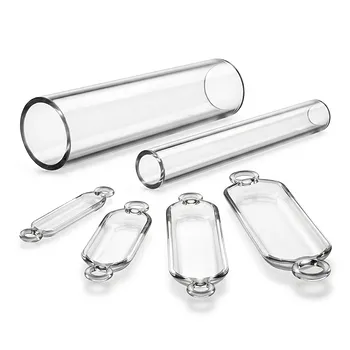
- High Purity Quartz Tube and Quartz Boat for Laboratory Furnaces
People Also Ask
- What are the advantages of using a condensing tube furnace for magnesium extraction? Achieve High Purity and Efficient Metal Recovery
- Why is a high-precision tube furnace required for PtCln/Fe-N-C catalysts? Ensure Sub-Nanometer Precision
- What are the primary functions of a tube furnace in the thermal pre-treatment research of aluminum alloy powder?
- What industrial and research applications are tube furnaces used for? Unlock Precise Thermal Processing Solutions
- What is a tube furnace and what are its primary uses? Essential for Controlled High-Temperature Processes