
To put it simply, an induction furnace ensures high purity by fundamentally isolating the precious metal from common sources of contamination. It achieves this through a combination of non-contact electromagnetic heating, a highly controlled low-oxygen atmosphere, precise temperature management, and the use of inert crucibles that do not react with the molten metal.
The core principle is prevention, not correction. Unlike traditional methods that expose metal to open flames or contaminating electrodes, induction heating generates heat within the metal itself, creating an inherently cleaner process from the start.
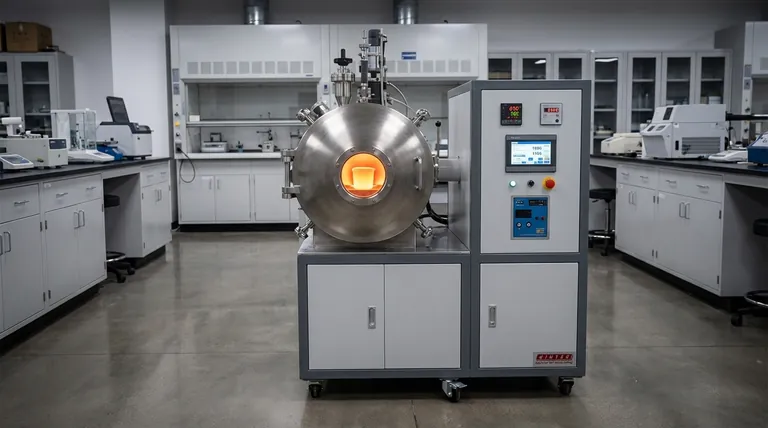
The Core Principle: Contamination-Free Heating
To understand how purity is maintained, you must first understand how an induction furnace generates heat. It is a process that removes the most common vectors for introducing impurities.
How Electromagnetic Induction Works
An induction system uses a powerful, high-frequency alternating current passed through a copper coil. This creates a fluctuating magnetic field around the crucible holding the precious metal.
This magnetic field induces powerful electrical currents, known as eddy currents, directly within the metal. The metal's natural resistance to these currents generates precise and rapid heat, causing it to melt from the inside out.
Eliminating External Contaminants
This method of heating is the primary reason for the high purity achieved. There is no direct contact with any external heating element.
Traditional furnaces often rely on burning fuel, which introduces byproducts of combustion directly into the melt. Arc furnaces use carbon electrodes that can degrade and shed particles into the metal. Induction heating has neither of these contamination sources.
Controlling the Melting Environment
Beyond the clean heating method, an induction furnace provides a sealed and tightly managed environment that preserves the metal's integrity.
Preventing Oxidation
The furnace's chamber can be flooded with an inert gas or operated under a vacuum. This creates a low-oxygen environment that effectively prevents the precious metal from oxidizing.
Oxidation not only results in metal loss (dross) but also introduces oxide impurities that compromise the final product's quality and value.
The Role of Precision Temperature Control
Induction systems offer exceptionally precise temperature control. This is critical for precious metals, as overheating can cause some elements in an alloy to vaporize or trigger unwanted reactions with trace elements.
By maintaining the exact temperature needed for a clean melt, the furnace ensures the metal's composition remains stable and pure.
The Importance of Inert Crucibles
The container holding the metal, known as the crucible, is another potential source of contamination. Induction furnaces for precious metals use crucibles made from non-reactive materials.
Materials like high-purity graphite or specialized ceramics are chosen because they are chemically inert and have very high melting points. They will not leach impurities into the molten gold, silver, or platinum group metals.
Understanding the Trade-offs
While superior for purity, induction technology is not without its considerations. Acknowledging them is key to making a sound technical decision.
Initial Investment and Complexity
Induction furnace systems represent a significant capital investment compared to simpler, fuel-based torches or kilns. Their operation also requires a higher level of technical knowledge to manage the power settings and controlled atmosphere correctly.
Focus is on Purity, Not Refining
An induction furnace excels at melting already-refined metal while maintaining its purity. It is not a magic solution for refining heavily contaminated scrap on its own.
While some impurities can be removed with the addition of flux, the primary function is to preserve quality, not to perform complex metallurgical refining of low-grade materials. Input quality still dictates output quality.
Making the Right Choice for Your Goal
The decision to use an induction furnace should be based on your specific purity requirements and operational goals.
- If your primary focus is maximum purity for investment-grade metals: The non-contact heating and controlled atmosphere of an induction furnace are essential to prevent any degradation of .999+ fineness.
- If your primary focus is working with platinum group metals (PGMs): The furnace's ability to reach very high temperatures with extreme precision is critical for melting platinum, iridium, or rhodium without loss or contamination.
- If your primary focus is upgrading from traditional flame-based methods: The key benefit you will gain is the immediate elimination of impurities caused by fuel byproducts and atmospheric oxidation, leading to a consistently higher quality melt.
Ultimately, choosing induction is a choice for control, consistency, and the prevention of contamination at the most fundamental level.
Summary Table:
| Feature | Benefit for Purity |
|---|---|
| Non-contact electromagnetic heating | Eliminates external contaminants from fuel or electrodes |
| Controlled low-oxygen atmosphere | Prevents oxidation and metal loss |
| Precise temperature control | Avoids overheating and unwanted reactions |
| Inert crucibles (e.g., graphite, ceramics) | No leaching of impurities into the melt |
Upgrade your precious metal processing with KINTEK's advanced high-temperature furnace solutions! Leveraging exceptional R&D and in-house manufacturing, we offer Muffle, Tube, Rotary Furnaces, Vacuum & Atmosphere Furnaces, and CVD/PECVD Systems, all with deep customization to meet your unique needs. Ensure contamination-free melting and high purity—contact us today to discuss how our tailored solutions can enhance your lab's efficiency and results!
Visual Guide

Related Products
- 600T Vacuum Induction Hot Press Vacuum Heat Treat and Sintering Furnace
- Vacuum Induction Melting Furnace
- 1200℃ Controlled Inert Nitrogen Atmosphere Furnace
- 1700℃ Controlled Inert Nitrogen Atmosphere Furnace
- Vacuum Heat Treat Sintering Furnace with Pressure for Vacuum Sintering
People Also Ask
- Why use Vacuum Hot Press (VHP) for ZnS Ceramics? Achieve Superior IR Transparency and Mechanical Strength
- How does a vacuum hot press sintering furnace mitigate copper sintering swelling? Solve Fe-Cu Expansion Issues
- What are the key advantages of vacuum hot press sintering furnaces? Achieve Superior Density and Purity in Materials
- What is the core function of a vacuum hot press sintering furnace in the preparation of high-density RuTi alloys? Achieve Maximum Density and Purity
- What are the benefits of using a vacuum hot press sintering furnace for the preparation of SiCw/2024 aluminum matrix composites? Achieve High-Performance Aerospace Materials



















