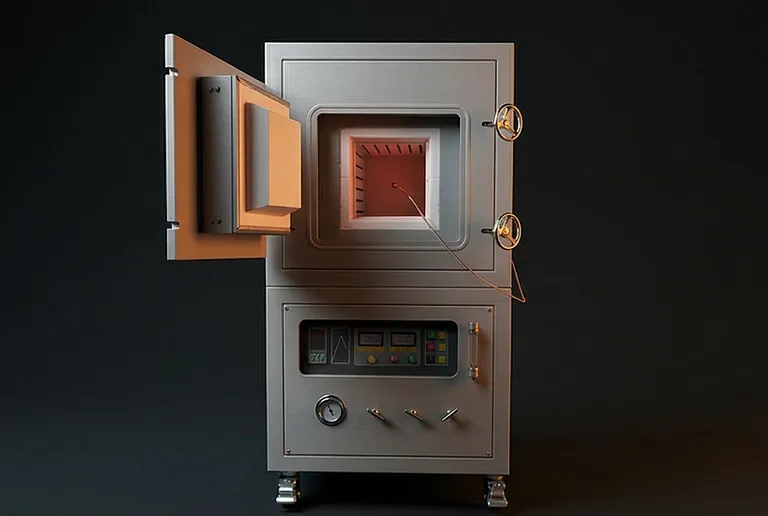
The Mystery of the "Perfect" Batch That Failed
Imagine this: Your furnace controller shows a flawless temperature curve. The vacuum levels are steady, and the dwell time was executed exactly to the second. Yet, when the cooling cycle finishes and you open the chamber, the results are a disaster. The braze alloy hasn't flowed correctly, or worse, the microstructure of your precision components has become brittle.
If your furnace settings are "perfect," why did the part fail? This is a frustratingly common scenario in high-precision brazing, and it usually stems from a single, overlooked truth: The temperature of the furnace is rarely the temperature of your part.
The High Cost of "Close Enough"
When faced with inconsistent brazing results, many lab managers and engineers try to compensate by over-engineering the process. They might increase the "soak time" by thirty minutes "just to be safe," or they might bump the furnace temperature up five degrees higher than the technical datasheet suggests.
While these workarounds might occasionally solve the immediate problem, they introduce a host of new risks:
- Wasted Energy and Time: Longer cycles mean fewer batches per week and higher utility bills.
- Material Degradation: High-performance alloys are sensitive. Excessive heat or prolonged dwell times can lead to grain growth, reducing the mechanical strength of your final product.
- Traceability Gaps: In industries like aerospace or medical device manufacturing, "guessing" isn't an option. If you can't prove the exact temperature the part reached, the batch is often unusable.
The Root Cause: Thermal Lag and the Ambient Trap
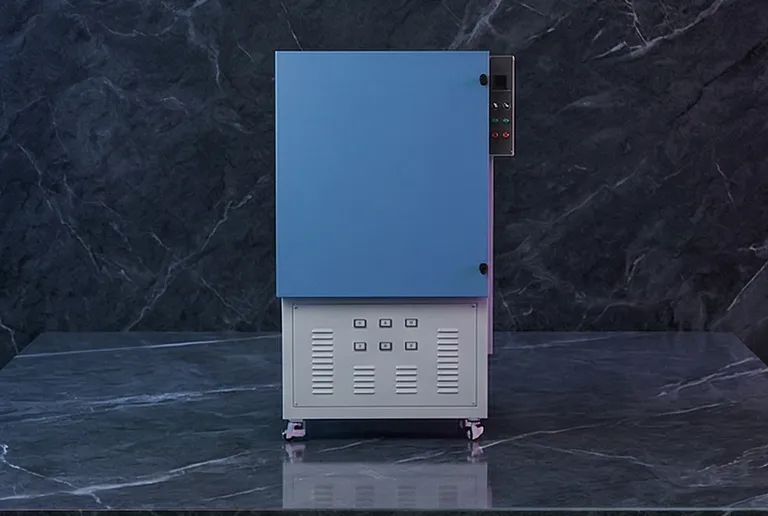
The fundamental problem lies in the physics of heat transfer. Most high-temperature furnaces use fixed thermocouples to monitor the "ambient" environment—the air or vacuum space inside the chamber. However, your sample has its own mass, geometry, and thermal conductivity.
This creates Thermal Lag. Your furnace might reach 1000°C in ten minutes, but a heavy stainless steel part might take another twenty minutes to reach that same temperature. If your brazing window is narrow, the furnace might already be cooling down before the part's surface ever reached the required "liquidus" temperature of the braze alloy.
Relying on ambient sensors is like trying to check if a steak is cooked by measuring the temperature of the oven air; it tells you everything about the environment and nothing about the actual product.
The Solution: Real-Time Ground Truth with Trailing Thermocouples
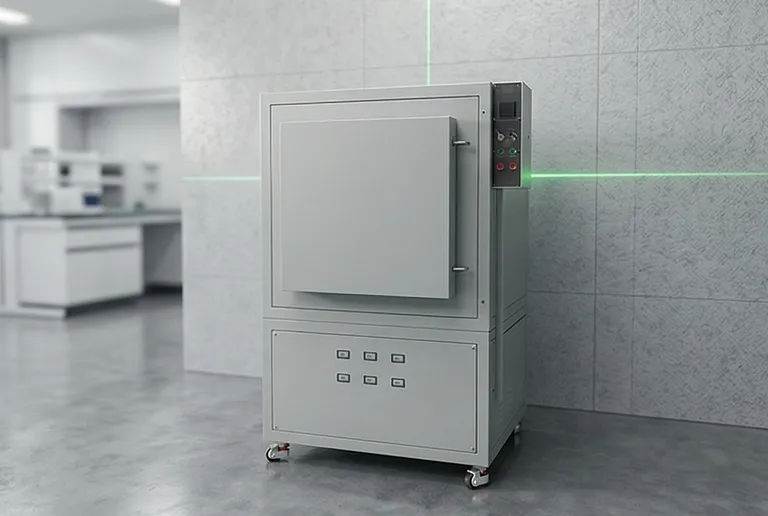
To bridge the gap between furnace temperature and part temperature, you need a Trailing Thermocouple.
Unlike fixed furnace sensors, a trailing thermocouple is placed in direct physical contact with the sample surface. As the specimen moves through various furnace zones—or simply sits in a vacuum chamber—the sensor "trails" along, recording the actual temperature profile of the material in real-time.
At KINTEK, we design our high-temperature vacuum and atmosphere furnaces with this precision in mind. We don't view a furnace as just a "hot box," but as a controlled environment for metallurgical transformation. Our systems are engineered to support integrated trailing thermocouple ports, allowing you to:
- See the Exact "Part Temperature": Eliminate the guesswork of thermal lag.
- Verify Requirements: Ensure that holding times strictly adhere to the technical requirements for reliable microstructural evolution.
- Dynamic Control: Use the data from the part's surface to trigger the next stage of your furnace program, ensuring every batch is processed based on reality, not a timer.
Beyond the Fix: Mastering Your Thermal Margins
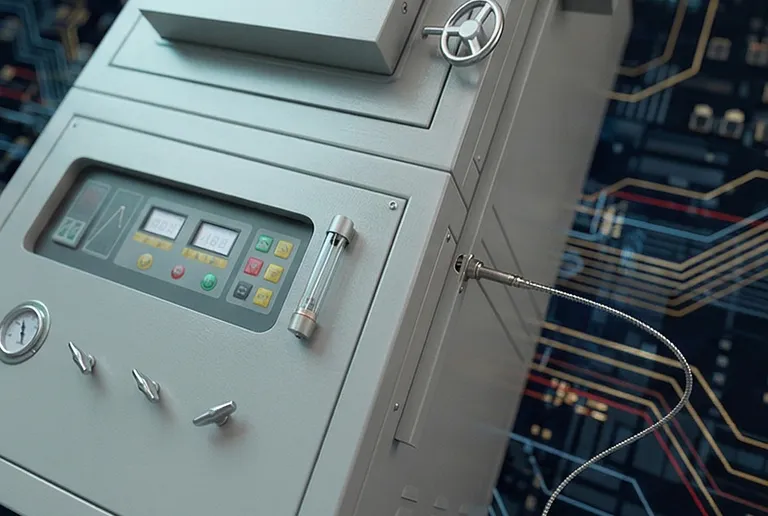
Once you stop guessing and start measuring the actual surface temperature of your samples, the potential of your laboratory expands. You are no longer limited to "safe" (and slow) recipes.
With the data provided by trailing thermocouples in a KINTEK furnace, you can optimize your cycle times for maximum throughput without risking quality. You can confidently experiment with new alloy compositions or complex geometries, knowing exactly how they respond to heat. This level of control doesn't just fix a technical problem—it turns your thermal processing into a competitive advantage, ensuring that your microstructural results are repeatable, auditable, and perfect every time.
Mastering thermal precision is about more than just buying a furnace; it’s about understanding the specific thermal journey of your components. Whether you are dealing with complex CVD processes or sensitive dental ceramic sintering, our team is ready to help you design a system that provides the transparency and control your work demands. Contact Our Experts today to discuss your unique project requirements and how we can help you achieve absolute thermal certainty.
Related Products
- Vacuum Heat Treat Sintering and Brazing Furnace
- Laboratory Muffle Oven Furnace with Bottom Lifting
- High Temperature Muffle Oven Furnace for Laboratory Debinding and Pre Sintering
- 1400℃ High Temperature Laboratory Tube Furnace with Alumina Tube
- Vacuum Heat Treat Sintering Furnace with Pressure for Vacuum Sintering
Related Articles
- Why 10⁻⁶ mbar Vacuum Isn’t Enough for Perfect Brazing—And the Missing Link to Oxide-Free Surfaces
- Why Your High-Temperature Aerospace Joints Fail—and the Science of the Perfect Vacuum Weld
- Why Your 3D-Printed Maraging Steel Parts Aren't Performing—And How to Fix the Structural Weakness
- Why Your Vacuum Brazed Joints Are Failing—And the Precise Pressure Fix You’ve Been Missing
- Beyond Inert: The Physics and Psychology of Perfecting Joints in a Vacuum Furnace



















