The High-Stakes Transformation of Smart Glass
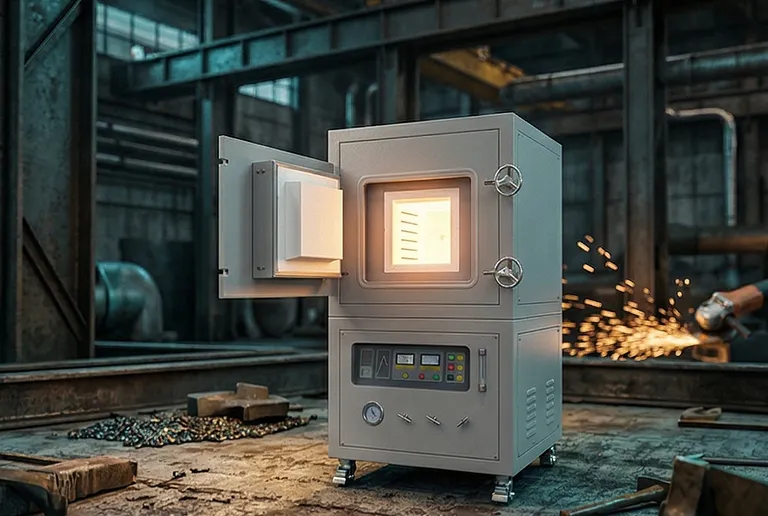
Imagine you have spent weeks perfecting the chemical composition of a high-performance electrochromic film—the "smart glass" technology that allows windows to tint at the touch of a button. The coatings are precise, the layers are uniform, and the potential for energy-efficient buildings is immense.
Then comes the final hurdle: sintering. You place your electrodes into a high-temperature furnace to bond the materials. But when the cooling cycle finishes, the results are devastating. Instead of a crystal-clear, highly conductive electrode, you are left with a cloudy, yellowish, or poorly responsive film. Your "smart" window has become a costly piece of scrap.
This isn't just a minor technical glitch; for many manufacturers, it is a persistent barrier to scaling production and maintaining quality.
The Common Struggle: Why Standard Sintering Often Fails
When faced with cloudy electrodes or poor conductivity, the natural instinct is to tweak the temperature or extend the heating time. Many labs attempt to solve the problem by using standard muffle furnaces or purging the chamber with nitrogen or argon.
However, these common workarounds often fail to deliver consistent results. You might find that:
- The contrast is weak: The glass doesn't get dark enough when powered, or doesn't clear up fully when switched off.
- Conductivity drops: The Indium Tin Oxide (ITO) layer—the "highway" for electrons—becomes sluggish.
- The cost of failure rises: High scrap rates and project delays lead to missed deadlines and blown budgets.
The reason these "solutions" fall short is that they address the temperature of the process but ignore the invisible chemistry happening in the atmosphere surrounding the electrode.
The Hidden Science: The "Invisible Enemy" of Transparency
To understand why traditional sintering fails, we must look at the atomic level of the materials involved, specifically Indium Tin Oxide (ITO) and Titanium Dioxide (TiO2) nanoparticles.
During the critical sintering phase at 450°C, two destructive chemical reactions often occur:
- ITO Degradation: In the presence of even trace amounts of oxygen and moisture found in a standard furnace, the ITO layer undergoes oxidative degradation. This effectively "clogs" the electronic highway, leading to poor conductivity.
- The Reduction of TiO2: Titanium dioxide is prized for its transparency in its tetravalent state ($Ti^{4+}$). However, in an uncontrolled atmosphere, these nanoparticles can "reduce" to a trivalent state ($Ti^{3+}$). This chemical shift turns the material dark and opaque, destroying the contrast between the colored and bleached states of the glass.
Standard inert gas purging is often insufficient because even a small "leak" of oxygen or a high dew point (moisture) in the gas can trigger these reactions. To keep these materials in their ideal state, you don't just need a "clean" atmosphere; you need an environment that actively prevents these chemical shifts.
The Solution: Precision Vacuum Control at 5 mbar
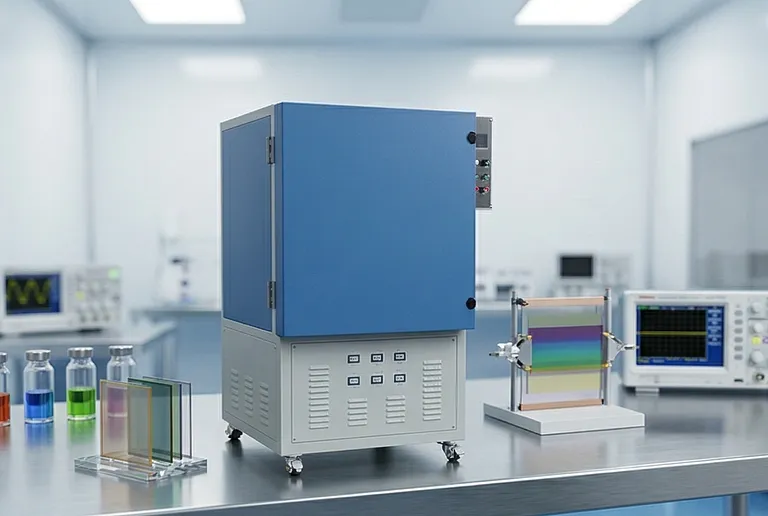
The solution lies in moving away from atmospheric sintering altogether. An industrial vacuum furnace solves the root cause by maintaining a precisely controlled low-pressure environment—typically around 5 mbar.
At KINTEK, our vacuum furnaces are engineered to handle this delicate balance. By removing the air and harmful atmospheric components like oxygen, nitrogen, and water vapor, the furnace acts as the ultimate inert environment.
How KINTEK’s Vacuum Technology Fixes the Problem:
- Stops Oxidation at the Source: By maintaining a vacuum of 5 mbar, we eliminate the oxygen that degrades the ITO layer, preserving its high conductivity.
- Stabilizes the Tetravalent State: The vacuum environment prevents the reduction of TiO2 nanoparticles. This ensures your electrodes remain transparent and provide the high-contrast performance required for premium electrochromic products.
- Ensures Uniformity: Our furnaces provide exceptional temperature uniformity throughout the chamber, meaning every electrode in the batch—from the center to the edge—undergoes the exact same transformation.
This isn't just a furnace; it is a precision tool designed specifically to protect the chemical integrity of sensitive thin films.
Beyond the Fix: Opening New Doors for Smart Technology
When you solve the problem of atmospheric interference, the focus shifts from "fixing failures" to "optimizing performance."
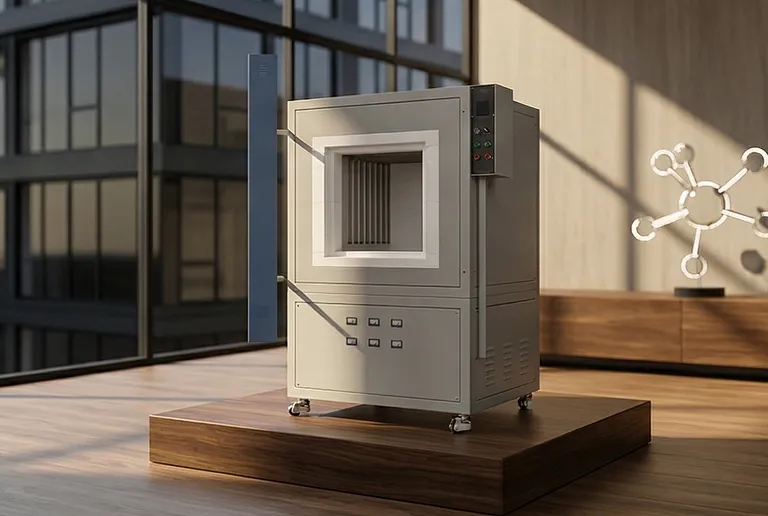
By utilizing a KINTEK vacuum furnace, you unlock several new competitive advantages:
- Superior Surface Finish: The absence of air results in cleaner, brighter parts with fewer surface defects.
- Faster Turnaround: Advanced vacuum systems allow for faster cooling and quenching than traditional conveyor furnaces, shortening your production cycle.
- High-Purity Results: The vacuum environment aids in removing adsorbed gases and impurities like silicon or magnesium, effectively purifying your materials during the heat cycle.
Whether you are developing next-generation smart windows, high-efficiency solar cells, or advanced dental ceramics, the ability to control the sintering atmosphere is the difference between a prototype and a market-ready product.
The challenges of electrode sintering are complex, but the solution starts with the right environment. At KINTEK, we don't just provide equipment; we provide the thermal expertise to help you overcome your most difficult material hurdles. Whether you need a customizable vacuum furnace for R&D or a high-capacity system for industrial production, our team is ready to help you achieve perfect transparency and conductivity in every batch. Contact Our Experts today to discuss your specific project requirements and find the ideal furnace configuration for your application.
Related Products
- Vacuum Heat Treat Sintering Furnace Molybdenum Wire Vacuum Sintering Furnace
- Small Vacuum Heat Treat and Tungsten Wire Sintering Furnace
- 9MPa Air Pressure Vacuum Heat Treat and Sintering Furnace
- Vacuum Heat Treat Sintering Furnace with Pressure for Vacuum Sintering
- 2200 ℃ Tungsten Vacuum Heat Treat and Sintering Furnace
Related Articles
- Why Your Stainless Steel Parts Fail Pressure Tests—and How Vacuum Sintering Fixes the Density Gap
- Why Your Sintered Parts Fail: It’s Not Just About Heat, But Pressure and Purity
- Beyond the Program: Why Your Sintering Fails and How to Guarantee Uniformity
- Why Your 3D-Printed Maraging Steel Parts Aren't Performing—And How to Fix the Structural Weakness
- Why Your Ti-6Al-4V Parts Crack Under Pressure—The Hidden Science of Vacuum Heat Treatment



















