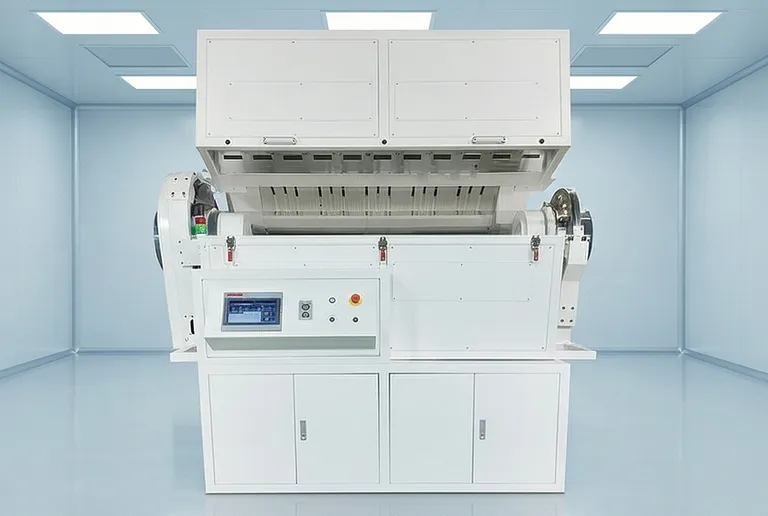
The High-Temperature Paradox: When Heat Destroys the Very Coating It’s Meant to Strengthen
You’ve engineered a Cr-Al-BN (Chromium-Aluminum-Boron-Nitride) coating designed for extreme hardness and thermal stability. But during the final heat treatment, something goes wrong. Instead of a refined, high-performance surface, you’re left with a brittle layer that flakes, peels, or shows signs of "mystery" oxidation.
For many materials scientists and engineers, this is a frustratingly familiar scene. You follow the temperature protocols to the letter, yet the resulting microstructure is inconsistent. These failures aren't just lab-scale headaches; they translate into premature component failure, rejected batches, and spiraling R&D costs.
Why Conventional "Inert" Solutions Often Fall Short
When coatings fail to perform, the typical response is to tweak the temperature or increase the flow of "inert" gases like nitrogen or argon. However, even high-purity gases can harbor trace amounts of moisture or oxygen—enough to wreak havoc at 800°C or higher.
The business consequences are significant. A coating that lacks proper structural integrity leads to:
- Delamination: Mechanical bonds fail under operational stress.
- Accelerated Wear: Without the correct phase transitions, the coating is softer than designed.
- Inconsistent Quality: Samples from the same batch show wildly different performance metrics.
The problem isn't usually the temperature itself; it's the environment in which that temperature is delivered.
The Invisible Enemy: Why Oxygen and Residual Stress are the Real Culprits
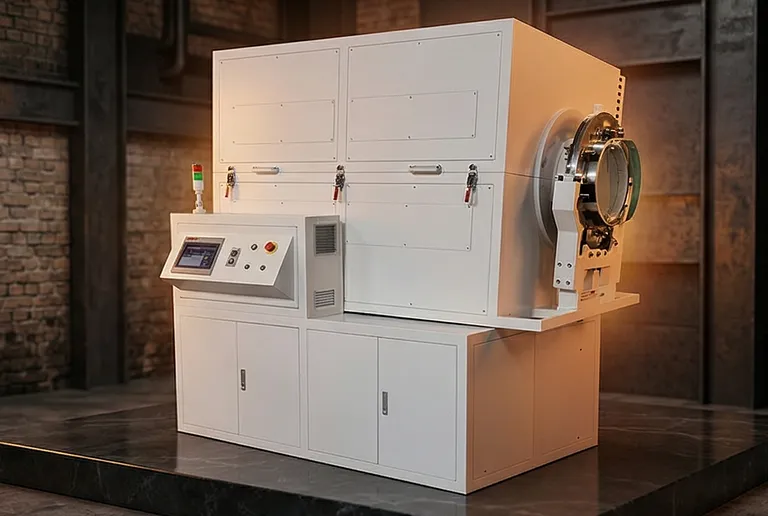
To understand why your coatings are underperforming, we have to look at what happens at the atomic level during heating. In a standard atmosphere—or even a poorly controlled "inert" environment—two things prevent the coating from reaching its potential:
- Uncontrolled Oxidation: At temperatures like 800°C, chromium and aluminum have a high affinity for oxygen. Even minuscule levels of oxygen cause "non-controlled oxidation," forming weak oxide layers that prevent the elements from bonding correctly.
- Stagnant Diffusion: For a coating like Cr-Al-BN to become truly stable, atoms must move. They need to diffuse to form intermediate phases like Cr2B and Cr2N. Without a pristine environment, this diffusion is blocked or diverted into forming brittle impurities.
This is where the transition from a "mechanical bond" (where the coating just sits on top of the substrate) to a "chemical bond" (where the coating and substrate share atoms) fails to occur.
The Solution: Precision Vacuum Environments as a Catalyst for Transformation
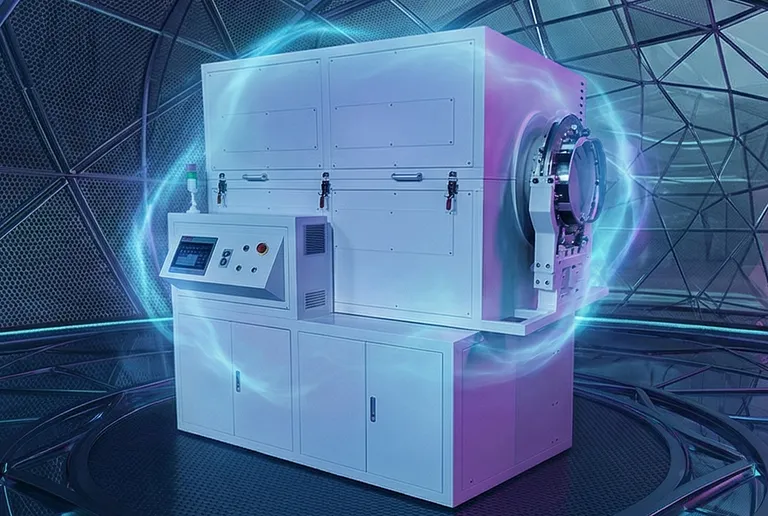
True microstructural transformation requires more than just a furnace; it requires a high-vacuum chamber that acts as a "structural reset" button.
By utilizing a series of specialized pumps—ranging from roughing to high-performance diffusion pumps—a high-vacuum furnace reduces oxygen partial pressure to near-zero levels. This unreactive environment serves a critical dual purpose:
- Driving Phase Equilibrium: In the absence of oxygen, thermal energy is used exclusively to promote internal diffusion. This allows for the controlled formation of those essential Cr2B and Cr2N phases, which refine the microstructure and provide the "atomic glue" needed for structural stability.
- Stress Relaxation and Grain Refinement: High-vacuum treatment facilitates the release of residual stresses left over from the mechanical alloying or spraying process. In specialized equipment like vacuum hot presses, the combination of heat and mechanical pressure can even reduce Secondary Dendrite Arm Spacing (SDAS), significantly refining the grain structure.
KINTEK High-Vacuum Furnaces are engineered specifically to handle these delicate transitions. Whether it's processing Cr-Al-BN coatings at 800°C or driving alloy homogenization at 1450°C, our systems provide the "strictly controlled environment" necessary to turn a superficial coating into an integrated, high-strength protective shield.
Beyond the Fix: Unlocking New Material Potential
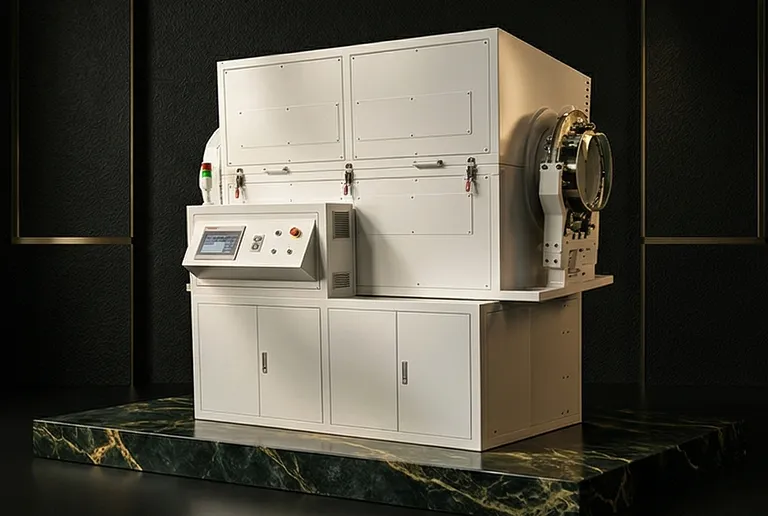
When you solve the root cause of oxidation and stress, you aren't just "fixing" a problem; you're opening the door to new engineering possibilities.
With a stable, vacuum-refined microstructure, your components can now achieve:
- Chemical Bonding: Transforming mechanical adhesion into a deep-seated chemical bond that is virtually immune to spalling.
- Predictable Hardness: Achieving the exact phase structures (like FeAl intermetallics or specific hcp phases) required for extreme industrial applications.
- Enhanced Longevity: Reducing porosity and grain size leads to higher transverse rupture strength and superior wear resistance.
By mastering the vacuum environment, you move from "hoping the batch turns out" to "engineering the exact result every time."
Whether you are struggling with coating delamination or looking to refine the grain structure of advanced alloys, the right thermal environment is the deciding factor in your project's success. At KINTEK, we don't just provide furnaces; we provide the precision tools required to master microstructural transformation. Contact our technical team today to discuss how our customizable high-vacuum and atmosphere solutions can solve your specific material challenges and accelerate your development cycle. [Contact Our Experts](#ContactForm)
Related Products
- 2200 ℃ Graphite Vacuum Heat Treat Furnace
- 2200 ℃ Tungsten Vacuum Heat Treat and Sintering Furnace
- Molybdenum Vacuum Heat Treat Furnace
- 9MPa Air Pressure Vacuum Heat Treat and Sintering Furnace
- Vacuum Heat Treat Sintering Furnace Molybdenum Wire Vacuum Sintering Furnace
Related Articles
- Why Your Ti-6Al-4V Parts Crack Under Pressure—The Hidden Science of Vacuum Heat Treatment
- Why Your High-Strength Titanium Biomaterials Are Brittle—and How Vacuum Heat Treatment Fixes It
- The Unseen Failure Point: Why Your Vacuum Furnace's Graphite Is Costing You More Than You Think
- Why Your 3D-Printed Maraging Steel Parts Aren't Performing—And How to Fix the Structural Weakness
- The Art of Absence: How Vacuum Furnaces Forge Material Perfection



















