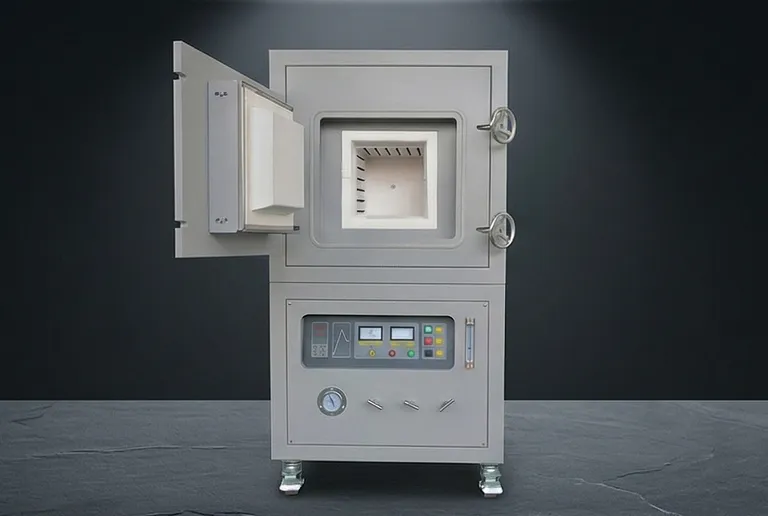
The Invisible Stress Within Your Perfect 3D Print
You’ve just completed a complex Ti-6Al-4V component using Selective Laser Melting (SLM). To the naked eye, the geometry is flawless, the precision is unmatched, and the turnaround time was a fraction of traditional machining. But underneath that surface, the material is "screaming."
If you were to put this part directly into service, you would likely face a rude awakening. Despite its high-tech origins, the part is often brittle, prone to sudden cracking, or dimensions may warp unexpectedly. Many engineers find themselves in a cycle of "print and pray," hoping the next batch doesn't fail a fatigue test or crack during a simple post-processing step like polishing.
The High Cost of the "Quick Fix"
When faced with brittle 3D-printed titanium, the instinctive reaction is to perform a standard stress-relief heat treatment. However, treating Ti-6Al-4V like ordinary steel or aluminum is a costly mistake.
If you use a standard atmosphere furnace, you introduce titanium’s greatest enemy: oxygen. At high temperatures, titanium becomes chemically aggressive, devouring oxygen and nitrogen from the air. This creates an "alpha case"—a brittle, hard layer on the surface that acts as a gateway for cracks. Furthermore, hydrogen absorption can lead to embrittlement, making the part fail far below its rated load.
The business consequences are clear: delayed aerospace certifications, medical implants that fail premature safety checks, and thousands of dollars in wasted raw powder and machine time.
The Root Cause: Why SLM Changes the Rules of Metallurgy
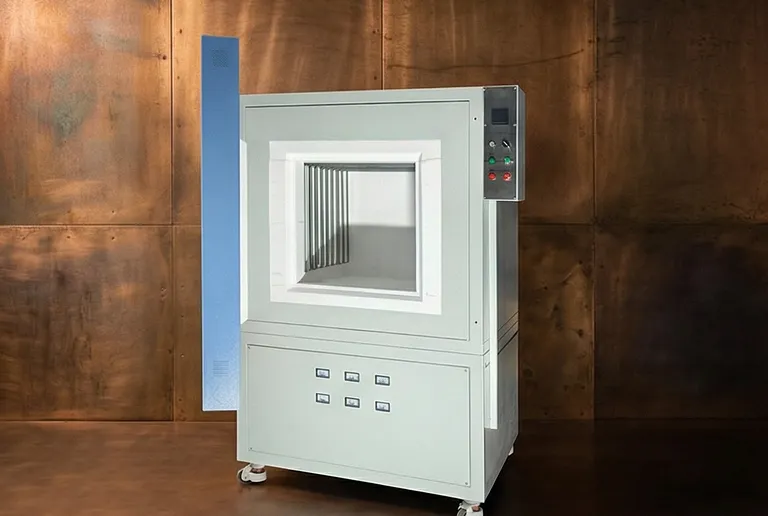
To understand why these parts fail, we have to look at what the laser actually does to the metal. During SLM, a high-energy laser melts the titanium powder instantly, followed by an incredibly rapid cooling rate.
This "thermal shock" does two things:
- It Traps Residual Stress: The metal contracts so fast that it builds up internal tension. Without intervention, these stresses can exceed the yield strength of the material, causing the part to pull away from its supports or warp.
- It Creates Martensite: The rapid cooling "freezes" the titanium in a metastable martensitic structure. While martensite is hard, it lacks the ductility (plasticity) required for critical industrial applications.
To transform this brittle, stressed state into a stable, high-performance material, you must transition the microstructure into a "lamellar alpha+beta phase." This isn't just a matter of heat; it’s a matter of environment.
The Solution: Precision Vacuum Annealing
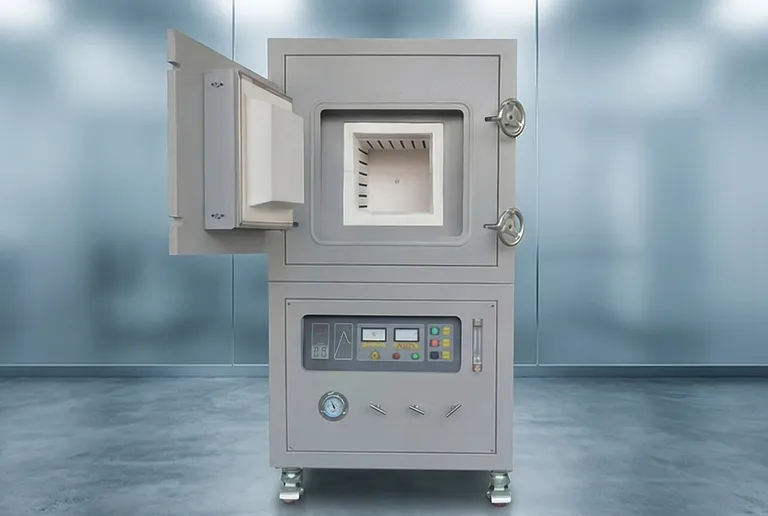
The only way to fix the internal structure of Ti-6Al-4V without destroying its chemistry is through a high-vacuum annealing furnace. This isn't just a heater; it is a controlled environment designed to address the specific vulnerabilities of titanium.
1. Oxygen-Free Stress Relief
By soaking the material at precise intervals—often a two-stage process involving temperatures like 350°C and 850°C—a vacuum furnace allows the internal stresses to "relax" without the risk of oxidation or hydrogen embrittlement. Because there is no air to react with, the chemical purity of your alloy remains pristine.
2. Microstructure Homogenization
In a KINTEK vacuum tube furnace, the heat is applied with extreme uniformity. This allows the brittle martensite to decompose into a stable alpha+beta phase. The results are measurable: research shows that proper solution and aging treatments (e.g., 850°C solution followed by 550°C aging) can refine the grain structure, increasing the Vickers hardness from approximately 317 HV to 362 HV, significantly improving wear resistance.
3. Preparing for the Final Finish
By establishing a stable, stress-free foundation, the vacuum annealing process makes subsequent steps, such as laser polishing or final machining, predictable and safe. The material becomes ductile enough to meet rigorous fatigue strength standards, ensuring the part performs as well as—or better than—its forged counterpart.
Beyond the Fix: Unlocking Titanium’s Full Potential
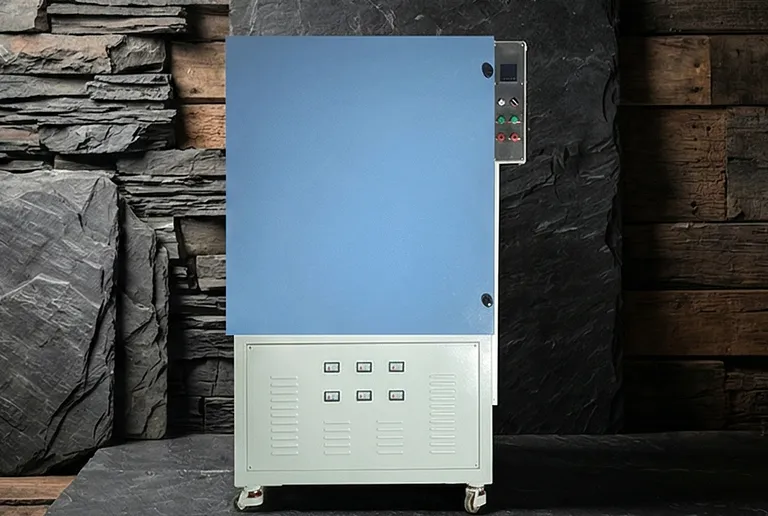
Once you master the post-processing of additive manufactured titanium, the "impossible" becomes routine. With the residual stress eliminated and the microstructure stabilized, you are no longer just making "prototypes"; you are producing flight-ready aerospace brackets, high-cycle fatigue medical joints, and high-performance automotive components.
You can push the boundaries of lightweighting and complexity, knowing that the internal integrity of the metal is as high-quality as the digital design on your screen. The bottleneck isn't the 3D printer; it’s the thermal environment that follows. When you control that environment, you control the final quality of your innovation.
Whether you are struggling with inconsistent mechanical properties or looking to scale your SLM production to industrial standards, our team of specialists can help you design the perfect thermal post-processing workflow. Let’s ensure your titanium components are as strong as your designs. Contact Our Experts to discuss your specific Ti-6Al-4V challenges and explore our range of customizable high-vacuum furnaces.
Related Products
- Small Vacuum Heat Treat and Tungsten Wire Sintering Furnace
- Vacuum Heat Treat Sintering and Brazing Furnace
- Vacuum Heat Treat Sintering Furnace Molybdenum Wire Vacuum Sintering Furnace
- Vacuum Heat Treat Sintering Furnace with Pressure for Vacuum Sintering
- Vacuum Sealed Continuous Working Rotary Tube Furnace Rotating Tube Furnace
Related Articles
- Why Your Stainless Steel Parts Fail Pressure Tests—and How Vacuum Sintering Fixes the Density Gap
- Why Your Electrochromic Electrodes Fail During Sintering—And How Vacuum Control Restores Transparency
- Why Your Sintered Parts Fail: It’s Not Just About Heat, But Pressure and Purity
- Beyond the Program: Why Your Sintering Fails and How to Guarantee Uniformity
- Why Your 3D-Printed Maraging Steel Parts Aren't Performing—And How to Fix the Structural Weakness



















