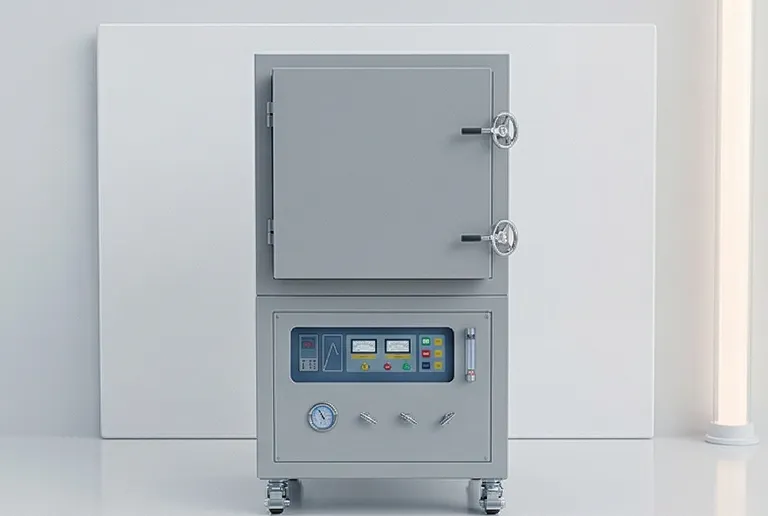
Is Your "Precision" Data Built on a Foundation of Sand?
Imagine you are 300 hours into a 400-hour high-temperature oxidation trial for a new NiCrAlY coating. You have meticulously prepared your samples, calibrated your scales, and set your muffle furnace to a precise 1,100°C to simulate the brutal environment of a gas turbine. But when you finally weigh the results, the numbers make no sense. The oxidation weight gain is inconsistent, or worse, the sample appears to have lost mass in a way that defies the laws of chemistry.
For many researchers, this is a frustratingly common reality. After weeks of testing, the data remains "noisy," and the kinetics of the Thermally Grown Oxide (TGO) layer—the very thing that determines the lifespan of a turbine blade—remain a mystery. Usually, the blame is placed on the coating process or the furnace’s temperature stability. However, the real culprit is often far more mundane and much harder to spot: the crucible itself.
The Cost of the "Clean Enough" Assumption
When faced with inconsistent oxidation data, the standard response is often to "clean" the equipment. Researchers might wash their alumina crucibles with high-purity solvents or bake them at low temperatures (100°C–200°C) to remove surface moisture.
While these steps seem logical, they fail to address the core issue. Because these "solutions" only scratch the surface, the experimental data continues to suffer from "phantom weight" fluctuations. In a commercial R&D setting, this isn't just a minor scientific annoyance; it’s a significant business risk. Inaccurate data leads to:
- Project Delays: Repeating a 400-hour soak time because of unreliable baselines wastes weeks of laboratory time.
- Material Waste: Expensive nickel-based substrates and specialized coatings are consumed in failed trials.
- Compromised Safety: If oxidation resistance is overestimated due to bad data, the resulting components could fail prematurely in the field, leading to catastrophic turbine damage.
The Root Cause: The Ghost in the Porous Ceramic
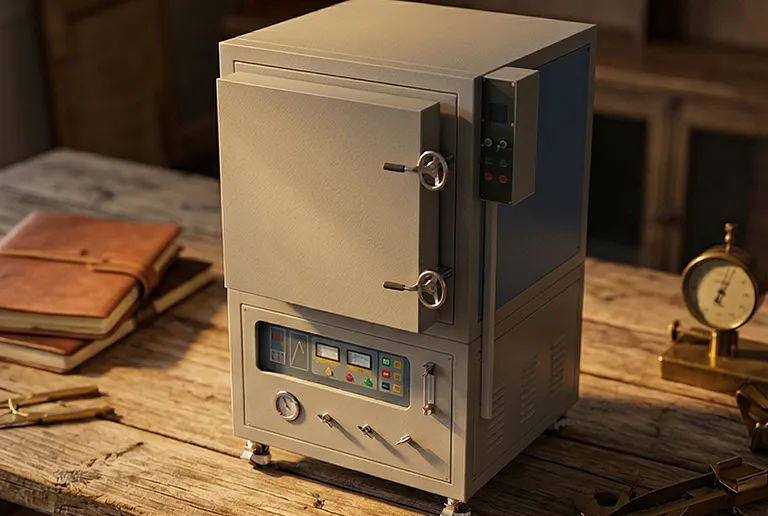
To understand why your measurements are fluctuating, we have to look at the microscopic structure of the crucible. High-purity ceramic crucibles, while chemically inert, are slightly porous. They act like a sponge for more than just liquid water; they adsorb atmospheric moisture and trap volatile impurities deep within their matrix.
When you begin an oxidation experiment at 1,050°C, the crucible doesn't just sit there. It begins to "outgas." As those trapped impurities and deeply embedded water molecules evaporate at high temperatures, the crucible itself loses mass.
If you haven't accounted for this, you are effectively trying to measure the weight gain of a coating (which is often just a few milligrams) while the vessel holding it is losing weight at the same time. This overlap creates a "net mass" calculation that is fundamentally flawed. You aren't just measuring the formation of the protective α-Al2O3 film; you are measuring the "ghost" of the crucible's hidden moisture.
The Solution: Achieving "Constant Weight" Through Pre-Drying
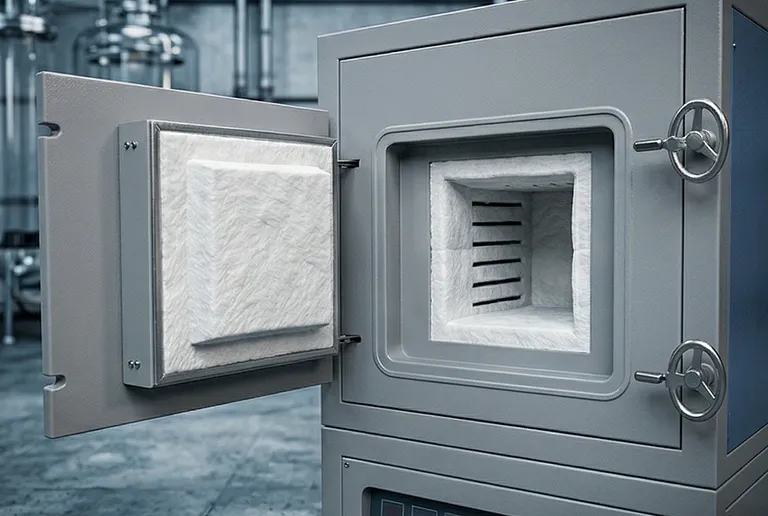
The only way to eliminate this variable is to reach what scientists call "constant weight" before the actual experiment begins. This requires a high-temperature pre-drying phase that mirrors or exceeds the conditions of the actual test.
In NiCrAlY coating experiments, this means placing the crucibles in a high-temperature muffle furnace at 1,050°C. At this energy level, all adsorbed moisture and volatile impurities are thoroughly purged. The process is repeated until the crucible’s mass no longer changes between weighings.
To do this effectively, you need a furnace that offers:
- High-Temperature Capability: A standard oven won't work; you need a muffle furnace capable of sustained 1,050°C+ operation.
- Thermal Uniformity: Every crucible in the batch must experience the same thermal field to ensure uniform outgassing.
- Contamination Control: The furnace environment must be clean to prevent the crucibles from picking up new impurities during the drying process.
KINTEK’s high-temperature muffle furnaces are engineered specifically for this level of precision. By providing a stable thermal field and a controlled environment, our equipment ensures that when you finally place your NiCrAlY sample into the crucible, the vessel is a true "zero" on your balance—chemically inert and mass-stable.
Beyond the Fix: Unlocking True Kinetic Insights
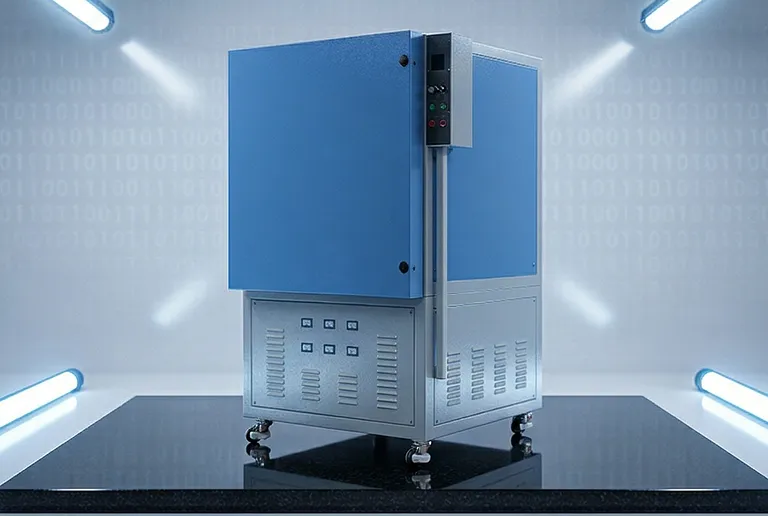
Once you have eliminated the "phantom weight" of your crucibles, the quality of your research changes overnight. Instead of fighting with noisy data, you can begin to see the true behavior of your materials.
With a stable baseline, you can accurately evaluate how elements like aluminum and chromium react to form the TGO layer. You can confidently simulate 900°C molten salt corrosion or 1,100°C long-term oxidation, knowing that every milligram of weight gain is a real reflection of the coating’s performance.
This precision allows you to move from "troubleshooting" to "discovery"—enabling you to develop thinner, lighter, and more durable coatings that push the boundaries of gas turbine efficiency.
Whether you are perfecting NiCrAlY coatings or exploring the crystalline structures of new spinel materials, your results are only as reliable as your baseline. Don't let a "dirty" crucible undermine your next breakthrough. Contact Our Experts today to discuss how KINTEK’s high-temperature solutions can bring total precision to your laboratory work.
Related Products
- High Temperature Muffle Oven Furnace for Laboratory Debinding and Pre Sintering
- 1700℃ Controlled Inert Nitrogen Atmosphere Furnace
- 1200℃ Controlled Inert Nitrogen Atmosphere Furnace
- 1700℃ High Temperature Laboratory Tube Furnace with Alumina Tube
- 1400℃ High Temperature Laboratory Tube Furnace with Alumina Tube
Related Articles
- The Hidden Saboteur in Your HT-LiCoO2 Synthesis: Why Precise Ramp Rates Can Make or Break Your Battery Materials
- Why Your High-Temperature Experiments Fail: The Hidden Flaw in Your Furnace
- Why High-Purity Gas Fails Your High-Temp Brazing—And How Mono-Silane Doping Fixes It
- Your Furnace Meets Spec, So Why Are Your Results Inconsistent?
- Why Your Muffle Furnace Might Be Masking Your Alloy Kinetics—And How to Fix It














