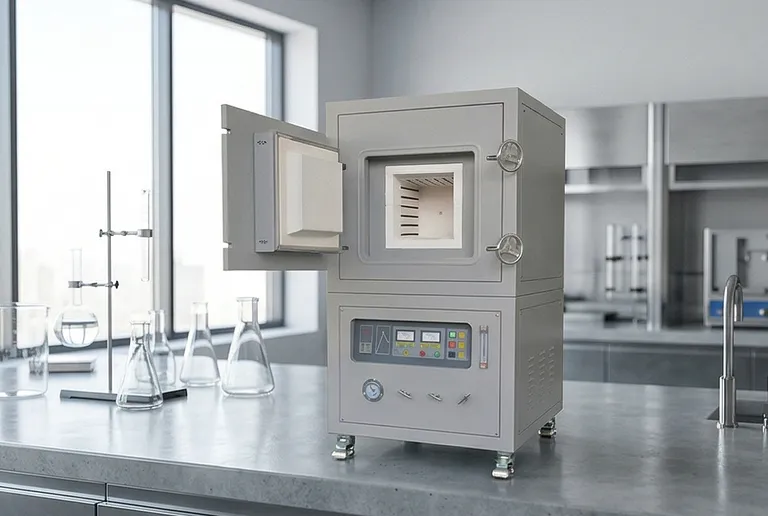
The Frustration of the "Uneven Batch"
Imagine you’ve just completed a high-stakes vacuum quenching process. Your precision tools look perfect—clean, bright, and free from oxidation. You move them into the tempering furnace to achieve the final desired hardness. But when the cycle ends and you test the batch, you find a frustrating discrepancy: the workpieces on the outer edges meet every specification, but the items in the center of the load are slightly under-tempered.
In the world of high-end manufacturing, "close enough" is a recipe for failure. Whether you are producing aerospace components or medical instruments, inconsistent tempering leads to unpredictable mechanical properties, potential field failures, and the high cost of scrapped parts or re-processing.
The Common Struggle: Chasing the Temperature Ghost
When faced with temperature gradients (the difference between the hottest and coolest spots in a furnace), many operators try the "obvious" fixes. They might increase the soaking time, hoping the heat eventually "soaks" into the center. Or, they might bump up the setpoint temperature.
However, these workarounds come with heavy penalties:
- Wasted Energy: Longer cycles drive up utility costs and reduce throughput.
- Surface Degradation: Over-tempering the outer parts can compromise the surface benefits gained during vacuum quenching, such as hardness and corrosion resistance.
- Project Delays: Solving these inconsistencies through trial and error can push delivery dates back by days or weeks.
The reality is that these aren't "fixes"—they are masks for a fundamental engineering problem that heat alone cannot solve.
The Root Cause: Why Square Corners Stifle Your Progress
The secret to uniform tempering in a vacuum environment isn't just about the heating elements; it’s about fluid dynamics. During the tempering process, gas must circulate through the load to transfer heat.
Historically, many vacuum furnaces used a square cross-section for their central air channels. While easier to manufacture, square channels have a hidden flaw: airflow resistance.
In a square channel, air tends to "bottle up" in the corners, creating pockets of turbulence and "dead zones" where the gas slows down. This resistance prevents the hot gas from penetrating the dense core of your workpiece load. Because the airflow velocity drops as it tries to navigate these corners, the center of the load remains significantly cooler than the perimeter, creating the dreaded temperature gradient.
The Solution: The Power of the Circle
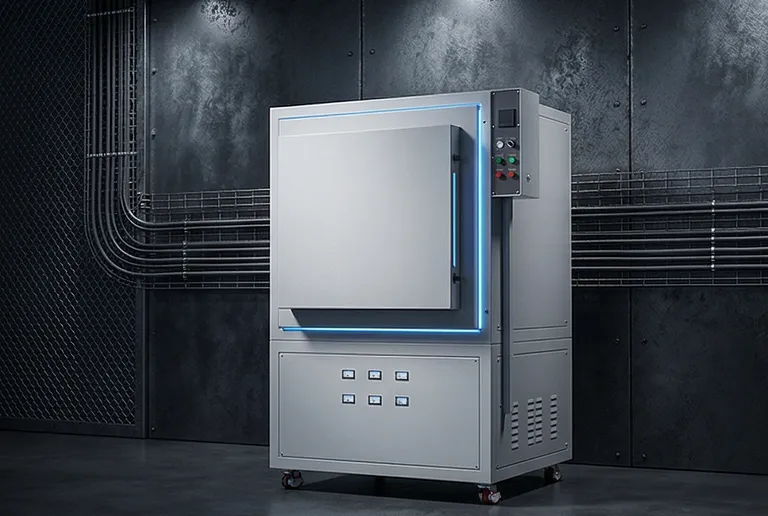
To solve this, modern high-performance vacuum tempering furnaces have moved away from square designs in favor of a circular cross-section. This isn't an aesthetic choice; it is a calculated engineering optimization.
By changing the central channel to a circular geometry, we fundamentally change how gas behaves:
- Reduced Resistance: A circular path allows gas to glide smoothly along the walls, eliminating the "corner drag" found in square designs.
- Optimized Turbulence: Instead of chaotic, slowing turbulence, the circular design guides the gas in a controlled manner, maintaining high kinetic energy.
- Core Penetration: Because the resistance is lower, the airflow velocity in the center of the channel increases significantly. This ensures that the hot gas reaches the very heart of the load at the same time it hits the edges.
At KINTEK, we integrate these fluid dynamics principles into our vacuum furnace designs. Our equipment is engineered to ensure that every workpiece—whether it’s on the bottom left or the dead center—undergoes synchronized tempering. This preserves the integrity of your vacuum quenching, preventing oxidation and maintaining that critical, mirror-smooth finish.
Beyond the Fix: New Possibilities for Your Lab
When you eliminate temperature gradients, you aren't just "fixing a problem"; you are unlocking a higher level of operational capability.
With a circular-channel furnace, you can:
- Process Larger Batches: Confidently pack your furnace to its maximum capacity without worrying about "cold spots."
- Shorten Cycle Times: Achieve uniform temperature faster, allowing you to move to the next project sooner.
- Guarantee Repeatability: Whether you run a batch today or six months from now, the aerodynamic consistency ensures the results are identical.
By understanding the physics of airflow, you move from "hoping" for a good batch to "knowing" your results will be perfect every time.
At KINTEK, we believe that precision lab equipment should be built around the unique challenges of your specific materials and processes. Whether you are dealing with complex geometries or demanding metallurgical standards, our team is ready to help you optimize your thermal processing. Let’s work together to turn your most difficult heat treatment hurdles into a streamlined, reliable competitive advantage. Contact Our Experts
Related Products
- 2200 ℃ Tungsten Vacuum Heat Treat and Sintering Furnace
- 2200 ℃ Graphite Vacuum Heat Treat Furnace
- Vacuum Heat Treat Sintering Furnace Molybdenum Wire Vacuum Sintering Furnace
- Molybdenum Vacuum Heat Treat Furnace
- Small Vacuum Heat Treat and Tungsten Wire Sintering Furnace
Related Articles
- Why Your High-Strength Titanium Biomaterials Are Brittle—and How Vacuum Heat Treatment Fixes It
- Why Your Alloy Phase Separation Observations Are Inconsistent—And the "Invisible" Variable You’re Missing
- The Unseen Engine: Why Graphite Dominates High-Temperature Vacuum Furnaces
- Heat, Void, and Control: Designing the Heart of a High-Temperature Vacuum Furnace
- The Paradox of Strength: Why Graphite Dominates High-Temperature Vacuum Furnaces



















