The High-Hardness Trap: Why Your Best Quench Might Be a Ticking Time Bomb
You’ve successfully navigated the quenching stage. The steel has reached its peak hardness, and on the surface, the project looks like a success. But beneath that hardened exterior, the material is under immense internal duress.
In metallurgical circles, a freshly quenched part is often a "ticking time bomb." The rapid cooling that creates the desired martensite structure also creates massive internal stresses. Without immediate and precise intervention, these parts are prone to microscopic cracking, dimensional warping, or—worse—catastrophic brittle failure the moment they are put into service.
If you have ever seen a "perfect" component crack sitting on a lab bench overnight, you have experienced the hidden volatility of untempered steel.
The Common Struggle: Why "Roughly Hot" is Not Enough
When faced with the need to stabilize steel, many labs treat tempering as an afterthought—a simple "reheating" process. The temptation is to use generic ovens or aging furnaces that lack sophisticated thermal control.
The results of this approach are frustratingly inconsistent:
- Dimensional Drift: Parts that pass inspection today but fail to fit into assemblies a week later because the microstructure hasn't been stabilized.
- Inconsistent Hardness: One batch meets the Rockwell C requirement, while the next is inexplicably soft or dangerously brittle.
- Premature Wear: Tools like High-Speed Steel failing in the field because the "red hardness" (the ability to stay hard at high temperatures) wasn't properly developed during the tempering cycle.
These failures aren't just technical setbacks; they are expensive. They lead to scrapped prototypes, delayed R&D cycles, and a loss of confidence in laboratory data.
The Science of Microstructure: Why Precision is the Only Solution
To understand why "approximate" temperatures fail, we must look at the atoms. Tempering is not just about warming up the metal; it is a controlled chemical and physical transformation.
1. The Stress-Relief Threshold
At a basic level, maintaining a stable, low-temperature environment (such as precisely 165°C) is required to reduce the brittleness of the martensite structure without losing the hardness you worked so hard to achieve during quenching. Even a 5-degree deviation can shift the balance between toughness and strength.
2. Managing Retained Austenite
In advanced materials like medium-manganese hull steel, the stakes are even higher. During a 620°C tempering stage, the furnace’s precision directly dictates the volume fraction and stability of reverted austenite (RA). This microscopic phase is the "secret sauce" that determines the steel’s strength-ductility product. If the thermal field isn't uniform, your material properties will vary across the very same specimen.
3. Secondary Hardening and Precipitation
For High Vanadium High Speed Steels, the goal is often "secondary hardening." This requires multiple, stable constant-temperature cycles to transform residual austenite into martensite and induce the precipitation of nanoscale carbides. These precipitates are what give the steel its wear resistance. This process requires a furnace that can follow strict heating curves—sometimes as slow as 5°C/h—to allow for the delicate diffusion of carbon atoms.
The Solution: A Furnace Designed for the "Molecular Dance"
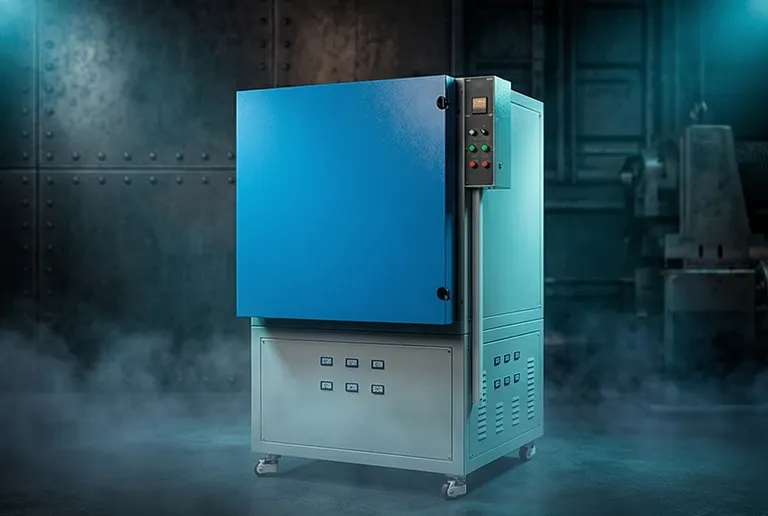
A KINTEK laboratory precision tempering furnace is not simply a heating box; it is a precision instrument designed to govern these atomic transformations.
To solve the root cause of inconsistent heat treatment, our furnaces focus on three critical pillars:
- Isothermal Stability: By providing a perfectly uniform thermal field, we ensure that the "pinning pressure" of precipitate particles (like NbC or AlN) remains consistent across the grain boundaries, preventing erratic grain growth.
- Programmable Thermal Curves: Our systems allow researchers to simulate industrial coiling or slow-cooling processes by following defined heating and cooling ramps. This is essential for studying the late-stage stabilization of Martensite-Austenite (MA) constituents.
- Atmospheric Integrity: Whether your process requires a vacuum, a specific gas atmosphere, or a simple muffle environment, KINTEK ensures the chemical composition of your steel surface remains uncompromised during the hours-long tempering soak.
Beyond the Fix: Opening New Frontiers in Material Science
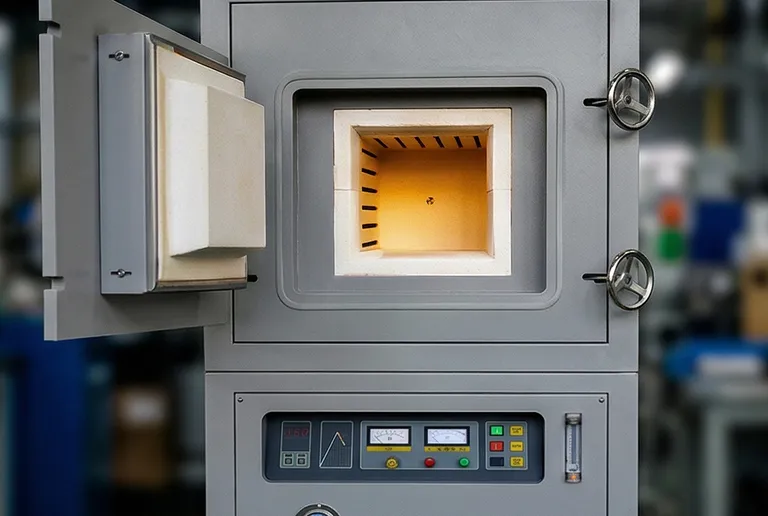
When you move from "approximate tempering" to "precision thermal management," the focus of your lab shifts from troubleshooting failures to pioneering new materials.
With a stabilized, predictable tempering process, you can achieve what was previously impossible:
- Accelerated Tooling Development: Achieve maximum red hardness and wear resistance in high-vanadium alloys with 100% repeatability.
- High-Ductility Steel Research: Master the balance of strength and toughness in hull steels by perfectly regulating austenite stability.
- Reliable Industrial Scaling: Use precise lab data to accurately simulate large-scale industrial cooling, reducing the risk when moving from the lab to the factory floor.
Solving the tempering puzzle is about more than just stopping cracks; it’s about unlocking the full potential of your metallurgy.
Ready to bring precision to your heat treatment process? Our experts specialize in configuring high-temperature solutions tailored to the specific metallurgical challenges of your industry. Whether you are working with specialized carbides or high-performance hull steels, we can help you design a thermal workflow that ensures consistency every time. Contact Our Experts today to discuss your project requirements.
Related Products
- 2200 ℃ Tungsten Vacuum Heat Treat and Sintering Furnace
- High Temperature Muffle Oven Furnace for Laboratory Debinding and Pre Sintering
- 1700℃ Controlled Inert Nitrogen Atmosphere Furnace
- 1800℃ High Temperature Muffle Oven Furnace for Laboratory
- 1700℃ High Temperature Muffle Oven Furnace for Laboratory
Related Articles
- Why Your High-Strength Titanium Biomaterials Are Brittle—and How Vacuum Heat Treatment Fixes It
- Why Your Alloy Phase Separation Observations Are Inconsistent—And the "Invisible" Variable You’re Missing
- The Unseen Engine: Why Graphite Dominates High-Temperature Vacuum Furnaces
- Heat, Void, and Control: Designing the Heart of a High-Temperature Vacuum Furnace
- The Paradox of Strength: Why Graphite Dominates High-Temperature Vacuum Furnaces



















