
Vacuum sintering is essential for iron-based friction materials because it prevents the catastrophic oxidation of the metallic iron matrix and the graphite lubricant while simultaneously driving the material to its maximum theoretical density. At the high temperatures required for sintering—typically around 1050°C—exposure to even trace amounts of oxygen would cause the iron to form brittle oxide scales and the graphite to vanish as carbon dioxide gas. By operating in a vacuum, manufacturers can ensure the material retains its intended chemical composition and achieves the mechanical integrity necessary for heavy-duty friction applications.
Core Takeaway: A vacuum sintering furnace serves as a protective, low-pressure environment that preserves critical lubricating phases (graphite) and promotes superior metallurgical bonding, resulting in high-density materials with optimized mechanical properties.
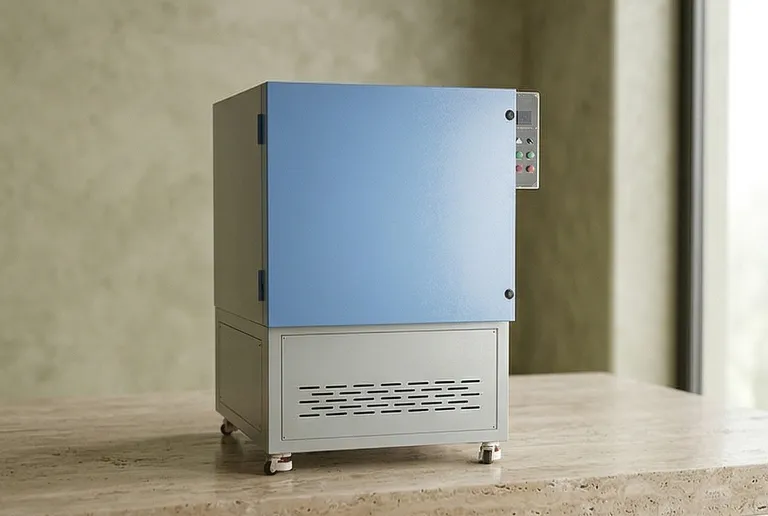
Preservation of Material Integrity
Preventing Metallic Oxidation
Iron-based matrices are highly susceptible to oxidation when heated to sintering temperatures. A vacuum environment effectively excludes oxygen, preventing the formation of oxide scales that would otherwise weaken the bond between powder particles.
Protecting the Graphite Lubricant
Graphite is a vital lubricating phase in friction materials, but it is "easily oxidizable" at high temperatures. Without a vacuum, the graphite would react with oxygen and be lost to the atmosphere, stripping the finished product of its required tribological properties.
Enhancing Chemical Purity
The vacuum process removes adsorbed gases and volatile impurities from the surface of the powder particles. This cleaning effect ensures that grain boundaries are free of inclusions, which is critical for achieving high fracture toughness and structural reliability.
Mechanisms of Superior Densification
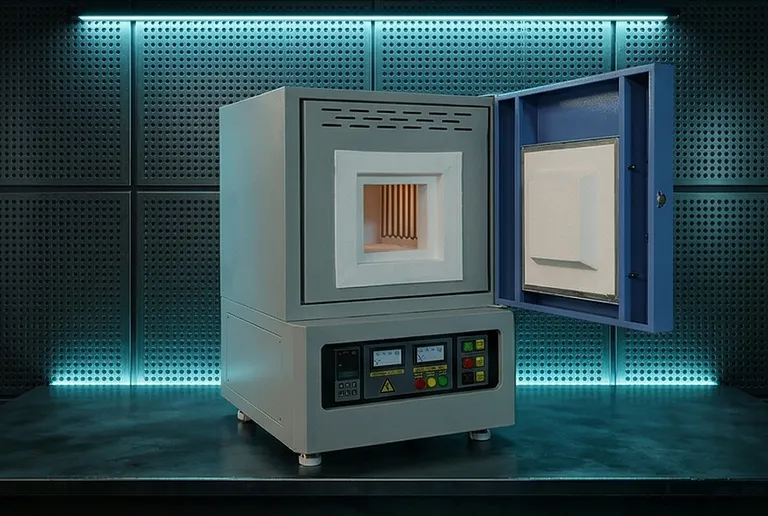
Promotion of Sintering Necks
The low-pressure environment in a vacuum furnace facilitates the formation of sintering necks between metallic particles. This leads to more robust diffusion bonding and better wetting between the various components of the composite material.
Spherical Pore Elimination
During the final sintering stage, the vacuum helps transform irregular, angular pores into spherical voids. This specific pore morphology significantly reduces internal stress concentrations, leading to a higher relative density.
Facilitating Gas Discharge
In specialized processes like carbothermal reduction, vacuum conditions allow for the timely discharge of gases produced during the reaction. This ensures that the reduction of iron oxides into a metallic matrix is both efficient and complete.
Understanding the Trade-offs
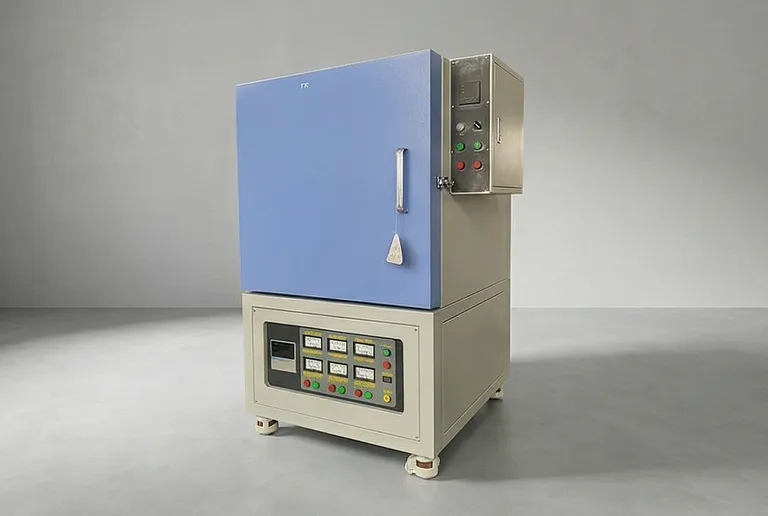
Cost vs. Vacuum Degree
Achieving higher vacuum levels (such as 10^-5 Pa) offers superior protection against oxidation but significantly increases operational and equipment costs. Manufacturers must balance the "neutrality" of the atmosphere with the economic requirements of the project.
Thermal Cycle Management
While vacuum provides an ideal chemical environment, it relies on radiative heating rather than convection, which can lead to longer heating and cooling cycles. This requires precise control to ensure uniform temperature distribution across the sintering workload.
Material Compatibility
While ideal for iron and copper-based composites, the vacuum level must be carefully calibrated for materials with high vapor pressures. If the vacuum is too deep, certain alloying elements may actually vaporize and be lost from the material during the process.
How to Apply This to Your Project
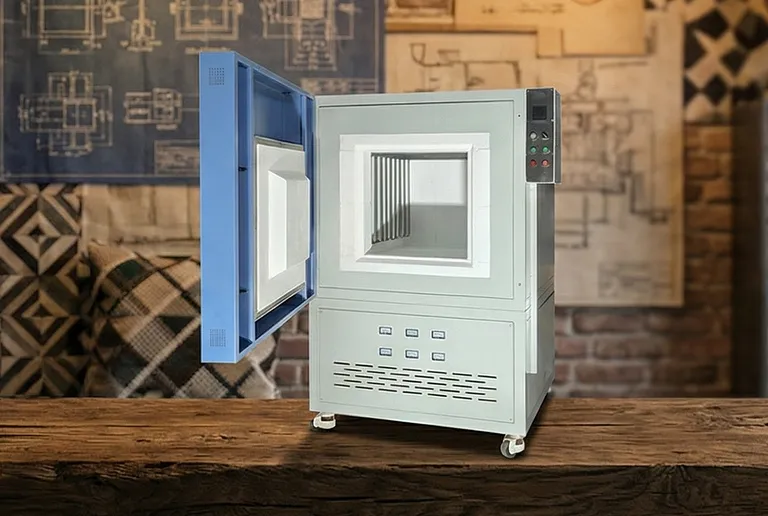
Making the Right Choice for Your Goal
- If your primary focus is maximum mechanical strength: Prioritize a high-vacuum degree (10^-3 Pa or better) to ensure the complete elimination of oxide inclusions and optimal grain boundary bonding.
- If your primary focus is cost-effective mass production: Consult with the furnace manufacturer to find the minimum effective vacuum level (often 10^-1 Pa) that still prevents graphite loss for your specific alloy.
- If your primary focus is complex chemical reduction: Ensure the vacuum system is equipped with high-capacity pumps capable of handling the continuous discharge of reaction gases like CO and CO2.
By strictly controlling the atmosphere and pressure through vacuum sintering, you transform a fragile powder compact into a high-performance engineering material capable of withstanding extreme thermal and mechanical stress.
Summary Table:
| Key Benefit | Mechanism/Action | Impact on Material |
|---|---|---|
| Oxidation Prevention | Excludes oxygen at high temps (1050°C) | Preserves iron matrix and graphite lubricant integrity. |
| Superior Densification | Promotes sintering necks and spherical pores | Increases relative density and mechanical strength. |
| Chemical Purity | Removes adsorbed gases and impurities | Enhances fracture toughness and metallurgical bonding. |
| Gas Discharge | Facilitates carbothermal reduction gases | Ensures complete iron oxide reduction to metallic state. |
Achieve Superior Material Integrity with KINTEK
Don't let oxidation or low density compromise your research or production quality. KINTEK specializes in high-performance laboratory equipment, offering a comprehensive range of vacuum furnaces—including vacuum, tube, muffle, and CVD options—that are fully customizable for your unique sintering requirements.
Whether you need to preserve sensitive graphite phases or achieve maximum theoretical density for iron-based composites, our precision solutions provide the control you need.
Elevate your lab’s sintering capabilities—Contact KINTEK Experts Today to find your perfect high-temperature furnace!
References
- Dajun Zhai, Yanyan Zhang. Effects of rare-earth oxides on the microstructure and properties of Fe-based friction materials synthesized by <i>in situ</i> carbothermic reaction from vanadium-bearing titanomagnetite concentrates. DOI: 10.1039/c9ra03271a
This article is also based on technical information from Kintek Furnace Knowledge Base .
Related Products
- Vacuum Heat Treat Sintering Furnace Molybdenum Wire Vacuum Sintering Furnace
- Vacuum Heat Treat Sintering Furnace with Pressure for Vacuum Sintering
- 9MPa Air Pressure Vacuum Heat Treat and Sintering Furnace
- Small Vacuum Heat Treat and Tungsten Wire Sintering Furnace
- 600T Vacuum Induction Hot Press Vacuum Heat Treat and Sintering Furnace
People Also Ask
- What are the main structural components of a vacuum sintering furnace? Unlock Precision in High-Temperature Processing
- How does vacuum sintering improve dimensional tolerances? Achieve Uniform Shrinkage and Precision
- What is the purpose of setting a mid-temperature dwell stage? Eliminate Defects in Vacuum Sintering
- What are the key components of a vacuum sintering furnace? Essential Parts for Precision Material Processing
- How does vacuum sintering contribute to cost reduction in material processing? Lower Expenses with Superior Parts



















