Rapid air cooling is the preferred method because it serves as a mechanism to "lock in" the atomic structure formed at high temperatures. By subjecting the TS-Ir/MnO2 catalyst to a sudden temperature drop, the process prevents the material from relaxing back to a natural, low-energy state. This preserves specific structural imperfections that are critical for the catalyst's reactivity.
The core objective of this cooling method is strain engineering. Rapid cooling traps internal tensile stress within the lattice, creating a highly active physical structure that would otherwise be lost through slow cooling.
The Mechanics of Strain Retention
Locking in Lattice Distortion
At high temperatures, the atomic lattice of the material undergoes distortion. To utilize this distortion for catalysis, it must be preserved at room temperature.
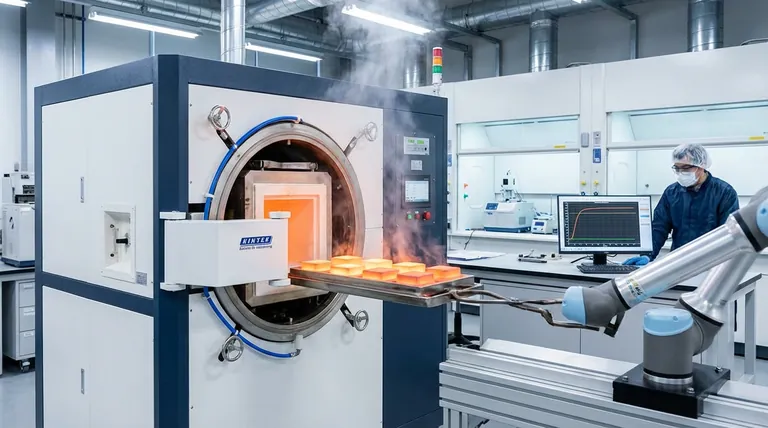
Rapidly transferring the catalyst into the air creates a sharp temperature gradient. This effectively "freezes" the lattice in its distorted state before the atoms have time to rearrange themselves.
Creating Internal Tensile Stress
The primary goal of this rapid cooling is to retain internal tensile stress within the manganese dioxide (MnO2) lattice.
When the material cools instantly, the lattice structures are pulled taut. This stress is not a defect to be avoided, but a functional feature required for the catalyst to work effectively.
Comparing Cooling Methods
The Problem with Furnace Cooling
Furnace cooling is a slow process that allows the material to cool down gradually alongside the furnace environment.
During this slow cooling phase, the material seeks thermodynamic equilibrium. This allows for stress release, causing the atoms to settle into a relaxed, stress-free state. While this might be desirable for structural stability in other materials, it neutralizes the catalytic advantage in this specific context.
The Advantage of Air Cooling
In contrast, rapid air cooling forces the material to bypass this relaxation phase.
By denying the lattice the time to release stress, the process ensures that the tensile-strained states are successfully retained. This method deliberately prevents the material from reaching equilibrium.
Impact on Catalytic Performance
Activating Iridium Sites
The retained tensile stress has a direct impact on the active sites of the catalyst.
Specifically, the stress within the MnO2 lattice results in tensile-strained iridium (Ir) sites. These strained sites exhibit significantly enhanced catalytic activity compared to relaxed iridium sites.
Understanding the Trade-offs
Stability vs. Activity
In materials science, there is often a trade-off between a stable, relaxed structure and a highly active, stressed structure.
Furnace cooling produces a more stable lattice, but it yields a catalyst with lower performance. Rapid cooling produces a "stressed" lattice that is thermodynamically unstable, but this instability is exactly what drives the superior chemical reaction rates. You are trading structural relaxation for peak performance.
Making the Right Choice for Your Synthesis
To ensure you achieve the desired catalytic properties, consider the following approach based on your specific goals:
- If your primary focus is maximizing catalytic activity: You must use rapid air cooling to lock in lattice distortions and generate the necessary tensile-strained iridium sites.
- If your primary focus is establishing a control baseline: You should use furnace cooling to release internal stress, creating a low-activity reference sample for comparison.
By controlling the cooling rate, you are effectively tuning the atomic geometry to maximize the efficiency of the TS-Ir/MnO2 catalyst.
Summary Table:
| Cooling Method | Cooling Rate | Structural State | Internal Stress | Catalytic Activity |
|---|---|---|---|---|
| Rapid Air Cooling | Fast | Distorted/Frozen | High Tensile Stress | Superior (Peak Performance) |
| Furnace Cooling | Slow | Relaxed/Equilibrium | Stress Released | Low (Control Baseline) |
Maximize Your Catalyst Performance with KINTEK Precision Solutions
Precise thermal management is the key to successful strain engineering and lattice distortion control. Whether you need rapid quenching environments or controlled furnace cooling for your TS-Ir/MnO2 synthesis, KINTEK provides the high-performance lab equipment necessary to achieve peak catalytic activity.
Backed by expert R&D and manufacturing, KINTEK offers a comprehensive range of Muffle, Tube, Rotary, Vacuum, and CVD systems. Our lab high-temp furnaces are fully customizable to meet the unique cooling gradients required by your specific research and industrial applications.
Ready to refine your synthesis process? Contact KINTEK today to discover how our custom furnace solutions can elevate your material science outcomes.
References
- Hui Su, Qinghua Liu. Tensile straining of iridium sites in manganese oxides for proton-exchange membrane water electrolysers. DOI: 10.1038/s41467-023-44483-6
This article is also based on technical information from Kintek Furnace Knowledge Base .
Related Products
- Controlled Inert Nitrogen Hydrogen Atmosphere Furnace
- Molybdenum Disilicide MoSi2 Thermal Heating Elements for Electric Furnace
- 1700℃ Controlled Inert Nitrogen Atmosphere Furnace
People Also Ask
- How does hydrogen furnace annealing assist in preparing mechanically alloyed powders for compaction?
- How does atmospheric annealing in a controlled hydrogen furnace affect the cold compaction behavior of metal powders?
- What are the characteristics and uses of hydrogen atmosphere in furnaces? Achieve Superior Surface Purity and Bonding
- What are the characteristics and uses of hydrogen atmospheres in furnaces? Unlock Clean Metal Processing
- What controlled-atmosphere furnace conditions are required for sintering powder metallurgy copper alloy compacts? Ideal Setup