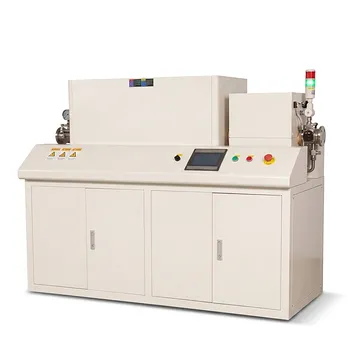
Even milliseconds inside a furnace are enough to catastrophically compromise reactive metals. The reason controlled atmosphere or vacuum is mandatory when sintering titanium—regardless of how short the electrical pulse is—comes down to the metal’s explosive affinity for atmospheric gases at temperature. In just 1.4 seconds of air exposure during direct electrical sintering, titanium powder can suffer a ten‑fold jump in oxygen content and a doubling of nitrogen contamination, producing a part that is brittle and mechanically worthless. The protective environment is not optional; it is the only barrier between a ductile, high‑integrity component and a chemically degraded failure.
The core insight: Extremely short process times do not neutralize titanium’s extreme reactivity. At sintering temperatures, even a flash exposure to air triggers instantaneous, deep interstitial contamination that destroys ductility. A vacuum or high‑purity argon atmosphere is the only proven method to prevent this damage and ensure the part meets practical performance requirements.
The Inescapable Reactivity of Titanium at High Temperatures
Titanium’s tendency to absorb gases is not a slow, gradual process. Once the material reaches sintering temperatures, its chemical activity becomes so aggressive that the contamination reaction is essentially instantaneous.
Why Seconds Are All It Takes
A 1.4‑second consolidation cycle might feel negligible, but the reaction kinetics of titanium with oxygen and nitrogen are phenomenally fast at 1000–1200°C.
The metal surface does not need prolonged exposure; it grabs atmospheric molecules the moment they collide with the hot powder, and the impurities then diffuse inward at rates driven by extreme temperature.
A single second of unprotected heating can embed enough oxygen and nitrogen to permanently alter the metal’s crystal structure and eliminate all meaningful ductility.
The Contamination Mechanism
Atmospheric oxygen and nitrogen do not just sit on the surface; they dissolve interstitially into the titanium lattice.
Even minute increases—well below 0.5 weight percent—cause a severe embrittlement known as solid‑solution strengthening gone wrong.
Furthermore, residual hydrogen from humidity or feedstock hydrides remains trapped unless actively outgassed under vacuum. The result is a component that may look intact but fails suddenly under load due to catastrophic loss of fracture toughness.
How Controlled Atmospheres Solve the Problem
Integrating a vacuum or inert‑gas environment into the sintering equipment transforms the process from an uncontrolled contamination event into a controlled purification cycle. This is not about convenience—it is the only way to preserve chemical identity.
The Vacuum Advantage
A high‑vacuum furnace removes the oxygen and nitrogen entirely, dropping the partial pressure to levels where no reaction can occur.
Simultaneously, the vacuum strips out volatile impurities, residual hydrogen, and surface contaminants from the powder, enabling true powder metallurgy purification.
This dual action—protection plus outgassing—yields grain refinement and chemical homogeneity that are impossible to achieve in air, regardless of how quickly the current is applied.
High‑Purity Inert Gas Shielding
When a dynamic vacuum is impractical, a continuous flow of high‑purity argon provides an equivalent blanket.
Argon is heavier than air and chemically inert, effectively excluding oxygen and nitrogen from the hot zone. The right furnace design ensures that even the momentary introduction of parts does not compromise the atmosphere, preserving ultra‑low impurity levels throughout the entire thermal cycle.
Understanding the Trade‑offs
While atmosphere control is mandatory for high‑performance titanium, it is not without cost and complexity. Acknowledging these trade‑offs is essential for informed process design.
- Equipment investment and throughput: Vacuum chambers and gas‑management systems add to the capital cost of direct sintering machines. Pump‑down times may extend overall cycle time, though the electrical sintering pulse itself remains fast.
- Handling of reactive gases: Some controlled‑atmosphere setups introduce hydrogen or nitrogen for surface treatments like nitridation. This requires precise partial‑pressure management, adding process control complexity.
- When unprotected sintering might be tolerated: Only in applications where the final part will never see load, never require ductility, and can function as a completely brittle, high‑porosity compact could unprotected sintering be considered. For any structural, biomedical, or fatigue‑resistant component, this is not a viable shortcut.
Making the Right Choice for Your Goal
Your decision to integrate controlled atmosphere equipment hinges entirely on the end use of the sintered titanium component.
- If your primary focus is structural integrity or biomedical implants: Use a high‑vacuum or argon‑purge furnace without exception. The part’s fatigue resistance, ductility, and biocompatibility directly depend on interstitial purity.
- If your primary focus is rapid prototyping of non‑critical shapes: You may test air firing to quickly gauge form, but the resulting property loss means the data will not translate to a functional component. Always plan to transition to a protected environment for real performance.
- If your primary focus is achieving high density and fine grain simultaneously: Rely on vacuum outgassing to close porosity without trapping contaminants. This prevents pore‑sealing before impurities have been removed, a critical step that fast‑cycle air sintering completely misses.
Ultimately, protecting reactive metals from their own chemical hunger is not about process luxury—it is about whether the finished part can carry its intended load or simply crumble under the contamination it absorbed in seconds.
Summary Table:
| Feature / Impact | Air Sintering (1.4s Exposure) | Controlled Atmosphere / Vacuum Sintering |
|---|---|---|
| Impurity Level | 10x Oxygen increase, 2x Nitrogen jump | Ultra-low, controlled interstitial levels |
| Material Ductility | Severe embrittlement, high failure risk | Preserved high ductility & fatigue strength |
| Outgassing Effect | Trapped residual hydrogen & volatile gases | Active outgassing & deep lattice purification |
| Suitable Applications | Non-critical, non-structural testing | Critical structural, aerospace & biomedical parts |
Protect Your Reactive Metal Components with KINTEK Advanced Vacuum Solutions
Don't let split-second atmospheric exposure ruin your titanium sintering results. KINTEK offers high-performance laboratory equipment, including specialized vacuum, atmosphere, muffle, tube, and custom high-temperature furnaces engineered to eliminate gas contamination and preserve metal integrity.
Whether you need precise gas control or high-vacuum capabilities for advanced powder metallurgy, our team is ready to tailor the ideal furnace to your exact research or production needs.
Contact KINTEK today to discuss your vacuum furnace requirements!
Related Products
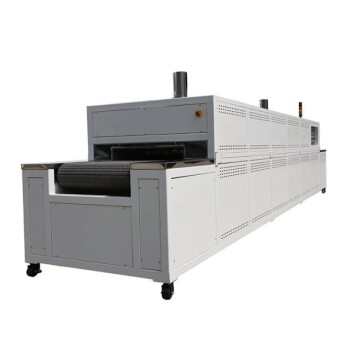
- Mesh Belt Controlled Atmosphere Furnace Inert Nitrogen Atmosphere Furnace
- 1400℃ Controlled Inert Nitrogen Atmosphere Furnace
- Controlled Inert Nitrogen Hydrogen Atmosphere Furnace
- 1200℃ Controlled Inert Nitrogen Atmosphere Furnace
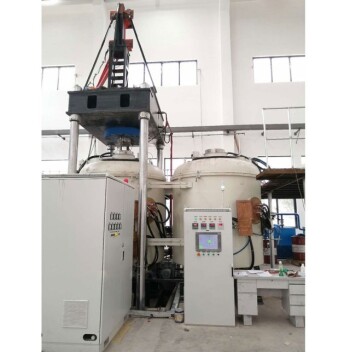
- Vacuum Heat Treat Sintering Furnace with Pressure for Vacuum Sintering
People Also Ask
- What are the two main purposes of controlled atmosphere conditions in furnaces? Protect or Transform Materials for Peak Performance
- How is a controlled atmosphere furnace used in material research? Achieve Precise Material Synthesis and Heat Treatment
- How does a controlled atmosphere furnace improve product quality and consistency? Master Precise Heat Treatment for Superior Results
- What types of furnaces have controlled atmosphere furnaces largely replaced? Boost Metallurgical Precision & Safety
- What types of gases can a controlled atmosphere furnace handle? Master Inert and Reactive Gases for Your Lab