The preference for a specifically designed radiation heater stems from its ability to decouple the energy source from the target material. In an ultrafast Joule heating process, utilizing a separate heating element—such as carbon cloth—provides indirect thermal radiation rather than passing current directly through the sample. This approach ensures uniform heat distribution and protects the structural integrity of the sample, which is often compromised during direct electrical heating.
While direct heating applies energy efficiently, it often creates uneven thermal gradients and physical stress. Indirect radiation heating resolves this by ensuring synchronous nanoparticle nucleation and preserving delicate carbon nanofiber substrates.
Achieving Uniform Material Synthesis
To understand why radiation heating is superior in this context, you must look at how nanoparticles form on a substrate.
The Necessity of Uniform Heat
Direct heating can result in "hot spots" where current flows most easily. This leads to uneven reaction rates across the material.
A radiation heater utilizes carbon cloth to emit a broad, consistent field of thermal radiation. This ensures that every part of the sample receives the same amount of energy simultaneously.
Synchronous Nucleation
Uniform heat is the prerequisite for synchronous nucleation. When the temperature rise is consistent across the entire substrate, nanoparticles begin to form at the same time.
This synchronization results in a homogeneous distribution of particles, which is critical for the performance of the final nanomaterial.
Protecting Structural Integrity
The second major advantage of indirect heating is the preservation of the physical structure of the substrate.
Avoiding Direct Electrical Stress
In direct sample heating, the carbon nanofiber substrate acts as the resistor. High currents are forced through the fibers to generate heat.
This process places immense electrical and thermal load directly on the substrate, frequently leading to structural degradation or breakage.
Managing Thermal Stress
Indirect radiation allows for more precise control over how thermal stress is applied. Because the heat is external, the sample is not subject to the violent expansion that can occur when internal current density varies.
This decoupling allows you to reach high temperatures necessary for processing without sacrificing the mechanical strength of the carbon nanofiber.
Understanding the Trade-offs
While radiation heating offers superior quality control, it is important to recognize the operational differences compared to direct heating.
System Complexity
Direct heating is often mechanically simpler, requiring only electrical contacts on the sample itself.
Radiation heating requires the design and integration of a secondary heating element (the carbon cloth) and a configuration that maximizes view factor to the sample.
Energy Transfer
Direct heating is 100% efficient in terms of converting electricity to heat within the sample.
Indirect heating relies on radiative transfer, meaning the heating element must reach a higher temperature than the sample to drive the heat transfer, potentially requiring slightly more power or careful thermal management.
Making the Right Choice for Your Goal
When designing your ultrafast Joule heating setup, your choice depends on the fragility of your substrate and your quality requirements.
- If your primary focus is material homogeneity: Choose the radiation heater to ensure synchronous nucleation and uniform nanoparticle distribution.
- If your primary focus is substrate preservation: Rely on indirect heating to avoid the structural damage caused by high currents flowing through delicate carbon fibers.
By utilizing indirect radiation, you prioritize the long-term stability and quality of your synthesized materials over the mechanical simplicity of direct heating.
Summary Table:
| Feature | Direct Joule Heating | Indirect Radiation Heating |
|---|---|---|
| Energy Source | Current passes through sample | Decoupled (via carbon cloth/element) |
| Heat Distribution | Potential for "hot spots" | Uniform thermal field |
| Structural Impact | Risk of electrical/thermal stress | High substrate integrity |
| Nucleation | Asynchronous / Uneven | Synchronous & Homogeneous |
| Efficiency | High internal conversion | Dependent on radiative transfer |
Elevate Your Material Research with KINTEK Precision
Don’t compromise the integrity of your nanomaterials with uneven heating. At KINTEK, we understand the delicate balance between high-speed thermal processing and structural preservation. Backed by expert R&D and world-class manufacturing, we provide high-performance Muffle, Tube, and Vacuum furnace systems tailored for advanced research needs. Whether you require custom heating elements or specialized CVD systems, our solutions are designed to ensure uniform nucleation and consistent results for your most sensitive substrates.
Ready to optimize your synthesis process? Contact our engineering team today to discuss how our customizable high-temperature systems can bring precision to your laboratory.
Visual Guide

References
- Bi-Ying Wang, Dawei Wang. Heterostructured WO<sub>x</sub>/W<sub>2</sub>C Nanocatalyst for Li<sub>2</sub>S Oxidation in Lithium–Sulfur Batteries with High‐Areal‐Capacity. DOI: 10.1002/smll.202310801
This article is also based on technical information from Kintek Furnace Knowledge Base .
Related Products
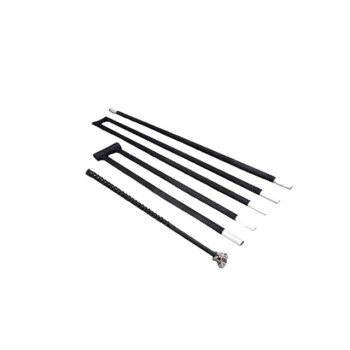
- Silicon Carbide SiC Thermal Heating Elements for Electric Furnace
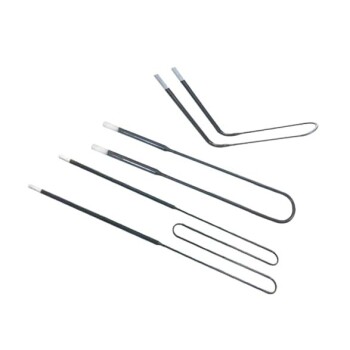
- Molybdenum Disilicide MoSi2 Thermal Heating Elements for Electric Furnace
People Also Ask
- How do the different types of silicon carbide heating elements compare in terms of applications? Find the Best Fit for Your High-Temp Needs
- What are the temperature capabilities and mounting options for silicon carbide heating elements? Unlock High-Temp Flexibility and Durability
- How do silicon carbide heating elements enhance the heat treatment of alloys? Achieve Superior Temperature Control
- What are the advantages of using silicon carbide heating elements in industrial furnaces? Boost Efficiency and Durability
- What is the recommended surface load for silicon carbide heating elements at different furnace temperatures? Maximize Lifespan & Performance