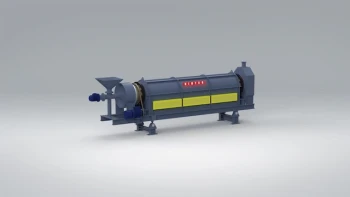
The activation treatment of silver tailings necessitates a high-temperature muffle furnace to break down chemically stable mineral structures through precise thermal energy. A furnace provides the stable 1023 K (approximately 750°C) environment required to react silver tailings with sodium carbonate. This process transforms inert minerals into loose, soluble compounds like sodium silicate and sodium aluminosilicate, which is a mandatory prerequisite for efficient leaching and silver recovery.
The high-temperature muffle furnace acts as a critical thermochemical reactor, providing the specific energy threshold needed to restructure silver tailings at a molecular level. By maintaining a precise thermal environment, it converts complex, insoluble mineral bonds into porous structures, ensuring the silver is accessible for downstream extraction.
The Role of Thermal Energy in Mineral Activation
Breaking Stable Chemical Bonds
Silver tailings often contain complex mineral matrices where silver is locked within chemically stable structures. The muffle furnace provides a consistent 1023 K reaction environment that supplies the activation energy necessary to disrupt these bonds.
Facilitating Structural Transformation
When mixed with reagents like sodium carbonate, the high heat facilitates a chemical metamorphosis. This converts the tailings into sodium silicate and sodium aluminosilicate, transforming a dense, impermeable ore into a loose, soluble structure.
Prerequisite for Efficient Leaching
Without this high-temperature activation, subsequent leaching agents cannot penetrate the mineral grain. The furnace ensures the material is sufficiently porous and chemically reactive, which directly dictates the final recovery rate of the silver.
Precision Control and Environmental Stability
Maintaining Thermal Uniformity
In mineral processing and refining, even slight temperature fluctuations can lead to incomplete reactions. Industrial muffle furnaces ensure a uniform thermal environment, preventing localized cold spots that would leave silver trapped in its original mineral form.
Achieving Precise Phase Transformations
Beyond tailings, muffle furnaces are used in silver processing to manage crystallization kinetics. For example, maintaining temperatures around 750°C allows for the calcination and reduction of silver powder, facilitating the growth of high-purity silver crystals.
Removing Organic and Volatile Impurities
At temperatures ranging from 400°C to 600°C, the furnace effectively calcines organic components like proteins or polysaccharides. This purification step is vital for ensuring the final silver product meets industrial purity standards and exhibits the correct face-centered cubic (FCC) crystal structure.
Understanding the Trade-offs
Energy Consumption vs. Recovery Yield
Operating a furnace at 1023 K requires significant energy, which increases operational costs. However, skipping this step or using lower temperatures often results in prohibitively low leaching efficiency, making the energy expenditure a necessary investment for profitability.
Equipment Wear and Maintenance
Sustained high-temperature operation accelerates the degradation of heating elements and refractory linings. Operators must balance the need for high-heat activation with a rigorous maintenance schedule to prevent furnace failure and ensure temperature precision.
Risks of Over-Sintering
If the temperature exceeds the target (e.g., significantly higher than 1023 K), the material may sinter excessively or melt. This can create a glass-like mass that is even harder to leach than the original tailings, effectively "locking" the silver inside a solid slag.
How to Apply This to Your Process
Making the Right Choice for Your Goal
- If your primary focus is silver extraction from tailings: Maintain a stable 1023 K environment with sodium carbonate to ensure the conversion of stable minerals into soluble silicates.
- If your primary focus is refining silver powder to high purity: Utilize a 750°C calcination cycle for approximately 20 minutes to facilitate proper recrystallization and impurity removal.
- If your primary focus is optimizing electrical conductivity in pastes: Focus on a controlled 450°C sintering process to reduce resistivity and achieve the lowest possible sheet resistance.
- If your primary focus is catalyst activation: Use a 550°C thermal treatment to induce crystal phase transformations and strengthen the porous structure of the material.
The high-temperature muffle furnace is the indispensable bridge between inert raw tailings and a chemically accessible, high-yield silver source.
Summary Table:
| Process Application | Target Temperature | Key Technical Objective |
|---|---|---|
| Tailings Activation | 1023 K (750°C) | Breaks stable mineral bonds into soluble compounds |
| Impurity Removal | 400°C - 600°C | Calcines organic components and volatile impurities |
| Silver Powder Refining | ~750°C | Facilitates crystallization and high-purity growth |
| Paste Sintering | ~450°C | Reduces resistivity and optimizes conductivity |
Optimize Your Silver Recovery with KINTEK Precision
Unlock the full potential of your mineral processing with KINTEK’s high-performance laboratory equipment. Whether you are performing complex silver tailings activation or high-purity refining, our advanced thermal solutions ensure the precise temperature uniformity and stability your research demands.
Why choose KINTEK?
- Comprehensive Range: From high-temperature muffle and tube furnaces to specialized vacuum, CVD, and atmosphere furnaces.
- Customizable Solutions: All equipment can be tailored to meet your unique mineralogical and laboratory requirements.
- Proven Reliability: Built for durability in high-heat environments to ensure long-term ROI and consistent leaching results.
Ready to enhance your extraction yields? Contact our experts today to find the perfect furnace solution for your laboratory.
References
- Jie Chang, Shentao Hu. Behaviors of Silicon, Aluminum and Iron and Kinetics of Silicon from the Roasted Clinker of Silver Tailings in Water–Acid Leaching Process. DOI: 10.3390/min13010105
This article is also based on technical information from Kintek Furnace Knowledge Base .
Related Products
- 1700℃ High Temperature Muffle Oven Furnace for Laboratory
- 1800℃ High Temperature Muffle Oven Furnace for Laboratory
- 1200℃ Muffle Oven Furnace for Laboratory
- 1400℃ Muffle Oven Furnace for Laboratory
- High Temperature Muffle Oven Furnace for Laboratory Debinding and Pre Sintering
People Also Ask
- What is the primary function of a high-temperature laboratory muffle furnace in chemical synthesis? Achieve Precision.
- How does a high-temperature laboratory muffle furnace affect material properties? Transform Anodic Oxide Films Fast
- What role does a muffle furnace play in BCZY712 electrolyte powder production? Achieve Perfect Phase Purity
- What role does a muffle furnace play in converting rice husk to ash? Achieve High-Purity Biogenic Silica Isolation
- How does the two-stage sintering process contribute to the synthesis of MeCuFeO3 perovskite? Optimize crystal purity.