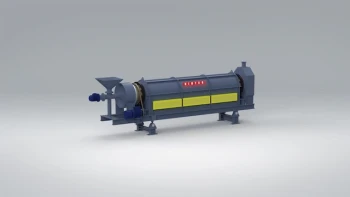
High-temperature muffle and tube furnaces provide a highly controlled thermal and atmospheric environment that acts as the engine for carbonization and activation. Specifically, these furnaces maintain precise temperatures ranging from 500°C to 850°C and manage oxygen levels to facilitate the pyrolysis of raw materials and the development of complex internal pore structures.
Core Takeaway: The furnace transforms raw precursors into high-surface-area activated carbon by providing a stable, oxygen-limited heat source that drives the chemical decomposition of organic matter and the physical expansion of carbon pores.
Precise Thermal Control for Carbonization
Stable Heat for Organic Decomposition
The furnace provides a stable thermal environment, often at temperatures around 500°C to 700°C, to initiate the pyrolysis of biomass or raw seeds. This heat treatment decomposes organic components, allowing non-carbon elements to volatilize and leave behind a stable framework of carbon atoms.
High-Temperature Activation Phases
For specific processes like coke powder activation, the furnace can maintain higher sustained temperatures, typically around 850°C. This high-energy environment is essential for driving steam activation reactions that create more advanced structural properties.
Controlled Heating Rates
Precision furnaces allow operators to control the ramp-up speed, such as a rate of 5°C per minute. This gradual increase ensures that volatile components are released systematically, preventing structural collapse and ensuring a uniform carbon skeleton.
Atmospheric Management and Chemical Environments
Oxygen-Limited and Anaerobic Conditions
A critical technical feature of these furnaces is the ability to provide oxygen-deficient or anaerobic environments. By limiting oxygen, the furnace prevents the raw material from combusting, ensuring it undergoes thermochemical conversion rather than simple burning.
Support for Chemical Activation Agents
The furnace environment facilitates the reaction between raw materials and activating agents like phosphoric acid (H3PO4) or zinc chloride (ZnCl2). At temperatures such as 500°C, the furnace drives dehydration and cross-linking reactions that allow these agents to effectively open and expand the carbon pores.
Self-Generated and Steam Atmospheres
In many setups, the furnace environment allows for a "self-generated atmosphere" within a closed crucible or the introduction of steam. These gases interact with the carbonized material at high temperatures to etch the surface, significantly increasing the specific surface area.
Structural Refinement and Pore Development
Mesoporous and Macroporous Formation
By maintaining a constant high-temperature environment over extended periods, the furnace promotes the formation of developed mesoporous and macroporous structures. This process is what transforms a dense carbon mass into a highly efficient adsorbent.
Carbon Atom Rearrangement
Sustained heating, such as 800°C for 60 minutes, allows for the rearrangement of carbon structures at the molecular level. This refinement results in a porous framework that is not only stable but also capable of supporting nanoparticle loading for specialized applications.
Understanding the Technical Trade-offs
Temperature Uniformity vs. Throughput
In a muffle furnace, heat is often radiated from the walls, which can lead to slight temperature gradients if the sample is too large. Tube furnaces offer better atmosphere control and uniformity for small batches but may limit the volume of material processed at one time.
Atmosphere Integrity Risks
Maintaining a strictly oxygen-free environment is technically demanding; any seal failure can lead to the oxidation of the carbon, resulting in ash rather than activated carbon. This requires rigorous monitoring of the furnace’s gas seals and crucible integrity.
Energy Consumption and Cooling Times
Operating at 850°C for extended periods requires significant energy and necessitates long cooling cycles before the material can be safely extracted. Rapid cooling can sometimes shock the carbon structure, potentially affecting the final pore distribution.
Applying Furnace Technology to Your Production Goal
How to Apply This to Your Project
Choosing the right furnace settings depends entirely on your raw material and the desired pore size of the final product.
- If your primary focus is Biomass Pyrolysis: Utilize a temperature range of 500°C to 700°C in an anaerobic environment to preserve the carbon skeleton while removing volatiles.
- If your primary focus is High-Efficiency Steam Activation: Set the furnace to a sustained 850°C to drive the development of macroporous structures and maximize specific surface area.
- If your primary focus is Chemical Modification (e.g., ZnCl2): Focus on a controlled ramp rate and a 500°C soak time to allow the activating agent to expand the internal pore structure effectively.
By mastering the furnace's thermal and atmospheric variables, you can precisely engineer the adsorption performance of your activated carbon.
Summary Table:
| Process Phase | Temperature Range | Technical Environment | Key Objective |
|---|---|---|---|
| Carbonization | 500°C - 700°C | Anaerobic / Oxygen-limited | Decomposes organics; forms stable carbon skeleton |
| Chemical Activation | ~500°C | Controlled heating ramp | Facilitates pore expansion via ZnCl2 or H3PO4 |
| Steam Activation | ~850°C | High-energy steam atmosphere | Etches carbon surface to maximize specific surface area |
| Pore Refinement | Sustained High Temp | Stable thermal soak | Rearranges carbon atoms for structural stability |
Elevate Your Carbon Research with KINTEK Precision
Successful activated carbon production demands absolute control over temperature and atmosphere. KINTEK specializes in high-performance laboratory equipment and consumables, providing a comprehensive range of high-temperature furnaces—including muffle, tube, rotary, vacuum, CVD, and atmosphere models.
Whether you require precise ramp rates for chemical activation or robust atmospheric integrity for anaerobic pyrolysis, our furnaces are fully customizable to meet your unique research and production goals.
Ready to optimize your carbonization process? Contact KINTEK today to find the perfect furnace solution for your laboratory!
References
- Aigul T. Ordabaeva, М. Г. Мейрамов. Production of Activated Carbon from Sifted Coke and Determination of Its Physicochemical Characteristics. DOI: 10.3390/molecules28155661
This article is also based on technical information from Kintek Furnace Knowledge Base .
Related Products
- 1700℃ High Temperature Muffle Oven Furnace for Laboratory
- 1800℃ High Temperature Muffle Oven Furnace for Laboratory
- 1200℃ Muffle Oven Furnace for Laboratory
- High Temperature Muffle Oven Furnace for Laboratory Debinding and Pre Sintering
- 1400℃ Muffle Oven Furnace for Laboratory
People Also Ask
- What is the primary function of a high-temperature laboratory muffle furnace in chemical synthesis? Achieve Precision.
- How does a high-temperature laboratory muffle furnace affect material properties? Transform Anodic Oxide Films Fast
- What role does a muffle furnace play in BCZY712 electrolyte powder production? Achieve Perfect Phase Purity
- How does a muffle furnace transform sphalerite catalytic properties? Unlock High-Performance Material Performance
- What role does a muffle furnace play in converting rice husk to ash? Achieve High-Purity Biogenic Silica Isolation