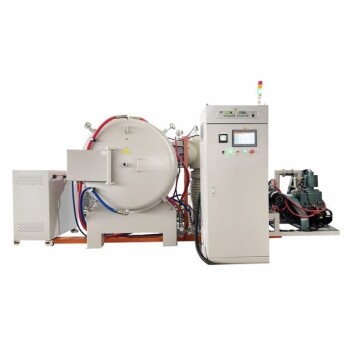
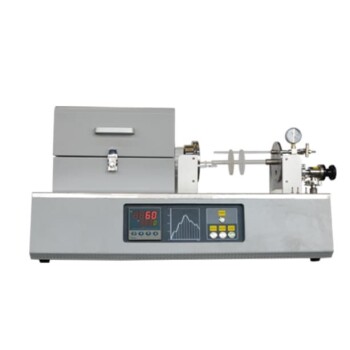
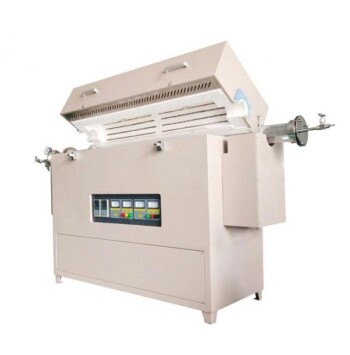
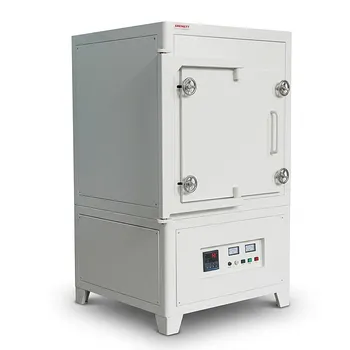
In the proximate analysis of bamboo charcoal, the laboratory high-temperature muffle furnace serves as the primary instrument for quantifying volatile matter and ash content. By subjecting the sample to precise temperature regimes and specific atmospheric conditions, the furnace enables the separation of the charcoal into its fundamental components: moisture, volatiles, fixed carbon, and inorganic residue.
The muffle furnace is the indispensable engine of proximate analysis, providing the controlled thermal environment required to thermally decompose bamboo charcoal. It allows technicians to isolate combustible materials from non-combustible minerals, providing a definitive profile of the charcoal's fuel quality and chemical stability.
Quantifying Volatile Matter
Precise Thermal Decomposition at 950°C
To determine volatile matter, the muffle furnace heats the bamboo charcoal sample to a standardized temperature of 950°C. This intense heat causes the organic compounds to vaporize and escape, leaving only the solid carbon and minerals behind.
The Necessity of an Anaerobic Environment
During this phase, the furnace must maintain an oxygen-free environment to prevent the solid carbon from burning. By heating the sample in a closed crucible, the furnace ensures that the mass loss recorded is strictly due to the release of volatile gases and not combustion.
Defining Reactivity and Ignitability
The amount of volatile matter measured by the furnace is a direct indicator of how easily the bamboo charcoal will ignite. High volatile content suggests a fuel that catches fire quickly but may burn with more smoke and less consistency.
Determining Ash Content
Complete Combustion of Organic Matter
For ash determination, the muffle furnace is used to facilitate complete combustion by heating the sample in the presence of oxygen. Typical temperatures range from 750°C to 950°C, depending on the specific international standard being followed.
Isolation of Inorganic Residue
The furnace maintains these high temperatures until all carbonaceous material has been oxidized into carbon dioxide. The remaining powder is the ash, which consists of the inorganic minerals originally present in the bamboo plant.
Evaluating Industrial Suitability
Measuring ash content is critical because high ash levels can lead to slagging and fouling in industrial furnaces. The muffle furnace provides the empirical data needed to predict how bamboo charcoal will affect the longevity and efficiency of combustion equipment.
Calculating Fixed Carbon and Fuel Value
The Final Calculation in Proximate Analysis
Fixed carbon is not measured directly by the furnace but is calculated by subtracting the percentages of moisture, volatile matter, and ash from the total mass. The furnace’s accuracy in the first two steps is what makes the fixed carbon value reliable.
Establishing the Carbon Skeleton
The muffle furnace helps characterize the stable carbon skeleton of the bamboo charcoal. This information is vital for determining the charcoal's value as a reducing agent in metallurgical processes or as a high-quality industrial fuel.
Understanding the Trade-offs and Pitfalls
Temperature Accuracy vs. Heating Rate
If the muffle furnace reaches the target temperature too slowly, some volatiles may react and form secondary char, skewing the results. Conversely, heating too quickly can cause "spitting" or sample loss due to the rapid expansion of gases.
Atmospheric Control Challenges
Failing to maintain a strictly anaerobic atmosphere during volatile matter testing will lead to the oxidation of fixed carbon. This results in an overestimation of volatiles and an underestimation of the charcoal's actual carbon content.
Cooling and Moisture Re-absorption
Samples removed from the furnace must be cooled in a desiccator before weighing. Because bamboo charcoal is highly porous, skipping this step allows the sample to absorb atmospheric moisture, which leads to significant errors in the final proximate analysis data.
Applying Furnace Data to Your Objectives
Making the Right Choice for Your Goal
To get the most value out of your muffle furnace analysis, you must align your testing protocols with your specific end-use for the bamboo charcoal.
- If your primary focus is fuel efficiency: Use the furnace to strictly monitor the volatile-to-fixed-carbon ratio, as this determines the energy density and burn duration of the charcoal.
- If your primary focus is industrial manufacturing: Prioritize the ash content determination at higher temperatures to identify the risk of mineral buildup and equipment corrosion.
- If your primary focus is adsorbent synthesis: Use the furnace to simulate pyrolysis gradients (400-800°C) to optimize the development of the pore structure for chemical adsorption.
The laboratory muffle furnace remains the gold standard for transforming raw bamboo charcoal into a quantified, high-performance industrial material.
Summary Table:
| Analysis Parameter | Temperature Range | Atmosphere | Key Purpose |
|---|---|---|---|
| Volatile Matter | 950°C | Anaerobic (Oxygen-free) | Determines ignitability and reactivity |
| Ash Content | 750°C - 950°C | Aerobic (Oxygen-rich) | Evaluates mineral residue and slagging risk |
| Fixed Carbon | Calculated | N/A | Establishes fuel value and carbon stability |
| Pyrolysis Study | 400°C - 800°C | Controlled/Inert | Optimizes pore structure for adsorbents |
Optimize Your Proximate Analysis with KINTEK Precision
Achieving accurate data in bamboo charcoal analysis requires absolute thermal control. KINTEK specializes in high-performance laboratory equipment, offering a comprehensive range of high-temperature furnaces, including muffle, tube, rotary, vacuum, CVD, atmosphere, dental, and induction melting furnaces.
Whether you are quantifying ash content or simulating complex pyrolysis gradients, our furnaces are fully customizable to meet your unique research and industrial specifications. Ensure reliability and precision in every sample.
Ready to upgrade your lab's capabilities? Contact KINTEK today for a tailored solution!
References
- Nurhazwani Jarawi, Ismail Jusoh. Charcoal properties of Malaysian bamboo charcoal carbonized at 750 °C. DOI: 10.15376/biores.18.3.4413-4429
This article is also based on technical information from Kintek Furnace Knowledge Base .
Related Products
- 1800℃ High Temperature Muffle Oven Furnace for Laboratory
- 1700℃ High Temperature Muffle Oven Furnace for Laboratory
- 1400℃ Muffle Oven Furnace for Laboratory
- 1200℃ Muffle Oven Furnace for Laboratory
- Laboratory Muffle Oven Furnace with Bottom Lifting
People Also Ask
- How does a high-temperature laboratory muffle furnace affect material properties? Transform Anodic Oxide Films Fast
- What is the primary function of a high-temperature laboratory muffle furnace in chemical synthesis? Achieve Precision.
- Why is a laboratory high-temperature muffle furnace required for LaNixFe1-xO3 catalysts? Optimize Two-Stage Synthesis
- How does a laboratory muffle furnace modify oyster shell powder? Transform Waste into High-Performance Materials
- What is the critical role of a laboratory high-temperature muffle furnace in TiO2/LDH? Unlock Superior Crystallization