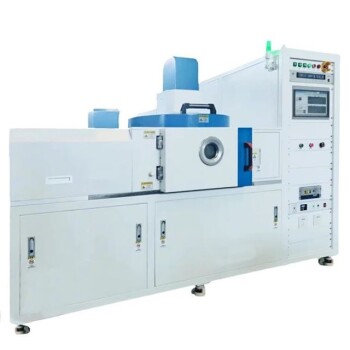
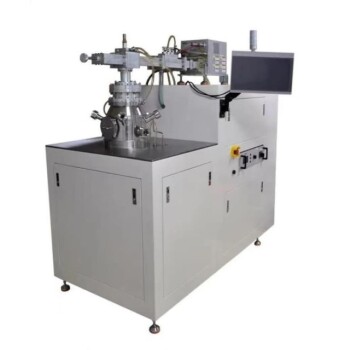
The primary function of vacuum pumps and chambers in the Reduced Pressure Test (RPT) is to create a controlled low-pressure environment that forces dissolved gases within liquid aluminum to expand. By artificially lowering the ambient pressure, this equipment accelerates the diffusion of hydrogen into internal defects, transforming them from microscopic flaws into visible indicators of metal quality.
In the RPT, the vacuum system does not merely simulate an environment; it actively amplifies hidden defects. By inflating internal oxide films into significant cracks, the process makes invisible contamination detectable via standard X-ray inspection.
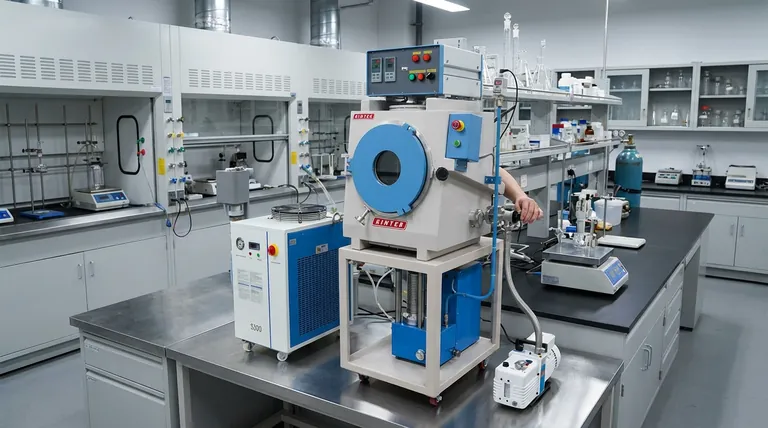
The Mechanism of Defect Amplification
Creating the Pressure Differential
The vacuum pump creates a specific low-pressure environment within the laboratory chamber. This reduction in ambient pressure is the catalyst for the entire test.
It disrupts the equilibrium of the molten aluminum, specifically targeting the gases dissolved within the metal matrix.
Activating Dissolved Hydrogen
Liquid aluminum alloys frequently contain dissolved hydrogen and double oxide films, technically referred to as bifilms. Under standard atmospheric pressure, these bifilms remain curled and compact, posing a "low hazard" that is difficult to detect.
The vacuum environment changes the solubility dynamics, encouraging the dissolved hydrogen to diffuse out of the solution.
Expansion of Bifilms
The diffusing hydrogen does not simply escape; it moves into the internal bifilms. As the gas accumulates, it causes these curled films to unfurl and expand.
This expansion physically transforms the defect. What was once a minor, hidden inclusion becomes a significant volume of gas trapped within an oxide skin.
The Role in Assessment and Inspection
Converting Flaws to Cracks
The vacuum chamber facilitates the transformation of minor discontinuities into significant engineering cracks. This is a deliberate exaggeration of the metal's internal state.
By inflating the bifilms, the test increases the volumetric size of the defects without necessarily adding new contamination.
Enabling Visual Verification
Once the defects have been expanded by the low pressure, the sample is solidified and analyzed. The resulting cracks provide a clear density contrast in the material.
This contrast allows technical personnel to accurately assess the density of cracks and the overall cleanliness of the metal using X-ray inspection equipment.
Understanding the Trade-offs
Exaggeration vs. Reality
It is important to recognize that the RPT creates an "artificial" worst-case scenario. The vacuum chamber creates conditions that are far more severe than standard casting solidification.
While this ensures that no potential defect goes unnoticed, the test results represent an amplified view of the metal's hydrogen and oxide content rather than a direct replication of the final part's microstructure.
Dependence on Vacuum Integrity
The reliability of the test is inextricably linked to the performance of the vacuum pump. Inconsistent pressure levels can lead to variable expansion rates of the hydrogen bubbles.
If the vacuum pressure fluctuates, the correlation between the visual cracks and the actual metal cleanliness becomes unreliable.
Applying RPT Results to Quality Control
To maximize the value of the Reduced Pressure Test, align the results with your specific production requirements.
- If your primary focus is root cause analysis: Use the RPT to identify the presence of specific oxide films (bifilms) to trace contamination back to specific melt handling errors.
- If your primary focus is routine quality assurance: Utilize the visual crack density as a pass/fail metric to approve batches of molten aluminum before they are poured into expensive molds.
By leveraging the vacuum chamber's ability to reveal hidden flaws, you ensure that only metal of sufficient cleanliness enters the casting stream.
Summary Table:
| Component | Role in RPT Process | Impact on Defect Detection |
|---|---|---|
| Vacuum Pump | Creates a consistent low-pressure environment | Triggers hydrogen diffusion & expansion |
| Vacuum Chamber | Houses molten sample & maintains pressure differential | Forces internal bifilms to unfurl into cracks |
| Hydrogen Gas | Migrates from molten matrix to internal defects | Inflates microscopic flaws into visible voids |
| Bifilms | Act as reservoirs for accumulating hydrogen | Become detectable indicators of metal cleanliness |
Precision Aluminum Quality Starts with KINTEK
Don't let hidden defects compromise your casting integrity. KINTEK provides high-performance vacuum systems and high-temperature laboratory furnaces specifically designed to deliver the consistent pressure levels required for accurate Reduced Pressure Testing (RPT).
Backed by expert R&D and manufacturing, we offer customizable Muffle, Tube, Rotary, Vacuum, and CVD systems tailored to the unique needs of metallurgy professionals. Whether you are performing root cause analysis or routine QA, our equipment ensures your defect amplification is reliable and repeatable.
Ready to optimize your metal cleanliness assessment?
Contact our technical experts today to find the perfect vacuum furnace solution for your laboratory.
References
- Time-Dependent Failure Mechanisms of Metals; The Role of Precipitation Cleavage. DOI: 10.20944/preprints202508.2134.v1
This article is also based on technical information from Kintek Furnace Knowledge Base .
Related Products
- Laboratory Quartz Tube Furnace RTP Heating Tubular Furnace
- Laboratory Vacuum Tilt Rotary Tube Furnace Rotating Tube Furnace
- High Pressure Laboratory Vacuum Tube Furnace
- Laboratory Muffle Oven Furnace with Bottom Lifting
- RF PECVD System Radio Frequency Plasma Enhanced Chemical Vapor Deposition
People Also Ask
- What physical conditions does a laboratory Tube Furnace provide for SOEC? Precision Heat for Solid Oxide Characterization
- What are the main features and functions of a laboratory tube furnace? Unlock Precise High-Temp Control for Your Lab
- What role does a laboratory tube furnace play in geological and mineralogical research? Unlock Earth's Secrets with Precision
- What conditions do tube furnaces provide for Au-Seeded TiO2 nanowires? Master Precision Thermal Synthesis
- What conditions does a tube furnace provide for post-ion-implantation? Achieve Precise Microstructural Repair