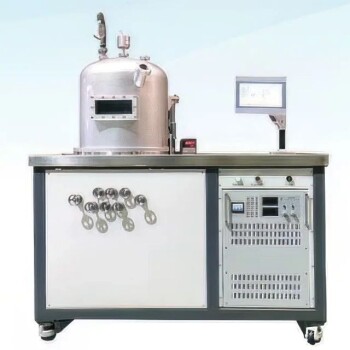
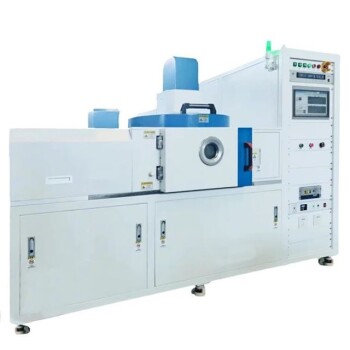
A suitable gas precursor delivery system for CVD furnace applications must be engineered to preserve the precursor molecule's delicate balance between volatility and stability. The system's core process requirements are precisely controlled temperature uniformity to achieve and maintain a vapor pressure of at least ~125 Pa at a delivery temperature around 300 °C, while eliminating cold spots that cause condensation or hot spots that trigger premature decomposition. Equally critical are materials that ensure high purity and avoid parasitic side reactions, as well as flow paths that prevent stagnation and preserve the precursor’s chemical integrity until it reaches the heated substrate.
A robust delivery system starts by treating the precursor itself as the primary design specification. The molecule must remain thermally stable at its vaporization temperature, generate sufficient vapor pressure for mass transport, and resist side reactions that introduce impurities. The hardware then translates these chemical boundaries into an isothermal, inert, and short-residence-time delivery environment.
The Precursor is Your Design Specification
Every engineering decision in the delivery system flows from the precursor’s intrinsic properties. These properties set hard limits on temperature, materials, and flow architecture.
Thermal Stability Dictates Safe Operating Windows
The precursor must withstand the temperature needed to generate usable vapor without decomposing. If the vaporization temperature approaches the molecule’s decomposition point, the delivery system must provide ultra-precise heating with minimal overshoot. Even brief temperature spikes can nucleate solid particles that clog lines or drag impurities into the film. Therefore, the system’s heating elements must be designed for tight thermal control and rapid fault detection.
Vapor Pressure Determines Mass Delivery Capacity
A viable precursor for furnace CVD needs a vapor pressure of at least ~125 Pa at a reasonable delivery temperature around 300 °C. The delivery system must maintain the entire gas path—from the bubbler or sublimator to the furnace inlet—above the precursor’s condensation point. This requires isothermal jacketing or traced lines that compensate for heat loss, ensuring the vapor does not partially condense and starve the process.
Purity and Parasitic Reactions Shape Materials Selection
The precursor must be available in high purity and must resist unintended reactions with moisture, oxygen, or the delivery system’s own surfaces. Consequently, all wetted components demand materials with proven chemical inertness and surfaces that do not catalyze breakdown. Even trace-level outgassing or reactive sites can introduce impurities that degrade film microstructure, so the system must prioritize ultra-clean, electropolished, and passivated internals.
From Molecule to Manifold: Translating Chemistry into Hardware
The abstract requirements of the precursor must be converted into tangible process control features.
Isothermal Heating to Prevent Cold Spots
Cold spots are the primary failure mode. Any point along the delivery path that falls below the precursor’s dew point becomes a condensation trap, causing mass flow fluctuations and particle shedding. The solution is comprehensive, multi-zone heating with continuous temperature monitoring. Heat tracing must extend through valves, filters, and fittings to create a truly gradient-free thermal envelope.
Inert Materials and Passivation to Safeguard Purity
Maintaining the precursor’s as-received purity demands that the delivery system contribute nothing. Stainless steel components are often electrochemically polished and passivated to form a chromium-rich oxide layer that resists attack from corrosive molecules like TiCl₄ or AlCl₃. Seals and gaskets are made from metal or advanced perfluoropolymers to eliminate outgassing and adsorption sites that could skew precursor concentration.
Flow Dynamics and Residence Time Control
The delivery system must minimize the time the precursor spends at elevated temperature before reaching the furnace. Prolonged residence times encourage parasitic gas-phase reactions that create non-volatile byproducts. Designing for short, simple flow paths and moderate carrier gas velocities keeps the precursor intact, while avoiding dead legs where stagnant vapor can stagnate and degrade.
Understanding the Trade-offs
Even with a perfectly designed system, inherent compromises must be managed.
Volatility Versus Stability
Raising the vaporization temperature increases vapor pressure and delivery rate, but it also pushes the precursor closer to its decomposition limit. Many highly volatile precursors are also more reactive, forcing a choice between higher throughput and tighter thermal control. The delivery system must often be tuned to balance sufficient mass transport with the narrowest margin against thermal breakdown.
Complexity Versus Mean Time Between Maintenance
Elaborate heating and purging systems improve reliability but introduce more potential failure points. Each additional heated zone, sensor, or purging manifold adds cost and maintenance burden. The most successful designs target the minimal complexity needed to maintain the precursor’s temperature-only safety window, trading extreme process windows for robust, serviceable hardware.
Making the Right Choice for Your Goal
Your specific film quality and production targets should dictate where you place emphasis in the delivery system.
- If your primary focus is ultra-high purity films: Prioritize all-metal, electro-polished flow paths with minimal dead volume and rigorous leak-tightness to prevent oxygen or moisture ingress.
- If your primary focus is high deposition rates: Select a precursor with a favorable vapor pressure-to-stability ratio and design the delivery system to operate at the highest safe temperature, with generous heat tracing margins to avoid condensation.
- If your primary focus is process repeatability over long runs: Invest in multi-zone active thermal feedback, automated purging sequences, and in-situ vapor concentration monitoring to compensate for precursor level decay.
A gas precursor delivery system succeeds not when it is the most advanced, but when it disappears as a variable—letting the precursor chemistry perform exactly as intended.
Summary Table:
| Key Requirement | Technical Specification / Focus | Impact on CVD Process |
|---|---|---|
| Thermal Stability | Ultra-precise heating without overshoot | Prevents premature decomposition and line clogging |
| Vapor Pressure | Isothermal tracing (~125 Pa @ ~300 °C) | Guarantees continuous mass transport and avoids cold spots |
| Material Purity | Electropolished, passivated stainless steel | Eliminates parasitic reactions and film contamination |
| Flow Dynamics | Short flow paths & minimized dead volume | Controls residence time and prevents byproduct formation |
Optimize your chemical vapor deposition process with high-performance laboratory solutions from KINTEK. As trusted specialists in laboratory equipment and consumables, we offer a comprehensive range of high-temperature furnaces—including CVD, tube, vacuum, atmosphere, muffle, and induction melting systems—all fully customizable to meet your precise precursor delivery and thermal processing needs. Enhance your film purity and deposition repeatability—contact our technical team today!
Related Products
- Slide PECVD Tube Furnace with Liquid Gasifier PECVD Machine
- Custom Made Versatile CVD Tube Furnace Chemical Vapor Deposition CVD Equipment Machine
- Inclined Rotary Plasma Enhanced Chemical Deposition PECVD Tube Furnace Machine
- Split Chamber CVD Tube Furnace with Vacuum Station CVD Machine
- HFCVD Machine System Equipment for Drawing Die Nano Diamond Coating
People Also Ask
- What are the main advantages of PECVD tube furnaces compared to CVD tube furnaces? Lower Temp, Faster Deposition, and More
- What is plasma in the context of PECVD? Unlock Low-Temperature Thin Film Deposition
- What are the typical conditions for plasma-enhanced CVD processes? Achieve Low-Temperature Thin Film Deposition
- What plasma source is used in PE-CVD tube furnaces? Unlock Low-Temperature, High-Quality Deposition
- What are the advantages of using a tube furnace CVD system for Cu(111)/graphene? Superior Scalability and Quality