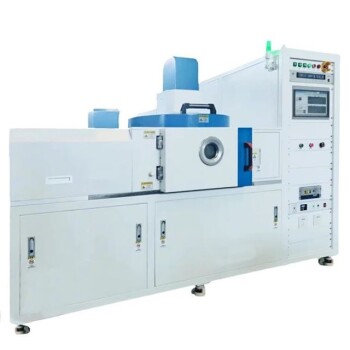
Low-pressure diamond film synthesis via plasma-assisted chemical vapor deposition (CVD) requires a precise combination of gas chemistry, thermal activation, and carefully integrated reactor components. The process demands a hydrogen-rich environment (>95% H₂, with methane as the carbon source) at sub-atmospheric pressure, activated by microwave plasma or a hot filament, while the substrate is held at 800–1000°C. The reactor must integrate gas delivery systems, a vacuum chamber with a substrate heater, and real-time pressure monitoring.
The essential conditions for low‑pressure diamond CVD are a CH₄ precursor diluted in >95% H₂, activation by a hot filament (~2000°C) or a 2.45 GHz microwave plasma, and a substrate temperature window of 800–1000°C under sub‑atmospheric pressure. The corresponding furnace setup requires a high‑purity process chamber, mass flow controllers, a reliable vacuum pump, and a substrate stage with active temperature regulation.
Process Conditions for Diamond Film Deposition
Gas Precursor Composition
A high‑purity diamond film demands a carbon‑lean, hydrogen‑rich mixture. The standard recipe uses methane (CH₄) heavily diluted in hydrogen, with H₂ typically exceeding 95 % of the total flow. Carrier gases like argon are sometimes added to tailor plasma properties and film morphology.
Thermal Activation Method
The feed gas must be cracked into reactive species. This is achieved by passing the mixture through a microwave plasma (e.g., 2.45 GHz in MPACVD systems) or across a hot filament heated to ~2000°C. These activation sources generate the atomic hydrogen and carbon radicals essential for diamond nucleation and growth.
Substrate Temperature Window
The substrate on which the diamond grows must be maintained continuously between 800°C and 1000°C. This temperature range provides enough surface mobility for carbon atoms to bond into the sp³ diamond lattice. Deviations outside this window can lead to amorphous carbon or graphitic deposits instead of high‑quality diamond.
Operational Pressure
The entire process runs at sub‑atmospheric pressure. For typical microcrystalline diamond growth, pressures in the mbar range are common; for example, ultrananocrystalline diamond films are synthesized at around 26 mbar. The low pressure ensures a stable, diffuse plasma and uniform gas‑phase chemistry across the substrate.
Essential Reactor Components in Plasma‑Assisted CVD Furnaces
Plasma Generation System
A complete MPACVD setup includes a microwave power generator (magnetron head), a wave guide, and a stub tuner to optimize plasma coupling. The plasma forms inside a dedicated deposition chamber, often equipped with view ports and a height‑adjustable substrate stage. For hot‑filament configurations, a durable filament array capable of sustaining ~2000°C replaces the microwave source.
Gas Delivery and Flow Control
Precise atmosphere control is non‑negotiable. The system uses mass flow controllers for CH₄, H₂, and any carrier gases (e.g., Ar) to maintain the exact precursor ratio and total flow rate. This ensures the reproducible delivery of the hydrogen‑rich mixture that is critical for diamond phase purity.
Vacuum and Pressure Regulation
A precision vacuum pump evacuates the chamber and sustains the sub‑atmospheric setpoint. Real‑time pressure monitoring (Pirani or capacitance manometers) and a throttle valve maintain stable pressure, which directly affects plasma density and film uniformity.
Substrate Stage and Temperature Management
The substrate sits on a stage with adjustable height, allowing fine‑tuning of its position relative to the plasma. Temperature is measured with an optical pyrometer and controlled by a water circulator (chiller) that regulates the stage’s temperature, preventing overheating during long deposition runs.
Furnace Chamber Materials
The reaction environment demands materials that withstand hydrogen plasma and high temperatures. The chamber must incorporate high‑purity quartz or silica process tubes and vacuum‑rated enclosures that are clean, leak‑tight, and inert to the reactive gases.
Understanding the Trade‑offs in Low‑Pressure Diamond Synthesis
Hydrogen Dilution and Film Purity
The >95 % H₂ concentration plays a dual role: it generates the atomic hydrogen flux that etches any non‑diamond (graphitic) carbon, leaving only sp³‑bonded diamond. If the methane fraction drifts too high or hydrogen activation is insufficient, graphitic inclusions form and compromise film hardness and transparency.
Temperature Uniformity vs. Substrate Size
Maintaining a uniform 800–1000°C across large‑area substrates is a key engineering challenge. Hot‑spot variations can lead to inconsistent nucleation and film thickness, while overheating may damage temperature‑sensitive substrates or cause re‑deposition of sp² carbon.
Alternative Gas Chemistries for Different Film Properties
Departing from the classic H₂/CH₄ recipe gives access to other diamond forms. Using a CH₄/N₂ mixture (e.g., 17 % CH₄ in N₂) at 500–770°C and 26 mbar yields ultrananocrystalline diamond (UNCD) with 3–5 nm crystallites embedded in an amorphous carbon matrix. The trade‑off is a lower fraction of pure diamond phase, but the film becomes extremely smooth (rms roughness ~12 nm) and dense (~2.75 g/cm³)—ideal for coatings where low friction and surface finish matter more than bulk diamond perfection.
Making the Right Choice for Your Application
- If your primary focus is high‑purity polycrystalline diamond films: Use a CH₄/H₂ mixture with >95 % H₂, activate it with a microwave plasma (2.45 GHz) or a hot filament (~2000°C), and hold the substrate temperature strictly between 800°C and 1000°C to maximize the sp³ diamond volume fraction.
- If your primary focus is ultra‑smooth, ultrananocrystalline diamond coatings: Adopt a CH₄/N₂ precursor (e.g., 17 % CH₄) at lower temperatures (500–770°C) and ~26 mbar pressure, and pre‑treat substrates ultrasonically with diamond powder to achieve dense, low‑roughness UNCD films.
Aligning your process conditions and reactor design with the target diamond morphology—polycrystalline or nanocrystalline—will determine the success of your low‑pressure deposition, making every parameter you control a lever for the exact film properties you need.
Summary Table:
| Parameter / Feature | High-Purity Polycrystalline Diamond | Ultrananocrystalline Diamond (UNCD) | Essential Reactor Component |
|---|---|---|---|
| Gas Precursor | >95% H₂ diluted CH₄ | ~17% CH₄ in N₂ | Mass Flow Controllers (MFCs) |
| Activation Source | Microwave Plasma (2.45 GHz) / Filament (~2000°C) | Microwave Plasma / Hot Filament | Magnetron Generator or Filament Array |
| Substrate Temp. | 800°C – 1000°C | 500°C – 770°C | Stage with Pyrometer & Water Chiller |
| System Pressure | Sub-atmospheric (mbar range) | ~26 mbar | Vacuum Pump & Capacitance Manometer |
| Chamber Integrity | High-purity, low-sp² contamination | High-purity, dense packaging | Quartz/Silica Tube & Vacuum Enclosure |
Scale Your Diamond Film Synthesis with KINTEK Precision CVD Systems
Achieving phase-pure diamond films requires strict thermal accuracy, precise gas delivery, and robust plasma activation. KINTEK specializes in high-performance laboratory equipment and fully customizable high-temperature furnace systems—including advanced CVD, vacuum, atmosphere, and tube furnaces tailored to your exact research or production needs.
Whether you are optimizing polycrystalline growth or UNCD coatings, KINTEK provides engineered reliability, superior temperature uniformity, and OEM support to maximize your process yield. Contact our CVD technical experts today to build your tailored high-temperature furnace setup!
Related Products
- Slide PECVD Tube Furnace with Liquid Gasifier PECVD Machine
- Inclined Rotary Plasma Enhanced Chemical Deposition PECVD Tube Furnace Machine
- Inclined Rotary Plasma Enhanced Chemical Deposition PECVD Tube Furnace Machine
- RF PECVD System Radio Frequency Plasma Enhanced Chemical Vapor Deposition
- Spark Plasma Sintering SPS Furnace
People Also Ask
- What are the main advantages of PECVD tube furnaces compared to CVD tube furnaces? Lower Temp, Faster Deposition, and More
- What is plasma in the context of PECVD? Unlock Low-Temperature Thin Film Deposition
- What are the typical conditions for plasma-enhanced CVD processes? Achieve Low-Temperature Thin Film Deposition
- What plasma source is used in PE-CVD tube furnaces? Unlock Low-Temperature, High-Quality Deposition
- What are the advantages of using a tube furnace CVD system for Cu(111)/graphene? Superior Scalability and Quality