Liquid nitrogen adsorption instruments and Brunauer-Emmett-Teller (BET) analysis act as the definitive tools for quantifying the physical architecture of Resourceful Carbon Nanosheets (RCM NSs). Specifically, these techniques determine the material's specific surface area and pore size distribution, providing concrete evidence of the mesoporous structure required for effective performance.
Core Takeaway RCM NSs rely on a vast network of internal "reaction rooms" to function. BET analysis validates the existence of this architecture—specifically an average pore size of ~18.1 nm—which is the fundamental requirement for creating the adsorption sites and reaction interfaces necessary for catalytic water treatment.
Analyzing the Physical Structure
Measuring Adsorption-Desorption Isotherms
The liquid nitrogen adsorption instrument functions by exposing the carbon nanosheets to nitrogen gas at varying pressures.
It records $N_2$ adsorption-desorption isotherms, which are data curves that map how gas molecules interact with the material's surface. This data serves as the raw input for calculating the texture and topography of the nanosheets.
Quantifying Specific Surface Area via BET
BET analysis applies a mathematical model to the isotherm data to calculate the total specific surface area.
This provides a standardized metric that allows researchers to compare the "available space" on the RCM NSs against other materials. It confirms whether the synthesis process successfully created the high-surface-area sheets intended.
The Critical Role of Porosity in Performance
Confirming Mesoporous Characteristics
The primary value of this analysis is the physical proof of a mesoporous structure.
For RCM NSs, this analysis typically reveals an average pore size of approximately 18.1 nm. This specific dimension is significant because it classifies the material as mesoporous, a range ideal for interacting with various aqueous pollutants.
Facilitating Catalytic Water Treatment
The structural data obtained directly correlates to the material's application utility.
The porous structure identified by BET analysis provides the massive number of adsorption sites needed to trap pollutants. Furthermore, it creates the reaction interfaces where deep mineralization—converting organic pollutants into $CO_2$ and water—can occur.
Understanding the Limits of Structural Analysis
Physical Structure vs. Chemical Activity
While BET analysis confirms the potential for reactivity by proving high surface area, it does not measure chemical activity itself.
A material can have ideal porosity (18.1 nm) but lack the active sites required for catalysis. Therefore, structural analysis must be paired with performance metrics, such as Total Organic Carbon (TOC) removal, to verify that the "room" provided by the pores is actually being used for mineralization.
Sample Preparation Sensitivity
The reliability of BET results depends heavily on the state of the sample prior to measurement.
As noted in supplementary findings, residual moisture or volatile impurities can skew results. Techniques like vacuum treatment are often employed to dry the material without oxidative damage, ensuring the structure measured by the instrument accurately reflects the material's stable, operative state.
Making the Right Choice for Your Goal
To maximize the utility of your characterization data, apply these specific insights:
- If your primary focus is Quality Control: Verify that your BET analysis consistently yields an average pore size near 18.1 nm to ensure batch-to-batch structural consistency.
- If your primary focus is Catalytic Efficiency: Correlate the specific surface area data with TOC removal rates to confirm that the available surface area is chemically active.
Summary: Liquid nitrogen adsorption and BET analysis provide the structural blueprint of RCM NSs, confirming the mesoporous architecture that makes catalytic water treatment possible.
Summary Table:
| Metric | Characterization Detail | Purpose |
|---|---|---|
| Technique | BET Analysis & N₂ Adsorption | Measures physical architecture & pore distribution |
| Key Statistic | ~18.1 nm Average Pore Size | Confirms mesoporous classification for catalysis |
| Primary Goal | Specific Surface Area | Quantifies available adsorption sites for pollutants |
| Application | Water Treatment | Validates reaction interfaces for mineralization |
Optimize Your Material Characterization with KINTEK
Precision in BET analysis and structural characterization is the foundation of high-performance nanomaterial research. KINTEK provides industry-leading laboratory solutions to ensure your RCM Nanosheets and catalytic materials meet the highest standards of surface area and porosity.
Why partner with KINTEK?
- Advanced Equipment: Access high-precision Muffle, Tube, Vacuum, and CVD systems designed for the most demanding thermal treatments.
- Expert Engineering: Benefit from our specialized R&D and manufacturing capabilities to customize lab high-temp furnaces for your unique synthesis needs.
- Reliable Results: Our tools are engineered to help you achieve consistent, scalable, and verifiable material properties.
Ready to enhance your lab's efficiency and research accuracy? Contact us today to find your custom solution!
References
- Yingtao Sun, Lai Lyu. Fast elimination of emerging contaminates in complicated water environment medium over the resource conversion product of chicken manure biochar triggered by peroxymonosulfate. DOI: 10.1007/s44246-023-00096-8
This article is also based on technical information from Kintek Furnace Knowledge Base .
Related Products
- Multi Heating Zones CVD Tube Furnace Machine for Chemical Vapor Deposition Equipment
- High Temperature Muffle Oven Furnace for Laboratory Debinding and Pre Sintering
- Multi Zone Laboratory Quartz Tube Furnace Tubular Furnace
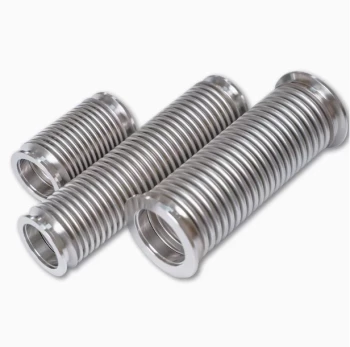
- High Performance Vacuum Bellows for Efficient Connection and Stable Vacuum in Systems
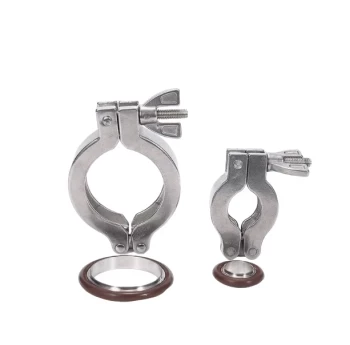
- Stainless Steel Quick Release Vacuum Chain Three Section Clamp
People Also Ask
- What is the function of a multi-zone tube furnace in CVD synthesis? Master 2D In2Se3 Nanosheet Precision
- Why are multi zone tube furnaces particularly useful for nanomaterial research? Unlock Precise Thermal Control for Advanced Synthesis
- What temperature-related capabilities make multi zone tube furnaces valuable for research? Unlock Precision Thermal Control
- What environmental protection applications utilize multi zone tube furnaces? Unlock Precision in Waste Treatment and Green Tech
- What role do multi zone tube furnaces play in new energy research? Unlock Precise Thermal Control for Innovation