The primary functional role of a vacuum pump within an induction brazing experimental apparatus is to evacuate the sealed chamber to an extremely low pressure, typically reaching levels such as 3 Pa. This evacuation is a preparatory step that thoroughly eliminates residual atmospheric air and potential contaminants from the environment before the heating process begins.
The vacuum pump acts as a foundational sterilization tool for the experimental atmosphere. By stripping away ambient air, it guarantees that the specific gas mixture and oxygen concentration used during brazing remain pure, ensuring the reliability and reproducibility of your research data.
Creating a Controlled Atmosphere
Elimination of Residual Air
The vacuum pump serves as the first line of defense against environmental variables. Its objective is to physically remove the residual atmospheric air that naturally occupies the chamber.
By extracting this air, the pump removes uncontrolled elements—specifically oxygen and moisture—that could react unpredictably with the brazing materials.
Establishing the Pressure Baseline
The apparatus relies on the pump to achieve a specific low-pressure benchmark, such as 3 Pa.
Reaching this deep vacuum state is critical because it resets the chamber's environment to a "neutral" state. This ensures that the starting condition for every experiment is identical, eliminating pre-existing air pressure as a variable.
Ensuring Experimental Integrity
Protecting Process Gases
Once the vacuum pump has cleared the chamber, process gases are introduced. The pump’s prior work ensures these new gases are not compromised by the surrounding environment.
Without this evacuation step, the introduced gas would mix with existing air, diluting its purity and altering its chemical properties.
Strictly Defined Oxygen Concentration
For high-quality research, variables must be isolated. The vacuum pump allows the researcher to establish a strictly defined oxygen concentration.
By removing the random fluctuations of ambient oxygen, the pump ensures that any oxidation or interaction observed during the brazing process is due to controlled experimental parameters, not accidental contamination.
Understanding Operational Criticality
The Dependency on Seal Integrity
While the pump provides the evacuation power, its effectiveness is entirely dependent on the sealed chamber.
If the chamber seals are compromised, the pump cannot achieve the required 3 Pa pressure. This inability to hold a vacuum renders the "clean slate" impossible, leading to immediate contamination of the process gases.
The Risk of Partial Evacuation
Stopping the pump before reaching the target low pressure can lead to false positives in research data.
Even a small amount of residual air can alter the oxygen concentration significantly enough to skew results, making the data unreliable for scientific publication or process validation.
How to Apply This to Your Project
To ensure your induction brazing experiments yield valid data, consider how the vacuum phase aligns with your specific goals:
- If your primary focus is Research Accuracy: Ensure the pump is maintained to consistently reach the 3 Pa threshold, guaranteeing that no residual air biases your oxygen concentration data.
- If your primary focus is Process Gas Purity: Verify the chamber holds the vacuum after the pump is disengaged but before gas backfilling to confirm that no external contaminants are leaking in.
The vacuum pump is not merely an accessory; it is the gatekeeper that validates the accuracy of your entire atmospheric control system.
Summary Table:
| Feature | Functional Role in Induction Brazing |
|---|---|
| Primary Objective | Evacuate chamber to low pressure (e.g., 3 Pa) to remove air/contaminants |
| Atmospheric Control | Resets environment to a "neutral" state for precise gas backfilling |
| Oxygen Management | Establishes strictly defined oxygen concentrations to prevent oxidation |
| Data Integrity | Eliminates environmental variables to ensure research reproducibility |
| System Dependency | Relies on chamber seal integrity to maintain high-purity conditions |
Elevate Your Research Precision with KINTEK
Maximize the integrity of your induction brazing experiments with high-performance atmospheric control. KINTEK provides industry-leading, customizable Muffle, Tube, Rotary, Vacuum, and CVD systems designed for the most demanding lab environments. Backed by expert R&D and precision manufacturing, our high-temperature furnaces ensure the reliable vacuum levels and controlled atmospheres your research requires.
Ready to optimize your thermal processes? Contact us today to discuss your unique needs and discover how our advanced lab solutions can bring unparalleled accuracy to your work.
References
- Sebastian Weis, Thomas Uhlig. Effects of local gas shielding on induction brazing of stainless steel: an experimental approach. DOI: 10.1007/s40194-024-01892-5
This article is also based on technical information from Kintek Furnace Knowledge Base .
Related Products
- Vacuum Hot Press Furnace Machine Heated Vacuum Press
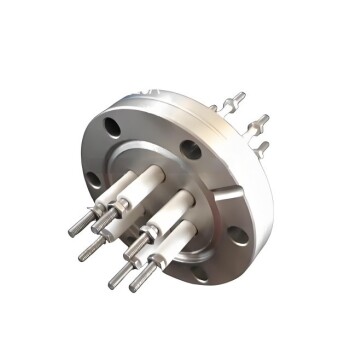
- CF KF Flange Vacuum Electrode Feedthrough Lead Sealing Assembly for Vacuum Systems
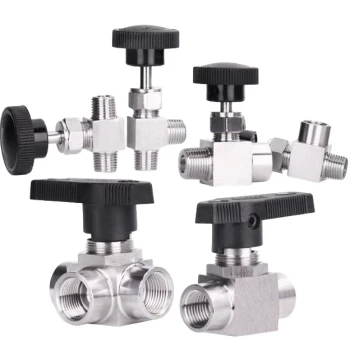
- 304 316 Stainless Steel High Vacuum Ball Stop Valve for Vacuum Systems
- Vacuum Hot Press Furnace Machine for Lamination and Heating
- Vacuum Hot Press Furnace Machine Heated Vacuum Press Tube Furnace
People Also Ask
- What are the primary components of a vacuum hot press furnace? Master the Core Systems for Precise Material Processing
- What are the benefits of the vacuum environment system in a vacuum hot press furnace? Unlock High-Density Sintering
- What safety features are incorporated in vacuum hot press furnaces? Ensure Operator and Equipment Protection
- What types of heating elements are used in vacuum hot press furnaces? Optimize for High-Temp Performance
- What are the core advantages of using a vacuum hot press furnace? Achieve Near-Forged Density for Ti-6Al-4V Alloys