Controlled thermal post-processing is not just a finishing step—it’s the defining moment that transforms a fragile, as-printed hemp-mycelium part into a robust, dimensionally stable bio-composite. After FDM or SLS deposition, the material is a loosely bound matrix of biopolymer binder and mycelium filler. Without precise, controlled heating to cure the binder and permanently bond the particles, the part will remain weak, moisture-sensitive, and prone to warping. The process delivers the material’s final mechanical integrity, thermal resistance, and lightweight insulation characteristics.
The surface need is to understand what thermal post-processing does. The deeper need is to grasp why temperature precision matters so critically—because working with heat-sensitive bio-materials requires a tight window between curing and degradation. Controlled thermal post-processing activates the binder’s full cross-linking potential, locks in dimensional accuracy, and preserves the delicate mycelium structure, all while avoiding the point where the organic components begin to char or lose their beneficial properties.
The Dual Role of Heat in Hemp-Mycelium Composites
After additive manufacturing, the composite is in an intermediate state. The binder has been shaped but not fully set, and the mycelium filler particles are merely embedded, not structurally integrated. Heat applied with strict control accomplishes two essential transformations simultaneously.
Curing the Biopolymer Binder
In both FDM and SLS, the binder—whether PLA, polyamide, or a biopolymer like chitosan—serves as the matrix that holds the mycelium particles. During printing, this binder only partially fuses, leaving weak interfacial bonds. Controlled post-processing drives the binder through its final curing or recrystallization phase, allowing polymer chains to fully relax and cross-link. This dramatically increases tensile strength and stiffness, turning a layered assembly into a homogeneous solid.
Stabilizing the Mycelium Filler Network
The mycelium particles in the powder are not living; they are dried, inert biological matter. However, their porous, fibrous structure still holds residual moisture and can compact unevenly under stress. Controlled heating evaporates this bound water gradually, preventing steam-induced micro-cracks. More importantly, as the binder softens and reflows under heat, it wets the mycelium surfaces more completely, creating a mechanical interlock. This converts the mixture from a simple “powder in plastic” into a truly integrated bio-composite with superior load transfer.
Why Precision Temperature Control Determines Success
The difference between a durable part and a failed one often comes down to a narrow temperature band. Hemp and mycelium are organic materials with lower thermal stability than synthetic fillers like glass fiber.
Navigating the Degradation Threshold
Hemp begins to thermally degrade at around 200–230°C, depending on exposure time, and mycelium’s chitin-based cell walls can start to break down even sooner. The post-processing temperature must sit high enough to fully cure the binder (typically 160–180°C for PLA, for example) but remain strictly below the point where the bio-filler scorches, off-gasses, or loses structural integrity. Even a brief overshoot can turn the composite brittle and discolored, ruining its insulation properties.
Ensuring Uniform Heat Distribution
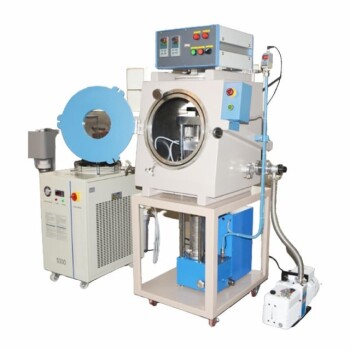
Laboratory heating equipment and atmosphere furnaces are specified for a reason: they avoid hot spots that would locally degrade the organic material while leaving other regions under-cured. In a conventional oven without forced convection or precise PID control, temperature gradients can cause uneven binder flow and variable shrinkage. This leads directly to warping, delamination, and loss of dimensional accuracy—fatal flaws for parts intended as insulation panels or structural components.
Atmosphere Control as a Co-Factor
Often overlooked, the atmosphere inside the furnace matters. An inert gas environment (e.g., nitrogen) during post-processing can prevent oxidative degradation of both the mycelium and the binder at elevated temperatures. This allows the use of higher effective curing temperatures without charring, yielding a part with better mechanical strength and a more consistent surface finish.
Understanding the Trade-offs
Not all thermal post-processing is equal, and pushing for maximum temperature or speed introduces risks that must be weighed against the final application.
Speed vs. Structural Integrity
Rapid heating cycles can save time but cause the part’s exterior to cure and shrink before the core has reached temperature. This generates internal stresses that manifest as micro-cracks or warping weeks after the part cools. A slow, staged ramp-up profile is almost always necessary for thick sections, sacrificing speed for long-term reliability.
Dimensional Stability vs. Bioactivity
Some applications seek to retain a degree of moisture buffering or even a minimal biological activity in the mycelium. Aggressive, high-temperature post-processing will completely inert the material, which is ideal for structural stiffness but eliminates any passive humidity regulation or potential for self-healing. Designers must clarify whether complete devitalization is the goal.
Energy Cost and Throughput
Precision-controlled ovens with atmosphere management consume significant energy and extend cycle times. For large-scale production, this adds a non-trivial cost. The trade-off is between higher per-part manufacturing expense and the superior, repeatable material properties that justify the product’s market position as a high-performance green composite.
Making the Right Choice for Your Project
The thermal post-processing protocol must be tailored to the specific binder chemistry, part geometry, and end-use requirements. Here is how to align your approach with your primary goal.
- If your primary focus is maximum mechanical strength and heat resistance: Use a multi-stage heating profile in an inert atmosphere, targeting a hold temperature just below the hemp degradation point, with a long soak to ensure complete binder curing and particle bonding.
- If your primary focus is dimensional accuracy for large insulation panels: Prioritize uniform, slow heating with forced convection to avoid thermal gradients, and incorporate a controlled cooling phase to lock in the final shape without residual stress.
- If your primary focus is cost-efficient production of non-structural items: A simpler, air-atmosphere oven with a single hold temperature may suffice, but you must accept a trade-off in ultimate strength and a higher risk of surface discoloration from oxidation.
Ultimately, controlled thermal post-processing acts as the critical bridge between a promising 3D-printed green shape and a reliable, market-ready bio-composite product. The precision you apply here defines the final performance, longevity, and commercial viability of your hemp-mycelium components.
Summary Table:
| Process Aspect | Optimal Target / Parameter | Key Functional Benefit | Risks of Poor Control |
|---|---|---|---|
| Binder Curing | 160–180°C (e.g., PLA) | Full polymer cross-linking & maximum tensile strength | Weak interfacial bonding, structural fragility |
| Organic Stability | Stay below 200–230°C | Preserves hemp & mycelium fibers from charring | Bio-filler degradation, brittleness, discoloration |
| Atmosphere Control | Inert Gas (e.g., Nitrogen) | Prevents oxidative damage at elevated temperatures | Surface oxidation, reduced mechanical integrity |
| Thermal Uniformity | Precision PID / Forced Flow | Uniform curing & locked-in dimensional stability | Heat gradients, warping, internal micro-cracks |
Optimize Your Advanced Bio-Composite Post-Processing with KINTEK
Transform fragile 3D-printed parts into high-performance, dimensionally stable bio-composites. KINTEK specializes in advanced laboratory heating equipment and high-temperature furnaces—including controlled-atmosphere, vacuum, muffle, tube, and fully customizable lab furnace systems engineered specifically to deliver tight temperature precision and uniform heat distribution.
Protect heat-sensitive organic fillers, prevent oxidative charring, and achieve complete binder cross-linking with our reliable thermal processing solutions tailored for researchers and manufacturers.
Contact KINTEK today to discuss your customized furnace solution
Related Products
- Multi Heating Zones CVD Tube Furnace Machine for Chemical Vapor Deposition Equipment
- Vacuum Hot Press Furnace Machine for Lamination and Heating
- High Temperature Muffle Oven Furnace for Laboratory Debinding and Pre Sintering
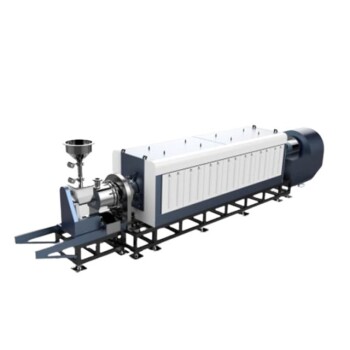
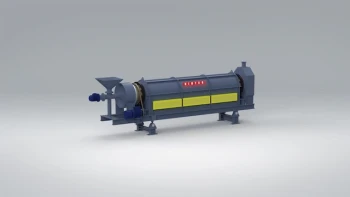
- Electric Rotary Kiln Small Rotary Furnace Biomass Pyrolysis Plant Rotating Furnace
- Vacuum Hot Press Furnace Machine Heated Vacuum Press
People Also Ask
- What is the function of a multi-zone tube furnace in CVD synthesis? Master 2D In2Se3 Nanosheet Precision
- What temperature-related capabilities make multi zone tube furnaces valuable for research? Unlock Precision Thermal Control
- Why are multi zone tube furnaces particularly useful for nanomaterial research? Unlock Precise Thermal Control for Advanced Synthesis
- What role do multi zone tube furnaces play in new energy research? Unlock Precise Thermal Control for Innovation
- What environmental protection applications utilize multi zone tube furnaces? Unlock Precision in Waste Treatment and Green Tech