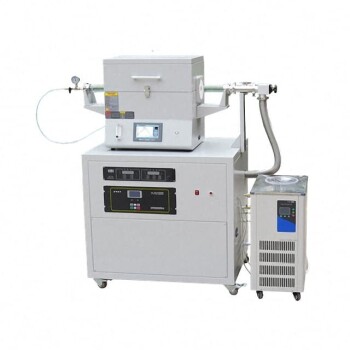
The Vacuum Induction Furnace (VIF) serves as the primary vessel for melting and alloying C-Mn experimental steel in a strictly controlled, high-temperature environment reaching up to 1600 ℃. By operating under vacuum or low-pressure conditions, the furnace prevents atmospheric gases like oxygen and nitrogen from reacting with the molten metal. This process ensures the resulting steel possesses a precise chemical composition and high purity level, which is critical for experimental accuracy and reproducibility.
The Vacuum Induction Furnace is essential for producing high-quality C-Mn steel because it isolates the melting process from the atmosphere. This isolation allows researchers to control trace elements and oxygen levels with surgical precision, ensuring that experimental results are based on an exact, known chemistry.
Eliminating Atmospheric Interference
Preventing Oxidation and Nitrification
At high temperatures, molten steel reacts aggressively with the oxygen and nitrogen in the air. The VIF creates a vacuum environment that blocks these reactions, preventing the oxidative loss of alloying elements. This is vital for maintaining the intended ratios of carbon and manganese in the final sample.
Managing Gas Contamination
Nitrogen and oxygen can become trapped in the steel matrix, creating inclusions that compromise the material's properties. The vacuum suction effectively removes dissolved gases and volatile impurities from the liquid metal. This results in a cleaner, higher-purity matrix necessary for sensitive experimental studies.
Achieving Precision in Chemical Composition
Controlling Carbon and Manganese Levels
The furnace allows for the precise addition of raw materials like electrolytic iron and high-purity graphite. Because the environment is controlled, the burn-off rate of carbon and manganese is minimized and predictable. This ensures the experimental steel matches the theoretical design within very tight tolerances.
Precision Management of Trace Elements
C-Mn experimental steels often require the addition of specific trace elements like antimony (Sb) and sulfur (S). The VIF provides the stability needed to add these elements without them reacting with atmospheric contaminants. This level of control is essential for studying the specific metallurgical effects of trace additions.
Controlling Total Oxygen (T.O) Content
The ability to add deoxidizers under vacuum allows for the precise regulation of the Total Oxygen content in the steel. This enables researchers to prepare samples with various "cleanliness" levels. Such control is critical when investigating how oxygen levels affect the mechanical properties of the steel.
Enhancing Structural and Chemical Uniformity
The Role of Electromagnetic Stirring
Induction furnaces use electromagnetic fields to heat the metal, which naturally creates a stirring effect in the melt. This ensures that all alloying elements, such as carbon, manganese, and copper, are thoroughly mixed. The result is a molten bath with a completely uniform chemical composition.
Producing High-Quality Ingots
Uniformity in the liquid state leads to homogenous ingots upon cooling. Without this uniformity, different parts of the steel sample would have different properties, rendering experimental results unreliable. The VIF ensures that every part of the ingot reflects the target specification.
Understanding the Trade-offs
Refractory Material Interactions
While the vacuum protects the steel from the air, the high heat can cause reactions between the molten metal and the crucible lining. If the refractory material is not carefully selected, it can introduce unwanted impurities like silicon or oxygen into the C-Mn steel.
Complexity and Operating Costs
Operating a vacuum system is significantly more complex and expensive than traditional air-induction melting. It requires specialized maintenance to prevent leaks and ensure the vacuum pumps are functioning correctly. This makes it a tool primarily reserved for high-precision laboratory research rather than bulk production.
Making the Right Choice for Your Research Goal
How to Apply This to Your Project
- If your primary focus is trace element sensitivity (e.g., Sb or S): Use the VIF to ensure these elements are not lost to oxidation or masked by atmospheric impurities.
- If your primary focus is high-purity mechanical testing: Utilize the vacuum deoxidation capabilities to keep Total Oxygen levels as low as possible for a clean matrix.
- If your primary focus is chemical uniformity: Rely on the electromagnetic stirring of the induction process to ensure alloying elements are distributed evenly throughout the ingot.
The Vacuum Induction Furnace is the definitive tool for researchers who require absolute control over the chemical environment to ensure their experimental C-Mn steel is pure, uniform, and precise.
Summary Table:
| Key Function | Mechanism | Impact on C-Mn Steel |
|---|---|---|
| Atmospheric Isolation | Vacuum/Inert gas environment | Prevents oxidation and nitrification of C and Mn |
| Degassing | Vacuum suction | Removes dissolved oxygen and nitrogen for higher purity |
| Composition Control | Precise raw material addition | Matches theoretical design with tight tolerances |
| Homogenization | Electromagnetic stirring | Ensures uniform distribution of alloying elements |
| Cleanliness Regulation | Controlled deoxidation | Manages Total Oxygen (T.O) for mechanical testing |
Elevate Your Metallurgical Research with KINTEK
Achieving the perfect chemical composition in C-Mn experimental steel requires equipment that offers absolute control. KINTEK specializes in high-performance laboratory equipment and consumables designed for the most demanding research environments. Our comprehensive range of high-temperature furnaces—including vacuum induction melting, muffle, tube, rotary, CVD, and atmosphere furnaces—are all fully customizable to meet your unique experimental needs.
Whether you need to minimize trace element loss, achieve ultra-low oxygen levels, or ensure structural uniformity, KINTEK provides the reliability and precision your lab deserves.
Ready to optimize your steel preparation? Contact our technical experts today to find the perfect furnace solution!
References
- Guilin Sun, Chao Chen. Effect of Sulfur on Antimony-Induced High-Temperature Ductility Deterioration of C-Mn Steel. DOI: 10.3390/met13010130
This article is also based on technical information from Kintek Furnace Knowledge Base .
Related Products
- 600T Vacuum Induction Hot Press Vacuum Heat Treat and Sintering Furnace
- Vacuum Induction Melting Furnace
- Small Vacuum Heat Treat and Tungsten Wire Sintering Furnace
- High Pressure Laboratory Vacuum Tube Furnace
- Vacuum Hot Press Furnace Machine Heated Vacuum Press Tube Furnace
People Also Ask
- Why use Vacuum Hot Press (VHP) for ZnS Ceramics? Achieve Superior IR Transparency and Mechanical Strength
- How does a vacuum hot press sintering furnace mitigate copper sintering swelling? Solve Fe-Cu Expansion Issues
- What are the key advantages of vacuum hot press sintering furnaces? Achieve Superior Density and Purity in Materials
- How does the vacuum environment in a vacuum hot press sintering furnace protect chromium-containing ceramics? Find out.
- What is the core function of a vacuum hot press sintering furnace in the preparation of high-density RuTi alloys? Achieve Maximum Density and Purity