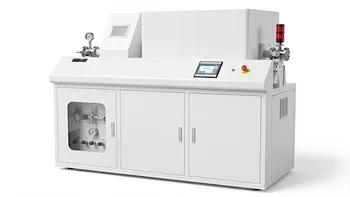
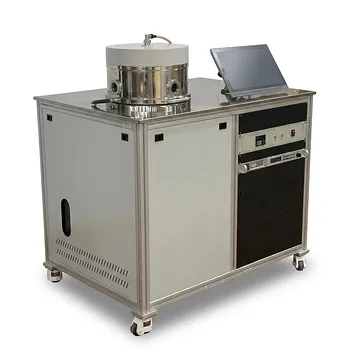
The high-pressure reaction tube is the essential containment vessel that enables the hydrogen pyrolysis (Hypy) process. It provides a specialized physical environment where samples are subjected to hydrogen pressures as high as 15 MPa and programmed heating up to 550 °C.
The primary function of the high-pressure reaction tube is to facilitate the reductive removal of unstable organic matter while preserving the most stable black carbon structures. This selective process ensures that the remaining carbon samples are reliable and ready for precise radiocarbon quantification.
Engineering the Reaction Environment
The reaction tube is designed to withstand extreme physical stresses while maintaining a strictly controlled atmosphere.
Managing High-Pressure Hydrogen
Inside the tube, the environment is pressurized to 15 MPa using high-purity hydrogen. This extreme pressure is necessary to drive the chemical reactions that strip away non-stable carbon components.
Facilitating Precision Programmed Heating
The tube works in tandem with a furnace to apply programmed heating up to 550 °C. This controlled ramp-up in temperature allows for the systematic breakdown of organic matter without destroying the target black carbon.
Atmospheric Protection and Purity
Like other specialized tube furnaces, this vessel ensures a controlled environment that prevents unwanted oxidation. By maintaining a high-pressure, hydrogen-rich atmosphere, the tube protects the integrity of the carbon skeleton throughout the reaction.
The Chemistry of Selective Pyrolysis
The reaction tube is not just a container; it is the site of a complex thermochemical "cleaning" process.
Reductive Removal of Labile Carbon
The combination of heat and high-pressure hydrogen facilitates the reductive removal of organic matter and unstable elemental carbon. This process effectively "washes" the sample of components that would otherwise interfere with analysis.
Preservation of Stable Black Carbon
A key function of the tube's controlled environment is the preservation of the most stable black carbon structures. Because the conditions are precisely modulated, the most resilient carbon remains intact for further study.
Enabling Accurate Radiocarbon Quantification
By isolating the most stable carbon fractions, the reaction tube ensures the production of reliable samples. This is critical for researchers who require high-precision radiocarbon dating and quantification.
Understanding the Trade-offs
While the high-pressure reaction tube is essential for Hypy, it presents specific engineering and operational challenges.
Material Stress and Maintenance
Operating consistently at 15 MPa and 550 °C places significant mechanical stress on the reaction tube. Over time, these extreme conditions can lead to material fatigue, requiring rigorous safety inspections and periodic replacement.
Process Complexity vs. Sample Purity
The high-pressure approach is significantly more complex than standard atmospheric pyrolysis. However, this complexity is the necessary "trade-off" for achieving the level of sample purity required for accurate black carbon analysis.
Temperature Limitations
While 550 °C is ideal for Hypy, other tube furnace applications (such as biomass carbonization) may reach 800 °C or higher. The Hypy reaction tube is specifically optimized for high pressure, which can sometimes limit its maximum temperature range compared to low-pressure specialized furnaces.
Applying Hypy Technology to Your Research
Choosing the right parameters for your reaction tube depends on your specific analytical goals.
- If your primary focus is accurate radiocarbon dating: Ensure the reaction tube is maintained to hold a steady 15 MPa, as pressure fluctuations can lead to incomplete removal of modern organic contaminants.
- If your primary focus is characterizing black carbon stability: Utilize the programmed heating capabilities to observe how different carbon fractions react at incremental stages up to 550 °C.
- If your primary focus is catalyst reduction or doping: Consider whether a standard high-temperature tube furnace is more appropriate, as these often allow for higher temperatures (up to 800 °C) at lower pressures.
By mastering the high-pressure environment within the reaction tube, you can achieve the chemical selectivity necessary for definitive carbon analysis.
Summary Table:
| Feature | Specification/Function | Benefit to Research |
|---|---|---|
| Operating Pressure | 15 MPa (Hydrogen) | Drives reductive removal of labile organic matter |
| Max Temperature | 550 °C (Programmed) | Systematic breakdown of organics without destroying black carbon |
| Atmospheric Control | Reducing Hydrogen Environment | Prevents unwanted oxidation and protects carbon skeleton |
| Primary Application | Selective Pyrolysis | Isolates stable carbon fractions for radiocarbon dating |
| Material Resilience | High-Stress Engineering | Ensures safety and integrity under extreme thermal/pressure cycles |
Precision Engineering for Your Carbon Research
Achieving the chemical selectivity required for definitive carbon analysis demands equipment that can withstand extreme environments. KINTEK specializes in high-performance laboratory equipment and consumables, offering a comprehensive range of high-temperature furnaces—including tube, muffle, vacuum, and CVD systems—all fully customizable to meet your unique research needs.
Whether you are performing hydrogen pyrolysis (Hypy), catalyst reduction, or advanced material synthesis, KINTEK provides the reliability and precision your lab requires for high-purity results.
Ready to enhance your lab's capabilities?
Contact KINTEK Experts Today to find the perfect furnace solution for your application.
References
- Xiangyun Zhang, Gan Zhang. Technical note: Intercomparison study of the elemental carbon radiocarbon analysis methods using synthetic known samples. DOI: 10.5194/acp-23-7495-2023
This article is also based on technical information from Kintek Furnace Knowledge Base .
Related Products
- High Pressure Laboratory Vacuum Tube Furnace
- Custom Made Versatile CVD Tube Furnace Chemical Vapor Deposition CVD Equipment Machine
- Vacuum Hot Press Furnace Machine Heated Vacuum Press Tube Furnace
- Split Chamber CVD Tube Furnace with Vacuum Station CVD Machine
- Slide PECVD Tube Furnace with Liquid Gasifier PECVD Machine
People Also Ask
- What role does a high vacuum tube furnace play in Co-Al sintering? Master High-Purity Porous Material Synthesis
- What are the different types of tube furnaces available? Find the Perfect Fit for Your Lab's Needs
- What is the role of a vacuum tube furnace during the final thermal treatment stage of Fe3O4@CSAC catalysts?
- What are the main advantages of vacuum tube furnaces in the market? Achieve Purity and Precision in Material Processing
- Why is a laboratory tube furnace necessary for BiVO4/RGO synthesis? Achieve Precise Nano-Structure Control