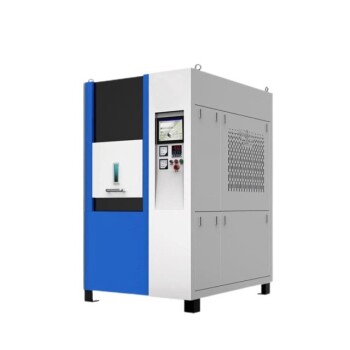
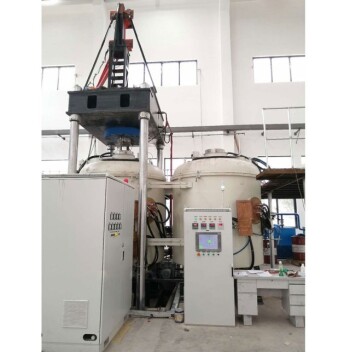
To sinter ultra-high-temperature ceramics (UHTCs) like Zirconium Diboride (ZrB₂) or Titanium Diboride (TiB₂), your furnace must reliably operate well above 2000 °C under a rigorously controlled vacuum or inert atmosphere—and deliver exceptional thermal uniformity across the entire hot zone.
The core specifications for processing ZrB₂ and TiB₂ are a maximum operating temperature of at least 2200 °C (often 2300 °C or higher), high‑vacuum capability (≤ 10⁻³ mbar) or ultra‑high‑purity argon, and a heating chamber engineered for tight thermal gradients (±5–10 °C). These three factors together prevent oxidation, suppress destructive side reactions, and enable the diffusive mass transport needed for near‑fully‑dense, high‑purity ceramic bodies.
Why the Temperature Threshold Is Non‑Negotiable
Pure ZrB₂ and TiB₂ have extreme melting points—3245 °C and 3200 °C, respectively—so solid‑state sintering requires temperatures that can drive sufficient diffusion without the aid of a liquid phase. In practice, pressureless sintering of these UHTCs typically demands soak temperatures between 2100 °C and 2300 °C. Without this extreme thermal driving force, particle necks never mature, porosity remains high, and final density drops well below what is needed for structural or thermal protection applications.
The Kinetic Barrier of Covalent Bonding
Both borides possess strong covalent bonding and low self‑diffusion coefficients. Only when the furnace crosses the 2000 °C threshold does grain‑boundary diffusion become fast enough to close residual pores. If your furnace tops out at 1800 °C or even 2000 °C, you will likely end up with a fragile, open‑porous skeleton rather than a densified ceramic.
Avoiding Side Reactions Through Peak Temperature Control
At excessive temperatures, titanium diboride can react with oxide impurities—for example, TiB₂ + ZrO₂ → ZrB₂ + TiO₂—degrading mechanical properties. A furnace with precise over‑temperature protection and tight dwell control lets you push to the minimum temperature that yields full density while staying below the thresholds where parasitic reactions accelerate.
The Atmosphere Imperative: Vacuum or Inert Blanket
Non‑oxide ceramics oxidize catastrophically at sintering temperatures. A high‑temperature furnace processing ZrB₂ or TiB₂ must therefore maintain a pristine environment throughout the entire heating cycle.
Vacuum: The Most Protective Environment
A high‑vacuum regime (typically 10⁻³ to 10⁻⁵ mbar) sweeps away residual oxygen, water vapor, and outgassing species. This is especially critical when raw powders carry volatile contaminants like B₄C, which can release CO at temperatures around 1000 °C. A furnace with an active pumping system and vacuum‑tight hot zone ensures that these gases are evacuated before they oxidize the part or leave carbonaceous residues.
High‑Purity Argon: A Practical Alternative
When vacuum conditions are impractical (e.g., large furnaces or long cycles), high‑purity argon (≥ 99.999%) can serve as an inert blanket. The argon flow must be actively managed to continuously purge the working volume and carry away any reactive volatiles. Note that even trace oxygen in the argon (above 1 ppm) can cause a visible oxide scale on ZrB₂ or TiB₂ surfaces at peak temperatures.
Heating Uniformity: The Hidden Specification
It is not enough to reach 2200 °C; every cubic centimeter of the part must experience a nearly identical thermal history. Poor thermal uniformity leads to anisotropic shrinkage, warping, differential grain growth, and hot‑short cracking.
Thermal Gradients and the Risk of Thermal Shock
UHTCs have moderate thermal shock resistance, but a furnace that heats one face of a component significantly faster than another can induce tensile stresses beyond the fracture point. Engineering‑grade furnaces for these materials are designed with multi‑zone heating and actively controlled power delivery to keep temperature spreads within ±5 °C across the usable workspace.
Measurement Tools That Can See Above 2000 °C
Conventional thermocouples fail at these extremes. Your furnace specification must include one or more optical pyrometers or two‑color infrared sensors capable of accurately reading temperatures in the 1000 °C–2500 °C range, calibrated for the specific emissivity of the heating element and the workpiece.
Understanding the Trade‑offs
Extreme Temperature vs. Grain Growth
Every minute spent above 2100 °C invites exaggerated grain growth, which can coarsen the microstructure and undermine fracture toughness. The ideal furnace combines ultra‑high maximum temperature with the ability to ramp and soak with sub‑degree precision, allowing you to hit the “densification window” without brewing an overly coarse grain structure.
Conventional Resistance Heating vs. Advanced Sintering Techniques
Traditional resistance‑heated graphite furnaces (often operating up to 2200–2400 °C) remain the workhorse for UHTC sintering. However, Spark Plasma Sintering (SPS) can often achieve equivalent or better density at 150–200 °C lower temperatures—for instance, densifying ZrC at 1850 °C instead of >2000 °C. While SPS is not yet universal for large‑scale production, its ability to reduce thermal budget and suppress grain growth makes it a highly attractive specification if you are scaling down from research to pilot production.
Pressure‑Assisted Sintering Reduces Temperature Requirements
Hot pressing or SPS applies uniaxial pressure during sintering, which dramatically lowers the temperature needed for full densification. For TiB₂ cermets with a metallic binder, near‑theoretical densities may be obtained as low as 1600 °C via pressureless liquid‑phase sintering, but pure ZrB₂ and TiB₂ still demand the high‑temperature envelope described above unless pressure is applied.
Cost vs. Capability
Furnaces with maximum temperatures above 2200 °C and high‑vacuum capability demand exotic heating elements (graphite, tungsten mesh) and intricate cooling systems. The capital and operating costs rise steeply. However, for most UHTC applications—hypersonic leading edges, re‑entry shields, molten‑metal crucibles—the performance envelope is non‑negotiable; cutting furnace specifications for cost will compromise the final part’s integrity.
Making the Right Choice for Your Goal
Every lab or production line has different priorities. Use these recommendations to align furnace specifications with your real objective.
- If your primary focus is producing dense, oxide‑free monolithic ZrB₂ or TiB₂: Invest in a high‑vacuum graphite resistance furnace rated to at least 2200 °C with ±5 °C thermal uniformity and automated glow‑to‑soak programming.
- If your primary focus is research and you need to minimize processing time and grain size: Consider a Spark Plasma Sintering system that can reliably achieve 2000–2100 °C under uniaxial pressure, which can lower the peak temperature requirement by 150 °C or more.
- If your primary focus is manufacturing TiB₂‑based cermets or composites with a metallic binder: A lower‑cost atmosphere furnace capable of 1600–1700 °C with high‑purity argon flow may suffice, but you must still maintain rigorous oxygen exclusion to preserve the UHTC reinforcement phase.
- If your primary focus is scaling up from coupon to component: Prioritize a furnace with a large, thermally uniform hot zone (multi‑zone control) and in‑situ optical pyrometry, even if it means sacrificing a few degrees of absolute maximum temperature—uniformity at the target sinter temperature trumps a higher nameplate max that you cannot use safely.
You do not need the single most expensive furnace on the market; you need the furnace whose temperature, atmosphere, and uniformity specifications align precisely with the unique thermodynamic demands of the ultra‑high‑temperature ceramic you are densifying.
Summary Table:
| Key Specification | Recommended Target | Impact on UHTC Quality |
|---|---|---|
| Max Operating Temp | ≥ 2200 °C (Up to 2300 °C+) | Overcomes kinetic barriers to enable deep diffusion and full density. |
| Atmosphere Regime | High Vacuum (≤10⁻³ mbar) or Argon (≥99.999%) | Prevents catastrophic oxidation and sweeps away volatile impurities. |
| Thermal Uniformity | ±5 °C to ±10 °C across hot zone | Eliminates anisotropic shrinkage, thermal shock, and part warping. |
| Temp Measurement | Optical Pyrometer / 2-Color IR | Delivers accurate readings above thermocouple failure thresholds. |
| Sintering Technique | Resistance Heating or SPS / Hot Press | SPS/Hot Pressing reduces target temps by 150–200 °C while limiting grain growth. |
Master Extreme Thermal Processing with KINTEK
Achieving near-theoretical density in UHTCs like Zirconium Diboride and Titanium Diboride requires zero compromise on thermal uniformity, vacuum purity, and temperature range. KINTEK specializes in premium laboratory equipment and high-temperature furnaces engineered to excel under extreme conditions.
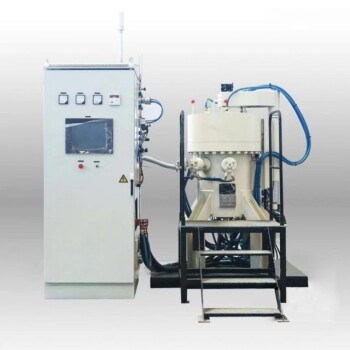
From high-vacuum graphite and atmosphere furnaces operating well over 2000 °C to tube, muffle, CVD, and induction melting systems, all KINTEK furnaces are fully customizable to suit your advanced material research or production scale.
Contact KINTEK today to consult with our application specialists and configure the ideal high-temperature furnace for your facility!
Related Products
- High Temperature Muffle Oven Furnace for Laboratory Debinding and Pre Sintering
- 2200 ℃ Tungsten Vacuum Heat Treat and Sintering Furnace
- 2200 ℃ Graphite Vacuum Heat Treat Furnace
- Vacuum Heat Treat Sintering Furnace Molybdenum Wire Vacuum Sintering Furnace
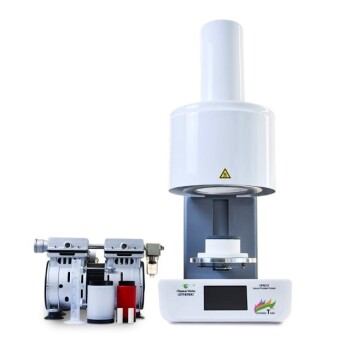
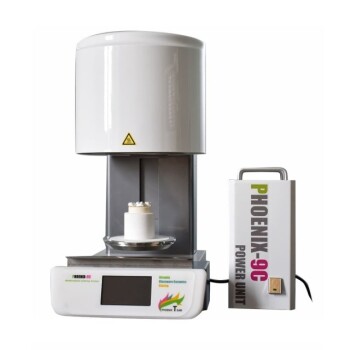
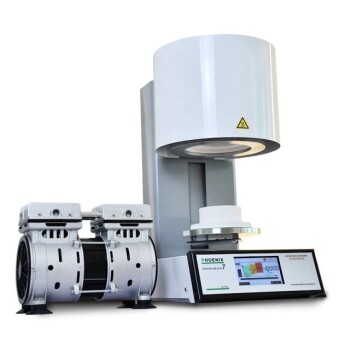
- Dental Porcelain Zirconia Sintering Ceramic Vacuum Press Furnace
People Also Ask
- What thermal phenomena occur during polymer binder burnout in ceramic green bodies? Lab Furnace Guide
- What role does a high-temperature muffle furnace play in STFO synthesis? Achieve Pure Perovskite Results
- Why is controlled heat treatment in a muffle furnace necessary for calcined clay? Achieve Optimal Pozzolanic Activity
- How does a high-temperature muffle furnace facilitate the formation of LaNbxAl1−xO3+δ perovskite structures? Key Roles
- What role does a high-temperature muffle furnace play in the formation of biochar catalysts? Master Catalyst Synthesis