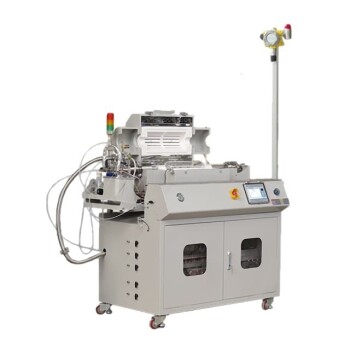
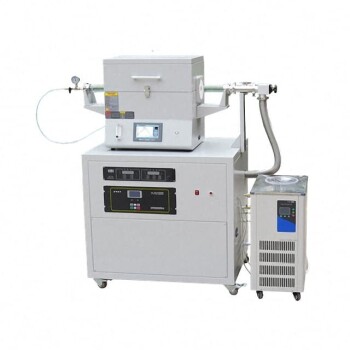
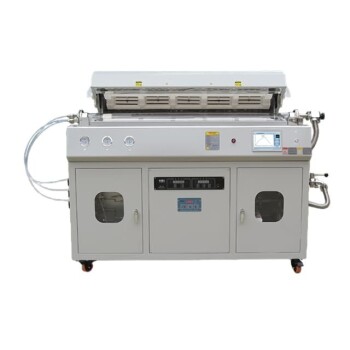
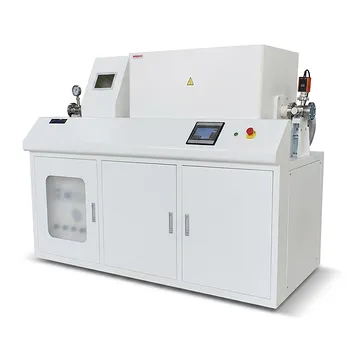
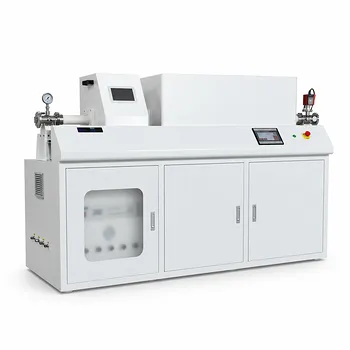
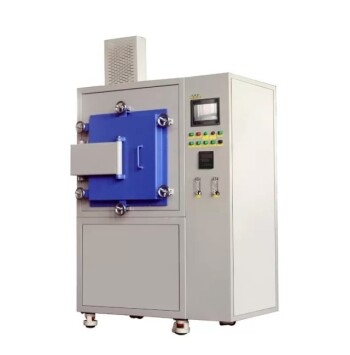
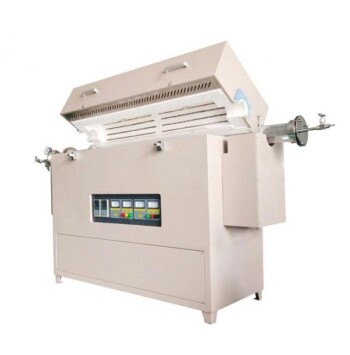
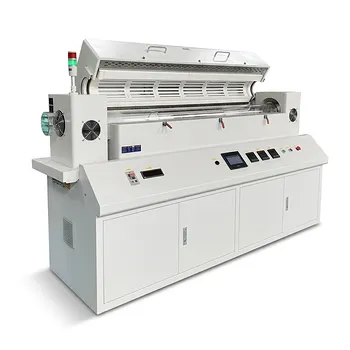
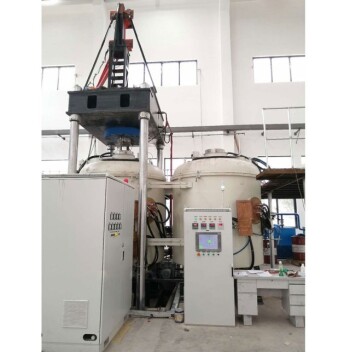
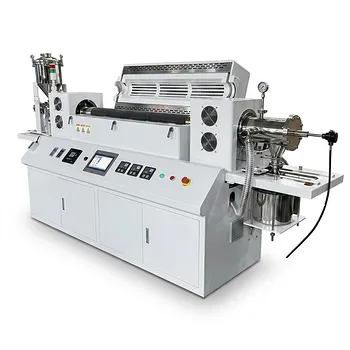
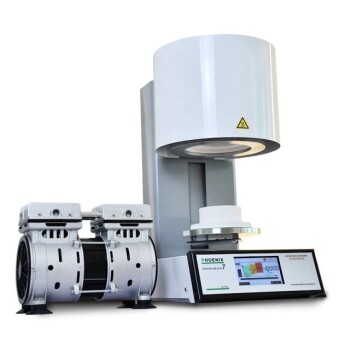
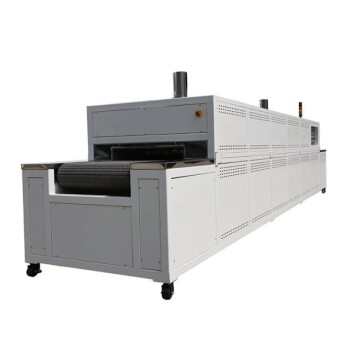
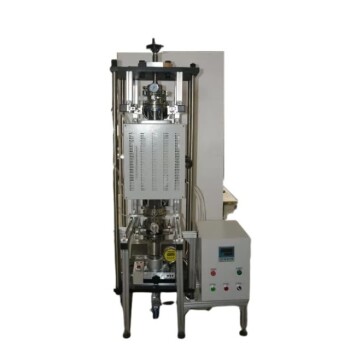
A CVD furnace is far more than a simple heated chamber. It is a precision instrument requiring multi-zone heating, vacuum-tight integrity, and exact gas flow management to drive the gas-phase reactions that deposit dense, uniform ceramic coatings. Without these integrated capabilities, the resulting films will be inconsistent, non-stoichiometric, or simply unusable.
While the immediate ask is about hardware, the deeper goal is reliable, high‑purity ceramic coatings. The furnace must deliver a perfectly controlled thermal and chemical environment across every square millimeter of your substrate—balancing temperature uniformity, atmosphere purity, and precursor delivery so that the coating chemistry, thickness, and microstructure are reproducible run after run.
Why the Furnace Defines the Coating’s Quality
Chemical Vapor Deposition for ceramics isn’t a simple “heat and coat” process. The furnace directly controls the reaction kinetics and the film’s final properties. If any capability is missing or underperforming, the coating will fail—whether through cracking, delamination, or off-spec composition.
The Reaction Depends on an Exact Thermal Budget
Gaseous precursors like methyltrichlorosilane (for SiC) thermally decompose or react only within a narrow temperature window. For most ceramic coatings—SiC, diamond-like carbon, or protective glass‑ceramics—this window sits between 600 °C and 1000 °C, though SiC synthesis can reach 1200 °C in a CVD furnace, still dramatically lower than the 1800–2000 °C required for solid‑state sintering.
A furnace must therefore provide precise, stable thermal control across the entire deposition zone. Any cold spot quenches the reaction prematurely; any hot spot causes premature gas‑phase nucleation, generating powder instead of a dense film.
Coatings Fail Without Atmospheric Integrity
Ceramic CVD is exquisitely sensitive to oxygen and moisture. Even trace leaks contaminate the coating with oxides, alter stoichiometry, and create weak interfaces. The furnace must be a leak‑tight system—vacuum‑rated flanges, high‑integrity seals, and the ability to cycle between vacuum, purge, and process gases without introducing atmospheric contamination. This is especially critical for reactive materials like aluminium‑ or silicon‑doped coatings, where hydrogen diffusion at the metal‑coating interface can cause spallation if the atmosphere isn’t pure and dry.
Core Furnace Capabilities, Layer by Layer
These are the non‑negotiable building blocks. Each one solves a specific failure mode in ceramic CVD.
Multi‑Zone Heating for Thermal Uniformity
A single‑zone heater inevitably creates a temperature gradient. A multi‑zone furnace divides the hot zone into independently controlled segments, flattening the thermal profile over the entire substrate area. This ensures:
- Every part of the substrate—whether a flat coupon, a complex shape, or a porous preform—sees the same temperature.
- Reaction kinetics are uniform, so film thickness grows consistently.
- Within a CVI process, precursor gases infiltrate porous fiber preforms at a uniform rate, preventing crusting that blocks deeper penetration.
Programmable Temperature Controllers with Feedback
Even a perfect heating element is useless without intelligent control. The furnace must have a programmable controller that can execute multi‑step thermal profiles—ramp, dwell, cool—with minimal overshoot. A closed‑loop system using thermocouples and PID algorithms maintains the target temperature within ±1–2 °C. This repeatability is what translates a successful lab recipe into a production‑grade process.
Leak‑Tight Vacuum and Atmosphere Management
The furnace chamber must be designed as a vacuum‑tight vessel. Key features include:
- High‑vacuum flanges and metal seals (Viton or copper) that hold base pressures in the 10⁻³ to 10⁻⁶ mbar range.
- The ability to purge with inert gas (argon, nitrogen) before process gas introduction, eliminating residual oxygen and moisture.
- A controlled pressure regulation system—often a throttle valve and vacuum pump combination—to hold a stable low‑pressure environment during deposition.
This hermetic envelope prevents external contaminants and also contains hazardous by‑products (like HCl from chlorosilane precursors) safely.
Integrated Gas Distribution Manifolds
Precursor delivery is a precision chemical engineering task. The furnace must incorporate mass flow controllers (MFCs) for each gas line, a manifold for mixing, and often bubblers or vaporizers for liquid precursors. Why?
- Stoichiometry control: For SiC from SiCl₄/CH₄, the C/Si ratio in the gas phase must be exact, otherwise the film will be carbon‑rich or silicon‑rich.
- Uniform film across the load: The manifold must introduce the gas mixture in a way that creates a laminar, even flow over the substrates, avoiding recirculation zones that cause thickness non‑uniformity.
- Multi‑layer capability: Switching between precursor sets to build graded or multi‑layer ceramic stacks requires immediate, accurate gas switching.
Process Automation and Safety Interlocks
High‑temperature CVD runs over hours. A fully automated system logs all parameters—temperature, pressure, gas flows—and can execute complex recipes without operator intervention. This is not just about convenience; it’s about reproducibility. Safety interlocks are equally critical: automatic shut‑off if over‑temperature, over‑pressure, or toxic gas leak is detected, protecting both the operator and the substrates.
Understanding the Trade‑offs
No furnace is perfect for every scenario. Selecting a system means weighing these tensions.
Temperature Uniformity vs. Furnace Size
Larger industrial furnaces can process higher volumes, but achieving tight uniformity across a 2‑meter‑long zone is exponentially harder than across a 30‑cm lab tube. The longer the hot zone, the more zones you need, and costs rise sharply. For high‑value, low‑volume ceramic coatings (e.g., aerospace CMCs), the premium for uniformity is justified. For lower‑cost enameling, simpler glass‑frit furnaces at 700–900 °C may suffice.
Vacuum Level vs. Throughput
Deep vacuum (10⁻⁶ mbar) guarantees the lowest oxygen levels but requires longer pump‑down cycles and higher‑spec hardware. If your coating tolerates low‑ppm oxygen (some oxide ceramics are forgiving), a simpler rough‑vacuum‑purge system can dramatically increase throughput without compromising quality.
Silane‑Based Precursors Add Complexity
Chlorosilanes (SiCl₄, MTS) are common but generate corrosive HCl gas. The furnace must be built with corrosion‑resistant internals (quartz or SiC‑coated components, stainless steel with special passivation) and have scrubbed exhaust. This raises capital and maintenance costs but is unavoidable for many high‑purity SiC processes.
Making the Right Choice for Your Goal
Prioritize the capability that aligns with your primary ceramic coating objective.
-
If your primary focus is research‑grade film purity and thickness control: Invest in a small hot‑wall, multi‑zone tube furnace with high‑vacuum capability and a flexible gas panel. The lower energy requirement compared to sintering (e.g., 1000 °C vs. 2000 °C for SiC) already broadens your substrate options.
-
If your primary focus is infiltrating porous preforms for ceramic matrix composites: Look for a CVI‑specific system with forced‑flow gas manifolds, pressure‑cycling capability, and uniform thermal loading to drive precursors deep into the fiber architecture without surface crusting.
-
If your primary focus is high‑volume industrial enameling or protective glass‑ceramic layers: A belt furnace or large batch atmosphere furnace with precise thermal regulation from 700 °C to 1000 °C will serve better, but don’t skip the atmosphere integrity—hydrogen diffusion at the coating‑metal interface still requires a dry, reducing environment to prevent spallation.
-
If your primary focus is scaling from lab to pilot production: Prioritize a modular furnace platform with field‑upgradeable zones, configurable gas panels, and strong data logging. Reproducibility across scale‑up is built on consistent thermal and flow fields.
The right furnace doesn’t just heat your parts; it orchestrates every molecule that forms your ceramic coating, ensuring that what you design in the chemistry is exactly what you get on the substrate.
Summary Table:
| Core Capability | Key Function | Coating Impact |
|---|---|---|
| Multi-Zone Heating | Maintains flat thermal profile across deposition area | Ensures uniform film thickness and reaction kinetics |
| Programmable PID Control | Closed-loop temperature regulation within ±1–2 °C | Prevents premature gas nucleation or cold-spot quenching |
| Vacuum-Tight Integrity | High-vacuum seals (10⁻³ to 10⁻⁶ mbar) with gas purge | Eliminates oxygen/moisture contamination and spallation |
| Integrated Gas Manifolds | Mass flow controllers (MFCs) for precise precursor mixing | Guarantees exact stoichiometry and multi-layer deposition |
| Automation & Interlocks | Recipe automation with over-temp/pressure safeguards | Delivers run-to-run reproducibility and operational safety |
Upgrade Your Chemical Vapor Deposition Systems with KINTEK
Achieving dense, uniform ceramic coatings requires uncompromised thermal precision and atmospheric control. KINTEK specializes in advanced laboratory equipment and high-performance consumables. We offer a comprehensive range of high-temperature furnaces—including state-of-the-art CVD, tube, vacuum, atmosphere, muffle, rotary, and induction melting furnaces—all fully customizable to meet your precise research or production demands.
Whether you are scaling ceramic matrix composites (CMCs) or optimizing high-purity surface coatings, our team provides reliable, tailored furnace solutions designed for maximum reproducibility.
Contact KINTEK today to consult with our high-temperature equipment experts and discover how our custom CVD furnaces can enhance your laboratory's capabilities!
Related Products
- Custom Made Versatile CVD Tube Furnace Chemical Vapor Deposition CVD Equipment Machine
- Split Chamber CVD Tube Furnace with Vacuum Station CVD Machine
- Multi Heating Zones CVD Tube Furnace Machine for Chemical Vapor Deposition Equipment
- Slide PECVD Tube Furnace with Liquid Gasifier PECVD Machine
- Inclined Rotary Plasma Enhanced Chemical Deposition PECVD Tube Furnace Machine
People Also Ask
- Why are CVD tube furnace sintering systems indispensable for 2D material research and production? Unlock Atomic-Scale Precision
- What is a CVD tube furnace and what is its primary function? Discover Precision Thin-Film Deposition
- How does CVD tube furnace sintering enhance graphene growth? Achieve Superior Crystallinity and High Electron Mobility
- Which industries and research fields benefit from CVD tube furnace sintering systems for 2D materials? Unlock Next-Gen Tech Innovations
- What temperature range do standard CVD tube furnaces operate at? Unlock Precision for Your Material Deposition