The culprit is hidden in the membrane’s chemistry—not just the heat. Porous anodic alumina (PAA) ceramic membranes synthesized with phosphoric acid electrolytes typically buckle or crack upon furnace heating above 700 °C. The root cause is a phosphorus impurity gradient embedded during anodization, which combines with thermal stress to generate destructive mechanical tension across the membrane.
The catastrophic loss of planarity in phosphoric acid-derived PAA membranes above 700 °C is driven by a built-in composition gradient of phosphate species. This internal chemical asymmetry creates a stress state that cannot be relieved without deformation. Recognizing this failure mechanism is essential for designing thermal treatments or choosing the right electrolyte to preserve membrane integrity at elevated temperatures.
The Fundamental Failure Mechanism
The buckling and cracking are not random defects—they are a direct consequence of how the membrane is made. To understand the failure, you must look at the relationship between the anodization process and the resulting impurity profile.
How Phosphate Becomes a Structural Liability
During anodization in phosphoric acid, phosphate anions incorporate into the growing oxide lattice. These species are not distributed evenly. They concentrate along the pore growth direction, creating a gradient in phosphorus content from the electrolyte-exposed face to the substrate interface.
When the membrane is heated, the regions rich in phosphorus and those poor in phosphorus do not behave identically—they densify, expand, and crystallize at different rates. This mismatch translates into high biaxial tensile stress that the stiff ceramic cannot accommodate elastically.
The Role of Thermal Stress
A laboratory furnace ramp introduces a uniform heat flux, but the gradient in phosphate composition means the material develops non-uniform internal stresses. At temperatures above 700 °C, the accumulated tensile stress exceeds the fracture strength of the amorphous alumina network. The result is macroscopic warping (camber), curling into tubular shapes, or outright cracking.
The Critical Temperature Threshold
Temperature clearly matters, but the precise failure onset depends on how the membrane was synthesized. For the most commonly reported phosphoric acid-derived PAA, the danger zone starts just above 700 °C.
The 700 °C Instability Boundary
Direct experimental evidence shows that phosphoric acid-derived PAA membranes lose planarity above 700 °C. This is below the onset of bulk crystallization (which for phosphoric acid systems clocks in at ~850 °C). The failure is therefore not primarily a crystallization-driven event—it is a mechanical consequence of the phosphate gradient combined with thermal softening and early structural rearrangement.
What Happens Above 850 °C
If the temperature climbs further, additional phenomena compound the problem:
- At around 824–850 °C, the amorphous alumina begins transforming into theta-alumina (θ-Al₂O₃).
- Flat discs buckle and curl, often forming tubular shapes.
- The basal (anode) face undergoes surface sintering, permanently closing the 100–200 nm pores.
- Near 1020 °C, an aluminum phosphate (AlPO₄ cristobalite) phase appears, locking in the deformed state.
Thus, while the initial buckling can start at 700 °C, the structural damage becomes irreversibly severe above 850 °C.
The Deeper Material Science: Gradient-Induced Compatibility Stresses
The failure shares similarities with the classic differential densification problem in co-fired ceramics. When one region of a membrane tries to shrink or expand at a rate different from its neighbor, the system develops compatibility stresses to maintain strain continuity.
The Phosphorus Gradient as a Built-In Mismatch
In co-firing, a mismatch arises between layers of different composition or particle packing. In phosphoric acid-derived PAA, the mismatch is built into a single layer: the phosphorus-rich side wants to densify and transform at one temperature, while the phosphorus-poor side behaves differently. This creates an intrinsic biaxial tension that retards local densification and, once relieved by viscous flow or fracture, manifests as bowing or cracks.
Why Other Electrolytes Yield More Stable Membranes
The magnitude of the gradient—and thus the severity of the failure—depends on the electrolyte chemistry.
- Phosphoric acid incorporates a large amount of phosphate, forming a pronounced asymmetric distribution.
- Sulfuric acid-derived PAA, by contrast, retains a much weaker anion gradient. Consequently, these membranes maintain their flat planarity up to 800 °C and show no overall shrinkage even at 1000 °C.
- Oxalic acid falls in between, with a crystallization exotherm around 900 °C and intermediate stability.
This electrolyte-dependent behavior is key: the failure temperature is not a universal property of all PAA but a fingerprint of the specific anodization acid.
Understanding the Trade-offs: Pore Size vs. Thermal Stability
Phosphoric acid is widely used because it produces larger pore diameters—often 100–200 nm—which are attractive for filtration and templating. The price is a severe thermal budget ceiling.
What You Gain and What You Sacrifice
- Phosphoric acid PAA: larger, more accessible pores, but planarity is lost above 700 °C. Pore closure and curling follow quickly.
- Sulfuric acid PAA: smaller pores, but excellent thermal shape retention up to 800 °C and no overall shrinkage up to 1000 °C.
- Oxalic acid PAA: a middle ground, with crystallization stability up to 900 °C.
If your application requires high-temperature gas separation, catalytic support, or any process above 700 °C, the electrolyte choice directly dictates whether your membrane will survive intact.
How to Apply This to Your Thermal Processing
Understanding the root cause lets you design around it. Here are concrete strategies based on your thermal goals:
- If your primary focus is processing phosphoric acid PAA below 700 °C: You can safely use the membrane without shape change. Keep the furnace profile well below 700 °C and avoid overshoots.
- If your primary focus is achieving a high-temperature phase transformation (e.g., γ-alumina formation at 890 °C): You must either switch to a sulfate- or oxalate-derived membrane or accept that phosphoric acid PAA will warp and close its pores. Pre-calcination at moderate temperatures cannot eliminate the phosphorus gradient.
- If your primary focus is flat, porous membranes for high-temperature applications: Use sulfuric acid-derived PAA. It preserves an open pore structure and planarity to at least 800 °C, with no significant shrinkage up to 1000 °C.
- If your primary focus is studying the membrane’s thermal behavior: Use a controlled heating rate (e.g., 10 °C/min) and understand that for phosphoric acid membranes, an exotherm near 850 °C and subsequent AlPO₄ formation at 1020 °C are inevitable—plan your characterization accordingly.
Ultimately, the key insight is that buckling in PAA is not a failure of heating technique but a direct chemical signature of the anion used to create the pores. Choose your electrolyte with your target temperature in mind, and you control the outcome.
Summary Table:
| Electrolyte Type | Typical Pore Size | Critical Failure Temp | Key High-Temperature Behavior |
|---|---|---|---|
| Phosphoric Acid | Large (100–200 nm) | > 700 °C | High phosphorus gradient; severe warping, curling, and pore closure above 850 °C |
| Sulfuric Acid | Small (< 50 nm) | > 800 °C | Low anion gradient; maintains flat planarity up to 800 °C with no shrinkage up to 1000 °C |
| Oxalic Acid | Medium | ~ 900 °C | Intermediate stability; undergoes crystallization exotherm near 900 °C |
Optimize Your Ceramic Thermal Processing with KINTEK
Precise ramp control and uniform thermal environments are critical when heat-treating delicate ceramic structures like porous anodic alumina membranes. KINTEK specializes in premium laboratory equipment, offering a comprehensive range of customizable high-temperature furnaces—including muffle, tube, vacuum, CVD, atmosphere, rotary, and induction melting furnaces.
Whether you need precise heating profiles to mitigate stress gradients or custom atmosphere controls for advanced material synthesis, KINTEK provides reliable equipment tailored to your exact research and production needs.
Contact KINTEK today to consult with our thermal processing experts!
Related Products
- Vacuum Dental Porcelain Sintering Furnace for Dental Laboratories
- High Temperature Muffle Oven Furnace for Laboratory Debinding and Pre Sintering
- Spark Plasma Sintering SPS Furnace
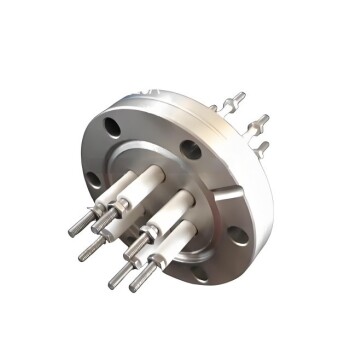
- CF KF Flange Vacuum Electrode Feedthrough Lead Sealing Assembly for Vacuum Systems
- Dental Porcelain Zirconia Sintering Ceramic Vacuum Press Furnace
People Also Ask
- What is the purpose of dental sintering furnaces? Transform Zirconia into Durable, High-Quality Dental Restorations
- How does a dental vacuum porcelain furnace maintain restoration quality? Precision Sintering for Superior Esthetics
- What are the main advantages of a dental sintering furnace? Boost Quality, Efficiency, and Profits
- What is the role of dental sintering furnaces in dental restorations? Transform Zirconia into Durable, Aesthetic Teeth
- What economic benefits does using a dental sintering furnace offer? Boost Profits with Faster, Automated Dental Lab Workflows