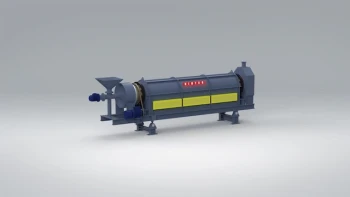
The high-temperature muffle furnace serves as the critical thermal reactor for the final activation of catalysts. For complex materials like Co/Al-SBA-15, the furnace facilitates a process called air calcination, typically at temperatures around 600°C, which removes organic templates to open the pore structure and converts metal precursors into active oxides while anchoring them to the support framework.
The muffle furnace is not merely a heater but a precision tool that dictates the catalyst's final architecture. By controlling the thermal environment, it transforms a raw composite into a high-performance material with accessible active sites and a stable, interconnected pore network.
Achieving Pore Accessibility and Surface Area
Complete Removal of Organic Templates
During synthesis, organic agents like F127 or TPAOH are used to direct the formation of the mesoporous structure. The muffle furnace provides the oxidative environment necessary to burn off these "placeholders," effectively releasing the internal pore space for future chemical reactions.
Clearing Diffusion Pathways
If organic residues remain, they block the channels of the SBA-15 support, preventing reactants from reaching the active metal sites. High-temperature treatment ensures that the mesoporous framework is clear, allowing for efficient molecular diffusion during industrial applications.
Strengthening the Skeletal Structure
The application of heat induces a degree of condensation within the silica or alumina framework. This process strengthens the skeletal structure of the composite, ensuring that the pore channels remain stable and do not collapse under the stresses of catalytic operation.
Chemical Transformation and Active Site Formation
Conversion of Metal Precursors
Metal components are often introduced as nitrates or other salts that lack catalytic activity. The muffle furnace facilitates the thermal decomposition of these precursors, converting them into stable, active oxide nanoparticles, such as cobalt oxide (CoOx).
Optimizing Metal Dispersion
The precise heating ramp of a laboratory muffle furnace prevents the rapid migration and "clumping" of metal particles. By maintaining a steady thermal field, the furnace helps achieve high dispersion of active sites, which maximizes the total surface area available for catalysis.
Promoting Framework Interaction
High-temperature activation is essential for strengthening the interaction between the active components (like Cobalt) and the mesoporous support (Al-SBA-15). This chemical bonding prevents the active metals from leaching or migrating during high-pressure or high-temperature reactions.
Understanding the Trade-offs and Pitfalls
The Risk of Sintering
While high heat is necessary for activation, excessive temperatures can lead to sintering, where small metal nanoparticles fuse into larger, less active masses. This reduces the total number of available active sites and significantly lowers catalyst efficiency.
Pore Structure Collapse
If the heating ramp is too aggressive, the rapid exit of gases from decomposing templates can create internal pressure. This may cause structural fracturing or the collapse of the delicate mesoporous walls, ruining the catalyst’s transport properties.
Thermal Field Non-Uniformity
In lower-quality furnaces, temperature gradients can occur across the heating chamber. This leads to inconsistent catalyst batches, where some samples are under-calcined (retaining organics) while others are over-calcined (suffering from sintering).
How to Apply This to Your Project
Making the Right Choice for Your Goal
- If your primary focus is maximum surface area: Utilize a slow heating ramp (e.g., 1-2°C/min) to ensure organic templates are removed without damaging the mesoporous framework.
- If your primary focus is active site stability: Prioritize a furnace with high thermal uniformity to ensure that metal precursors are converted to oxides consistently across the entire batch.
- If your primary focus is industrial durability: Focus on the higher end of the calcination range (near 600°C) to maximize the strength of the bond between the active metal and the support.
By masterfully controlling the furnace environment, you move beyond simple heating to true molecular engineering.
Summary Table:
| Furnace Function | Impact on Catalyst Activation |
|---|---|
| Template Removal | Burns off organic agents (F127/TPAOH) to open mesoporous channels |
| Precursor Conversion | Thermally decomposes metal salts into active oxide nanoparticles (e.g., CoOx) |
| Structural Strengthening | Induces framework condensation to prevent pore collapse during operation |
| Thermal Uniformity | Ensures high metal dispersion and prevents performance-robbing sintering |
Elevate Your Catalyst Research with KINTEK Precision
Precision heat treatment is the cornerstone of high-performance catalyst engineering. KINTEK specializes in advanced laboratory equipment and consumables, offering a comprehensive range of high-temperature furnaces (muffle, tube, rotary, vacuum, CVD, atmosphere) tailored for critical activation and calcination processes.
Whether you need to optimize pore accessibility or ensure uniform metal dispersion, our customizable solutions provide the thermal stability your research demands.
Ready to achieve superior material properties? Contact us today to discuss your unique laboratory needs and discover how KINTEK can enhance your workflow!
References
- Yanliang Zhai, Zhijun Li. Synthesis of Ordered Mesoporous Molecular Sieve-Supported Cobalt Catalyst via Organometallic Complexation for Propane Non-Oxidative Dehydrogenation. DOI: 10.3390/nano14131132
This article is also based on technical information from Kintek Furnace Knowledge Base .
Related Products
- 1700℃ High Temperature Muffle Oven Furnace for Laboratory
- 1800℃ High Temperature Muffle Oven Furnace for Laboratory
- 1200℃ Muffle Oven Furnace for Laboratory
- 1400℃ Muffle Oven Furnace for Laboratory
- Laboratory Muffle Oven Furnace with Bottom Lifting
People Also Ask
- What is the primary function of a high-temperature laboratory muffle furnace in chemical synthesis? Achieve Precision.
- How does a high-temperature laboratory muffle furnace affect material properties? Transform Anodic Oxide Films Fast
- What role does a muffle furnace play in BCZY712 electrolyte powder production? Achieve Perfect Phase Purity
- What is the role of a high-temperature muffle furnace in guava leaf carbonization? Master Precise Pyrolysis Control
- How does a muffle furnace impact Ni/MgAl2O4 catalysts? Optimize Stability and Catalytic Performance