
Microwave sintering furnaces are advanced heating systems that utilize microwave energy to rapidly and efficiently densify ceramic materials by generating internal heat, offering significant advantages in speed and energy consumption, though they present higher costs and specific operational considerations. These furnaces are characterized by their direct interaction with the material's microstructure, leading to uniform heating, but require careful handling and strict safety protocols due to the nature of microwave energy.
Microwave sintering excels in speed and energy efficiency by heating materials internally and uniformly, making it suitable for high-quality ceramic production like dental restorations. However, its adoption is balanced against higher equipment costs, specific material handling requirements to prevent cracking, and stringent safety considerations regarding microwave leakage.
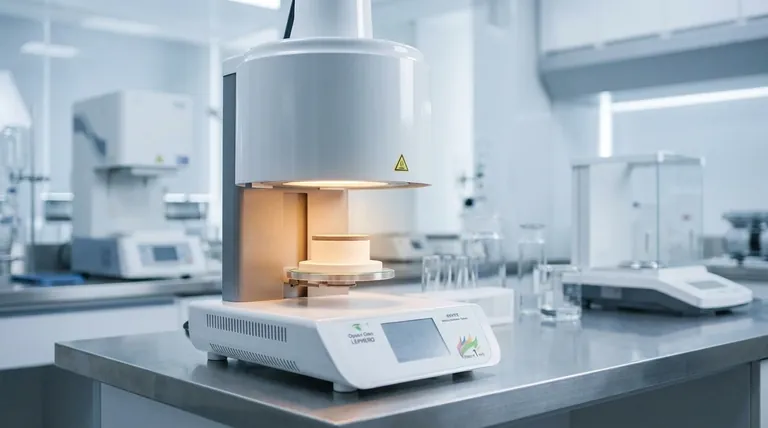
Characteristics of Microwave Sintering Furnaces
Microwave sintering furnaces operate on distinct principles compared to conventional heating methods. Their design and heating mechanism define their operational profile.
Direct Material Heating
Microwave energy couples directly with the microstructure of the material. This internal heating mechanism raises the material's temperature to the sintering point.
Uniform Temperature Distribution
Heating occurs simultaneously throughout the sample, both internally and externally. This characteristic avoids the temperature gradient problems common in traditional heating methods.
Essential Components
A typical system comprises a microwave source, a heating cavity where the material is placed, and a material transfer system. These components work together to deliver and control microwave energy.
Selective Heating Capability
Different substances absorb microwaves at varying rates. This allows for targeted heating of specific components within a multi-material sample.
Advantages of Microwave Sintering
The unique heating mechanism of microwave furnaces translates into several operational and quality benefits.
Accelerated Sintering Process
Microwave heating is significantly faster than conventional furnace methods. This shortens the pyrolysis reaction and overall processing time.
Enhanced Energy Efficiency
Microwaves act directly on the sample, leading to less energy loss into the furnace environment. This results in a more energy-efficient and cost-effective process.
Superior Material Quality
The uniform heating helps produce high-quality sintered products. For example, in dentistry, it's capable of producing high-quality dental restorations like crowns, bridges, and implants.
Reduced Production Cycles
The speed and efficiency contribute to reduced production cycles. This can lead to increased throughput and potentially lower labor costs.
Understanding the Trade-offs
Despite their advantages, microwave sintering furnaces come with notable challenges and limitations.
Higher Initial Investment
The equipment, including microwave generators and waveguides, is more complex and expensive than conventional furnaces. This leads to higher manufacturing and maintenance costs.
Stringent Safety Requirements
Microwave leakage poses a risk to human health. This necessitates strict safety protection measures and standardized operating procedures for personnel.
Limited Material Applicability
Not all materials are suitable for microwave heating. Non-polar substances, for instance, absorb microwaves weakly and may not effectively reach the sintering temperature.
Delicate Material Handling
Ceramic materials require very careful handling during the microwave sintering process. There is an increased risk of cracking if not managed properly.
Operational Expertise
While not as complex as vacuum furnaces, operating microwave sintering equipment effectively still requires specialized knowledge to optimize parameters and prevent issues.
Making the Right Choice for Your Goal
Selecting a sintering furnace depends on balancing your production priorities with the inherent characteristics of each technology.
- If your primary focus is rapid processing and energy savings: A microwave sintering furnace offers superior speed and efficiency.
- If your primary focus is cost-effectiveness and broad material compatibility: Conventional furnaces might be a more economical entry point, though slower.
- If your primary focus is the absolute highest quality, wear resistance, and minimal porosity for critical applications: A vacuum sintering furnace, despite its cost and complexity, typically yields the most robust results.
- If your primary focus is high-volume production of specific ceramic materials like dental restorations: The speed and quality benefits of microwave sintering can outweigh the initial investment.
Choosing the appropriate sintering technology hinges on a clear understanding of material science, production goals, and economic considerations.
Summary Table:
| Aspect | Key Points |
|---|---|
| Characteristics | Direct internal heating, Uniform temperature distribution, Selective heating capability |
| Advantages | Accelerated process, Enhanced energy efficiency, Superior material quality, Reduced production cycles |
| Disadvantages | Higher initial cost, Stringent safety requirements, Limited material applicability, Delicate handling needed |
Ready to Enhance Your Sintering Process?
Choosing the right furnace technology is critical for achieving your production goals in materials science and manufacturing. KINTEK leverages exceptional R&D and in-house manufacturing to provide diverse laboratories with advanced high-temperature furnace solutions.
Our product line, including Muffle, Tube, Rotary Furnaces, Vacuum & Atmosphere Furnaces, and CVD/PECVD Systems, is complemented by our strong deep customization capability to precisely meet unique experimental requirements. Whether you are processing advanced ceramics, metals, or composites, we can help you optimize for speed, quality, and efficiency.
Let's discuss how a customized furnace solution from KINTEK can drive your success. Contact our experts today for a consultation.
Visual Guide

Related Products
- Spark Plasma Sintering SPS Furnace
- High Temperature Muffle Oven Furnace for Laboratory Debinding and Pre Sintering
- Vacuum Heat Treat Sintering Furnace Molybdenum Wire Vacuum Sintering Furnace
- Vacuum Heat Treat Sintering Furnace with Pressure for Vacuum Sintering
- Small Vacuum Heat Treat and Tungsten Wire Sintering Furnace
People Also Ask
- Why is it necessary to maintain a high vacuum environment during the SPS of SiC? Key to High-Density Ceramics
- How does the heating mechanism of Spark Plasma Sintering (SPS) function? Enhance TiC/SiC Composite Fabrication
- What are the technical advantages of using an SPS sintering furnace? Elevate Al2O3-TiC Material Performance
- What are the steps in the discharge plasma sintering process? Master Fast, High-Density Material Consolidation
- What are the advantages of spark plasma sintering (SPS) over traditional forging? Precision Microstructural Control



















