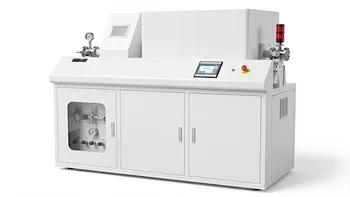
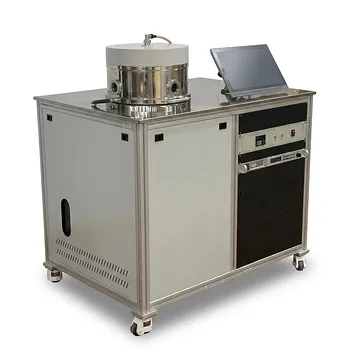
The defining advantage of CVI is its capacity to create high‑performance ceramic composites without mechanically harming the reinforcement. Unlike hot‑pressing furnaces—which rely on simultaneous high temperature and high uniaxial pressure—Chemical Vapor Infiltration deposits the matrix directly inside a fiber preform at lower temperatures (approximately 1000–1200 °C) and reduced pressure (~3 kPa), all while applying no external mechanical load. This gentler approach preserves the as‑processed strength of the fibers, yielding a dense composite (~10 % porosity) that maintains exceptional fracture toughness (~30 MPa·m^½) up to 1400 °C.
When the goal is to retain every bit of fiber strength and produce a damage‑tolerant ceramic composite, CVI’s ability to infiltrate a porous preform at moderate temperature without mechanical stress makes it the superior process. However, the technique is not without its own processing challenges, which must be managed to achieve full density and uniform properties.
Why Hot‑Pressing Compromises the Fiber
The Dual Assault of Temperature and Pressure
Traditional hot pressing subjects a stack of fiber fabrics and matrix precursor powders to temperatures often exceeding 1600 °C while applying high uniaxial mechanical pressure. These conditions are necessary to creep and sinter the matrix into a dense solid. But for the ceramic fibers—often SiC or carbon—this environment is harsh.
Chemical and Mechanical Fiber Damage
At such high temperatures, the matrix can react chemically with the fiber coating or the fiber itself, causing embrittlement and strength loss. Simultaneously, the applied pressure can physically bend, break, or crush the fiber tows. Supplementary data points out that even with rapid, electric‑assisted sintering (spark plasma), the core problem remains: mechanical load on the fibers. The result is a composite where the reinforcing element—the whole reason for using a CMC—is already degraded before the part is ever put into service.
The CVI Advantage: Preservation and Performance
Infiltrating, Not Crushing
CVI works as a “gentle” gas‑phase process. A gaseous precursor (like methyltrichlorosilane) is flowed over a heated fiber preform inside a vacuum furnace. The gas diffuses into the open pore network and deposits solid matrix directly on the fiber surfaces, atom by atom. Because the preform is not pressed, the fibers remain in their pristine orientation and retain their original tensile strength.
Lower Temperature, Higher Fiber Integrity
With processing temperatures of 1000–1200 °C (versus 1650–1800 °C for many hot‑press cycles), the thermal budget is dramatically reduced. This minimizes fiber grain growth, chemical interaction, and thermally induced residual stresses. The result is a composite where the load‑bearing fibers are nearly as strong as they were before matrix infiltration.
Exceptional Toughness Without Sacrificing Density
Properly executed CVI can achieve densities leaving only about 10 % residual porosity—not fully dense, but highly optimized for toughness. This controlled porosity, combined with undamaged fibers and a weak fiber/matrix interface, yields a quasi‑ductile fracture behavior. The composite exhibits fracture toughness values close to 30 MPa·m^½, and these properties remain stable even at 1400 °C, far beyond the useful limit of many hot‑pressed CMCs.
Near‑Net‑Shape Capability
Because there is no die pressing, CVI enables the fabrication of complex, near‑net‑shape components. The gas infiltrates a pre‑shaped fiber architecture, so intricate geometries can be densified without the line‑of‑sight limitations of uniaxial pressing.
Understanding the Trade‑offs
The Infiltration‑Front Challenge
Standard isothermal CVI can suffer from a well‑known problem: the precursor gas tends to react and deposit preferentially on the outer surface of the preform. This premature surface sealing traps porosity inside and creates severe density gradients. If not addressed, the final part will have a dense skin and a weak, under‑densified core.
Forced‑Flow CVI as an Enabler
To counteract this, advanced CVI systems use forced‑flow gas delivery combined with deliberate thermal and pressure gradients across the preform. By actively drawing reactants through the part before they decompose, the interior interstices are filled uniformly. This allows high fiber volume fractions (up to 45 vol.%) and uniform densification, but it demands precise multi‑zone temperature control and sophisticated gas handling.
Throughput and Process Time
CVI is inherently a slower process than hot pressing. Building up a matrix atom by atom can take days or even weeks, depending on part thickness. Hot pressing, in contrast, completes densification in minutes to hours. For some production scenarios, this longer cycle time can be a significant economic disadvantage.
Residual Porosity vs. Full Density
While 10 % porosity is an acceptable trade‑off for toughness, some applications require fully dense matrices for hermeticity or maximum stiffness. Hot pressing can achieve >99 % relative density, which CVI typically does not deliver without a secondary polymer infiltration or melt‑infiltration step.
Making the Right Choice for Your Goal
Different mission profiles demand different processing strategies. Use the following guidelines to decide between CVI and hot pressing for your ceramic matrix composite.
- If your primary focus is maximizing fiber strength retention and damage tolerance: Choose CVI. The absence of mechanical load and lower processing temperature preserves the inherent strength of the fibers, delivering a composite with high fracture toughness that remains stable to 1400 °C.
- If your primary focus is achieving full density and high throughput: Hot pressing or field‑assisted sintering may be more suitable. These methods can reach near‑total densification in short cycle times, provided you can accept the associated fiber damage and simpler geometries.
- If your primary focus is complex, near‑net‑shape parts: CVI is the clear winner. Gas‑phase infiltration can densify intricate fiber architectures that would be impossible to press uniformly.
- If your primary focus is a balance of properties and you can tolerate a longer process: Use forced‑flow CVI with precise thermal gradient control. It overcomes the surface‑sealing issue and delivers dense, uniform composites without sacrificing fiber integrity.
By aligning your manufacturing technology with the performance you truly need—rather than simply what is faster or more familiar—you can build ceramic matrix composites that fully deliver on their promise of high‑temperature toughness.
Summary Table:
| Feature / Parameter | Chemical Vapor Infiltration (CVI) | High-Temperature Hot-Pressing |
|---|---|---|
| Mechanical Load | Zero applied mechanical stress | High uniaxial mechanical pressure |
| Process Temperature | Moderate (1000–1200 °C) | Extreme (>1600 °C) |
| Fiber Integrity | High retention (no crushing/damage) | Compromised (crushing & embrittlement) |
| Component Geometry | Complex, near-net-shape capabilities | Limited to simple, planar shapes |
| Fracture Toughness | Exceptional (~30 MPa·m^½ up to 1400 °C) | Reduced due to degraded fibers |
| Matrix Density | ~90% (controlled ~10% porosity) | >99% (near-total densification) |
| Processing Time | Slower (days to weeks) | Fast (minutes to hours) |
Ready to Elevate Your Advanced Ceramic & Composite Processing?
Whether you are developing damage-tolerant ceramic matrix composites via CVI/CVD or optimizing high-density sintering, KINTEK provides the cutting-edge thermal technology your lab needs. We specialize in high-performance laboratory equipment and consumables, offering a full range of customizable high-temperature furnaces—including vacuum, CVD/CVI, tube, muffle, atmosphere, rotary, induction melting, and dental furnaces tailored to your precise experimental requirements.
Don't let thermal stress or mechanical damage compromise your material performance. Contact KINTEK today to consult with our high-temp equipment specialists and discover the ideal furnace solution for your research and production goals!
Related Products
- Custom Made Versatile CVD Tube Furnace Chemical Vapor Deposition CVD Equipment Machine
- Multi Heating Zones CVD Tube Furnace Machine for Chemical Vapor Deposition Equipment
- Slide PECVD Tube Furnace with Liquid Gasifier PECVD Machine
- Split Chamber CVD Tube Furnace with Vacuum Station CVD Machine
- Controlled Inert Nitrogen Hydrogen Atmosphere Furnace
People Also Ask
- Why are CVD tube furnace sintering systems indispensable for 2D material research and production? Unlock Atomic-Scale Precision
- What is a CVD tube furnace and what is its primary function? Discover Precision Thin-Film Deposition
- How does CVD tube furnace sintering enhance graphene growth? Achieve Superior Crystallinity and High Electron Mobility
- Which industries and research fields benefit from CVD tube furnace sintering systems for 2D materials? Unlock Next-Gen Tech Innovations
- What future trends are expected in the development of CVD tube furnaces? Discover Smarter, More Versatile Systems