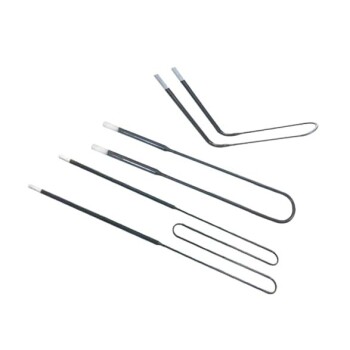
Fundamentally, silicon carbide (SiC) heating rods are specified for high-temperature processes where reliability and resistance to harsh chemical environments are non-negotiable. They are the workhorses in industries like metallurgy, ceramics, glass manufacturing, and advanced materials research. Their unique properties make them indispensable for achieving extreme temperatures that other elements cannot sustain.
The decision to use silicon carbide heating elements is rarely just about reaching a high temperature. It is about achieving that temperature reliably, uniformly, and for extended periods in demanding industrial atmospheres that would quickly degrade lesser materials.
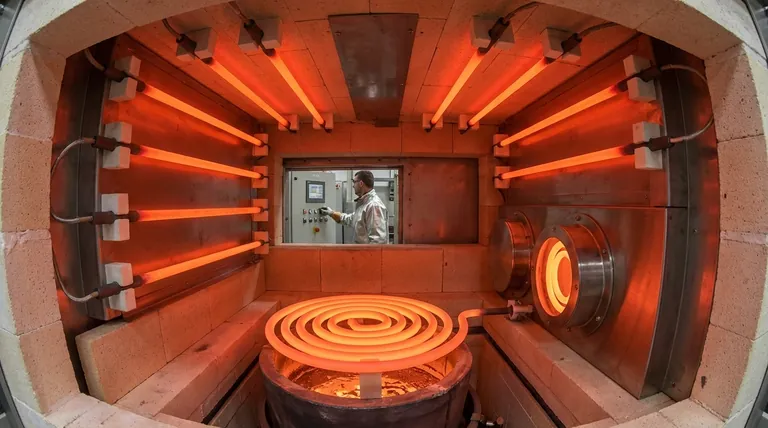
The Core Properties Driving SiC Adoption
To understand where SiC rods are used, you must first understand why they are chosen. Their application is a direct result of a unique combination of physical and chemical properties.
Extreme Temperature Capability
Silicon carbide elements operate consistently at temperatures up to 1450°C (2642°F). This high-temperature tolerance makes them essential for processes like metal smelting, alloy heat treating, and the sintering of advanced ceramics, which all require intense, sustained heat.
Chemical Inertness and Oxidation Resistance
SiC has exceptional chemical stability, particularly against acids and oxidation. This allows the rods to function for long periods in aggressive furnace atmospheres common in chemical processing and incineration without significant degradation.
High Thermal Conductivity
These elements transfer heat very efficiently. This property enables rapid furnace heat-up times and helps maintain uniform temperature distribution, which is critical for applications requiring precise thermal control, such as semiconductor manufacturing and laboratory material testing.
Structural Integrity and Longevity
Silicon carbide is an extremely hard and thermally stable material. This inherent toughness translates to a long operational lifespan, even under conditions of frequent thermal cycling, reducing costly downtime and replacement cycles in industrial production.
A Breakdown of Key Application Areas
The properties above make SiC heating elements a default choice across several key sectors.
Industrial Furnaces and Metallurgy
This is the largest area of use. SiC rods are found in electric arc furnaces, induction furnaces, and rotary kilns for processes like annealing, hardening, tempering, and sintering metals. Their ability to provide intense, direct heat is unmatched for these applications.
Ceramics and Glass Manufacturing
From firing pottery in kilns to melting quartz glass, SiC elements provide the high, uniform temperatures needed. Their stability ensures that the process is repeatable and the final product meets strict quality standards without contamination from the heating element itself.
Advanced Materials and Semiconductors
The manufacturing of semiconductors and high-temperature crystals demands an exceptionally clean and precisely controlled heating environment. The chemical inertness and thermal precision of SiC make it a perfect fit for these high-value, sensitive processes.
Laboratory and Research Environments
In laboratory furnaces, material testing rigs, and assaying equipment, the goal is often to simulate extreme conditions repeatably. SiC rods provide the stable, high-temperature environment necessary for accurate scientific research and quality control.
Understanding the Practical Trade-offs
While highly effective, SiC elements are not without their operational considerations. Understanding these is key to successful implementation.
Brittleness and Mechanical Shock
Like most ceramics, silicon carbide is brittle and susceptible to fracture from mechanical shock. Careful handling during installation and maintenance is essential to prevent damage. The system design must also avoid imposing mechanical stress on the elements.
The Importance of Correct Installation
Proper installation is critical to performance and longevity. Using the correct accessories, such as high-purity aluminum connecting belts for conductivity and stainless steel fixtures for support, prevents localized hot spots that can lead to premature failure.
Resistance Aging
A key characteristic of SiC is that its electrical resistance gradually increases with use over its lifespan. The power supply system must be designed to accommodate this change, typically by using a multi-tap transformer or a silicon-controlled rectifier (SCR) to progressively increase the voltage and maintain power output.
Making the Right Choice for Your Goal
Your specific objective will determine if SiC is the optimal solution for your heating application.
- If your primary focus is maximum process temperature: SiC is a leading choice for operations running continuously up to 1450°C, especially for sintering metals and firing advanced ceramics.
- If your primary focus is process purity and control: The chemical inertness and thermal uniformity of SiC make it ideal for semiconductor, glass, and sensitive laboratory applications.
- If your primary focus is operational lifespan and reliability: SiC's resistance to oxidation and thermal cycling provides a long service life in heavy-duty industrial furnaces, directly reducing downtime and maintenance costs.
By understanding these core principles, you can confidently determine if silicon carbide is the right technology to anchor your high-temperature process.
Summary Table:
| Property | Key Applications |
|---|---|
| Extreme Temperature Capability (up to 1450°C) | Metal smelting, alloy heat treating, sintering ceramics |
| Chemical Inertness & Oxidation Resistance | Chemical processing, incineration, semiconductor manufacturing |
| High Thermal Conductivity | Rapid furnace heat-up, uniform temperature control in labs |
| Structural Integrity & Longevity | Industrial furnaces with frequent thermal cycling |
Upgrade your high-temperature processes with KINTEK's advanced solutions! Leveraging exceptional R&D and in-house manufacturing, we provide diverse laboratories with reliable silicon carbide heating rods, muffle furnaces, tube furnaces, and more. Our deep customization capability ensures precise fit for your unique needs in metallurgy, ceramics, or research. Contact us today to enhance efficiency and durability in your applications!
Visual Guide

Related Products
- Silicon Carbide SiC Thermal Heating Elements for Electric Furnace
- Molybdenum Disilicide MoSi2 Thermal Heating Elements for Electric Furnace
People Also Ask
- How do the different types of silicon carbide heating elements compare in terms of applications? Find the Best Fit for Your High-Temp Needs
- What are the temperature capabilities and mounting options for silicon carbide heating elements? Unlock High-Temp Flexibility and Durability
- What are the advantages of using silicon carbide heating elements in industrial furnaces? Boost Efficiency and Durability
- How do silicon carbide heating elements enhance the heat treatment of alloys? Achieve Superior Temperature Control
- What are the unique properties of silicon carbide heating elements? Key Benefits for High-Temp Performance