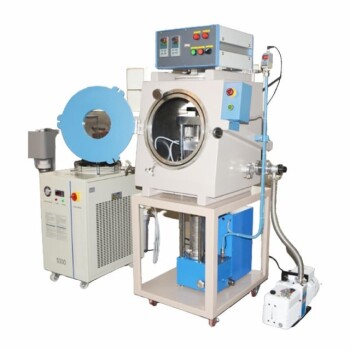
The choice between encapsulation and sinter/HIP fundamentally reshapes your cost structure, final grain size, and part precision. The encapsulation route preserves the finest microstructures but adds container-related expenses and surface contamination risks. The sinter/HIP route eliminates canning costs and delivers superior dimensional control, yet it demands longer thermal cycles and can coarsen the grains formed during the initial sintering stage.
The path you choose hinges on the green body’s open porosity. Encapsulation lets you skip a high-temperature pre-sinter, locking in an ultra‑fine grain at the expense of container fabrication and removal. Sinter/HIP starts with a conventional sinter to close all pores, which avoids encapsulation and surface reactions, but the upfront sintering step may grow grains beyond what encapsulation can achieve.
The Fundamental Divergence: Open vs. Closed Porosity
Why Porosity Dictates the Route
Open porosity in a green compact acts as a leak path for high‑pressure gas. If you expose a body with interconnected pores to the isostatic pressure inside a HIP vessel, the argon or nitrogen gas penetrates the channels and counteracts the sintering stress, preventing collapse.
The encapsulation route seals those pores inside a vacuum‑tight can. The sinter/HIP route, in contrast, eliminates open porosity by sintering the compact to the closed‑porosity stage (>90–92% relative density) before it ever enters the HIP.
Encapsulation: Canning the Green Body
A green compact is vacuum‑sealed inside a thin‑walled metal can (e.g., molybdenum, tantalum, mild steel) or a glass container. The evacuated can acts as a flexible pressure membrane, transmitting the HIP gas pressure uniformly while isolating the ceramic from the pressurizing medium.
Because no pre‑sintering is needed, the starting powder retains its nanoscale or sub‑micron grain size. The simultaneous application of high temperature (often lower than conventional sintering) and extreme pressure (up to ~250 MPa) densifies the body rapidly without extensive grain growth.
The can must later be removed—by machining, chemical dissolution, or thermal shock (for glass). This adds direct fabrication and removal costs and can introduce surface degradation if the ceramic and can material react at high temperature.
Sinter/HIP: Pre‑Sintering to Eradicate Open Channels
The powder compact is first sintered in a vacuum or controlled‑atmosphere furnace until every open pore neck fuses shut. At that point, the body is effectively impermeable, and it can be placed directly in the HIP vessel without a container.
This bypasses every cost associated with encapsulation. There is no can to fabricate, no post‑HIP extraction, and no risk of metal‑ceramic chemical interaction. The surface remains pristine.
However, the initial sintering step imposes its own thermal budget. If grain coarsening occurs during that pre‑sinter, the final microstructure will be coarser than what an encapsulation‑only process can deliver.
Cost Analysis: Container, Energy, and Post‑Processing
The Visible Cost of Encapsulation
Encapsulation demands custom‑made cans that are precisely sized to each part. High‑temperature can materials (Mo, Ta) are expensive and difficult to fabricate. After HIP, the can is a sacrificial consumable—it must be ground away or chemically stripped, adding labour and material disposal costs.
Additional surface finishing is often required. If the can‑ceramic interface reacts, the part may need grinding to remove a chemically altered layer, further increasing per‑part cost.
The Hidden Cost of Sinter/HIP: Extended Thermal Cycles
The sinter/HIP route runs two sequential thermal processes: a conventional sinter to close porosity, followed by a HIP cycle. Although it avoids can costs, total furnace time is longer, which consumes more energy and ties up capital equipment.
If grain size is not the primary concern, this extra time may be a worthwhile trade‑off. The elimination of container consumables and surface contamination often makes sinter/HIP the more cost‑effective choice at production scale, especially for simpler shapes that sinter homogeneously.
Microstructural Control: Preserving the Fine Grain
Encapsulation’s Grain‑Refining Advantage
Because the body is never heated to a pre‑sintering temperature without pressure, grain growth is drastically limited. The encapsulated compact experiences simultaneous heat and isostatic pressure from the outset, which triggers densification mechanisms at temperatures that would cause little densification in a pressure‑less furnace.
The result is a fully dense ceramic with a grain size remarkably close to the starting powder. This is critical for strength‑limiting defects: recall that HIP treatment can reduce internal defect sizes to below 20 µm in cermets, dramatically raising transverse rupture strength to ~2700 N/mm².
The Risk of Preexisting Grain Growth in Sinter/HIP
The initial sintering step, necessary to close porosity, exposes the powder compact to high temperatures for an extended time without the pinning effect of external pressure. Even with optimised sintering profiles, some grain coarsening is inevitable.
Once those grains have grown, the subsequent HIP step cannot shrink them back. It can only heal remaining pores and cracks. Therefore, a sinter/HIP body will almost always exhibit a larger final grain size than the same powder processed through encapsulation, all other factors being equal.
Defect Healing and Densification Depth
Both routes benefit from HIP’s unique ability to eliminate residual porosity and collapse internal flaws. Once open pores are sealed (naturally by canning or by pre‑sintering), the high isostatic pressure crushes isolated voids and promotes diffusion‑based welding of micro‑cracks.
The final strength and reliability gain is substantial irrespective of the route chosen. In cermets and advanced ceramics, HIP often doubles the transverse rupture strength relative to a standard sintered part, by reducing the population of strength‑limiting defects.
Dimensional Stability: Shrinkage and Shape Fidelity
Sinter/HIP’s Dimensional Precision
During the final HIP stage of the sinter/HIP route, the part has already undergone the majority of its linear shrinkage in the pre‑sinter furnace. Because the body is already close to full density, the additional densification from HIP is small—typically 2–5% volumetric—resulting in minimal and highly predictable final shrinkage.
This makes near‑net‑shape processing far easier. Tooling can be designed to compensate for the pre‑sinter shrinkage, and the HIP step acts almost like a “finishing” densification that corrects residual porosity without distorting the overall geometry.
Encapsulation’s Tolerance and Surface Finish Challenges
Encapsulation does not separate shrinkage into two stages. The green body collapses inside the flexible can under full HIP pressure while simultaneously being heated. The total shrinkage is concentrated in a single step, and the can must accommodate that volume reduction without wrinkling catastrophically.
Can design and material selection are critical. If the can mismatches the ceramic’s thermal expansion or fails to yield uniformly, the part can experience non‑isotropic shrinkage or surface dimpling. The subsequent removal of the can and any reaction layer also degrades the as‑HIP surface, often forcing a post‑machining allowance that erodes the dimensional accuracy.
Understanding the Trade‑offs
Surface Chemistry and Contamination
Encapsulation introduces a direct chemical interface at high temperature. Even with inert can materials like tantalum, a thin reaction zone may form, contaminating the ceramic’s surface and requiring removal. Glass cans may leach silicon or alkali elements into the ceramic.
Sinter/HIP avoids this entirely. The part never touches a foreign container during the HIP cycle, making it the preferred route for biocompatible, optical, or electronic ceramics where surface purity is non‑negotiable.
Complex Shapes and Temperature Limits
Encapsulation can process intricate, thick‑walled, or highly asymmetric shapes at lower temperatures than would be possible with pressure‑less sintering. Because the can transmits pressure isostatically, the ceramic can be densified uniformly even in complex geometries, enabling parts that would crack during conventional sintering.
However, the can itself must be formable around that complex shape. For very intricate designs, the fabrication cost can become prohibitive, tipping the balance toward the sinter/HIP approach if the geometry can survive the pre‑sinter.
Cycle Time vs. Final Properties
If your absolute priority is the finest possible grain size and maximum strength, encapsulation is the clear winner. You pay for this with elevated per‑part costs and a less predictable final dimension.
If your priority is a clean, precisely sized component at a lower unit cost, sinter/HIP is the more practical choice—provided you can accept the slightly coarser microstructure that comes from the mandatory pre‑sinter.
Making the Right Choice for Your Application
The selection of encapsulation or sinter/HIP is not about one route being “better”; it is about aligning the process with the exact demands of your material and final part.
- If your primary focus is maximising hardness, wear resistance, or strength through an ultra‑fine grain: Encapsulate. The absence of a pre‑sinter holds grain growth to an absolute minimum, delivering peak performance in cutting tools, armour, and high‑temperature structural ceramics.
- If your primary focus is achieving tight dimensional tolerances in a cost‑sensitive production environment: Choose the sinter/HIP route. It stabilises shrinkage in two controllable stages and eliminates the recurring cost of cans and surface rework.
- If your primary focus is maintaining an absolutely pure, contamination‑free surface: Use sinter/HIP. Without a container, there is no source of chemical interaction, making it ideal for medical implants, semiconductor components, and transparent ceramics.
Whichever path you take, the HIP step itself remains the most powerful tool for healing internal defects and driving the material to full density—understanding the pre‑HIP stage is what turns that raw power into a predictable, economical manufacturing strategy.
Summary Table:
| Metric / Feature | Encapsulation Route | Sinter/HIP Route |
|---|---|---|
| Pre-Sintering Requirement | None (canned as green body) | Required (sintered to >90–92% density) |
| Microstructure & Grain Size | Ultra-fine (minimal grain growth) | Coarser (growth occurs during pre-sinter) |
| Container & Consumable Cost | High (sacrificial Mo, Ta, or glass cans) | None (containerless HIP) |
| Dimensional Control | Lower (1-step shrinkage, potential distortion) | High (2-stage, highly predictable shrinkage) |
| Surface Contamination Risk | Medium to High (can-ceramic reactions) | Zero (no container interaction) |
| Best Suited For | Max hardness, wear resistance, fine grains | Cost-sensitive scale, tight tolerances, high purity |
Optimize Your Advanced Ceramic Processing with KINTEK
Whether your process demands the ultra-fine microstructures of encapsulation or the cost-effective precision of sinter/HIP workflows, high-performance thermal equipment is essential to your success. KINTEK specializes in premium laboratory equipment and custom high-temperature furnaces—including vacuum, atmosphere, muffle, tube, rotary, CVD, and induction melting systems—engineered to meet the rigorous demands of advanced material research and industrial production.
Ready to enhance your thermal processing capabilities and achieve superior material density? Contact KINTEK experts today for tailored high-temperature solution recommendations!
Related Products
- Vacuum Hot Press Furnace Machine for Lamination and Heating
- Vacuum Hot Press Furnace Machine Heated Vacuum Press
- 600T Vacuum Induction Hot Press Vacuum Heat Treat and Sintering Furnace
- Vacuum Hot Press Furnace Machine Heated Vacuum Press Tube Furnace
- High Pressure Laboratory Vacuum Tube Furnace
People Also Ask
- What are the primary components of a vacuum hot press furnace? Master the Core Systems for Precise Material Processing
- What are the benefits of the vacuum environment system in a vacuum hot press furnace? Unlock High-Density Sintering
- What safety features are incorporated in vacuum hot press furnaces? Ensure Operator and Equipment Protection
- What industries benefit from the use of vacuum hot press furnaces? Unlock High-Performance Materials for Your Industry
- What considerations guide the selection of heating elements and pressurization methods for a vacuum hot press furnace?