Field-assisted heating transcends thermal constraints by replacing slow, surface-to-core radiant heat transfer with instantaneous, volumetric Joule heating. In conventional furnaces, heat must travel from external elements through the furnace atmosphere and into the sample via conduction and radiation—a path riddled with thermal resistance. Field-assisted methods bypass this entirely by using electric, magnetic, or electromagnetic fields to generate heat directly inside the material or its conductive tooling. The result is a dramatic acceleration of densification, lower required temperatures, and far superior microstructural control.
The fundamental limitation of radiant furnace heating is its dependence on slow, external heat transfer, which creates severe thermal gradients and long cycle times. Field-assisted sintering solves this by converting electrical energy directly into heat within the powder compact or die, enabling heating rates up to 1000°C/min and full densification in minutes—transforming sintering from a time-bound diffusion process into a rapid, electrically driven one.
The Core Problem with Radiant Furnace Heating
Conventional high-temperature furnaces are inherently limited by the physics of heat transfer. Understanding these limits reveals why field-assisted techniques are such a radical departure.
The Thermal Gradients of Indirect Heating
In a radiant or resistance-heated furnace, energy is delivered from elements outside the sample. This heat must first cross the atmosphere—often a poor thermal conductor—then penetrate the sample from its outermost surface inward. Porous green compacts and large components exacerbate the problem, creating a steep temperature difference between the exterior and the core. Non-uniform heating leads to uneven densification, residual stresses, and the risk of cracking.
The Time-Temperature Penalty
Since heat flow relies on conduction, only modest heating rates (typically 1–10°C/min) are achievable without sacrificing temperature uniformity. To reach the high temperatures required for solid-state diffusion, hours-long dwell times become mandatory. This extended thermal exposure drives grain coarsening, making it nearly impossible to retain ultrafine or nano-scale microstructures. Simply put, radiant heating forces a trade-off between densification speed and microstructural integrity—one that field-assisted methods reject outright.
How Field-Assisted Heating Changes the Game
Field-assisted heating rewrites the sintering rulebook by introducing electromagnetic energy directly into the material. This single shift eliminates the conduction bottleneck and unleashes a cascade of process benefits.
Direct Volume Heating via Joule Effect
Instead of heating the environment, techniques like Spark Plasma Sintering (SPS) and Flash Sintering pass a low-voltage, high-intensity current directly through a conductive die or the specimen itself. Electrical resistance converts this current into heat instantaneously and uniformly throughout the volume. The entire sample acts as its own heating element, eliminating the cold-center problem and enabling precise energy delivery exactly where densification is needed.
Unprecedented Heating Rates and Cycle Times
With Joule heating, thermal inertia is minimal. Heating rates routinely reach 200–300°C/min and can surge to 1000°C/min in specialised setups. This is over a hundred times faster than conventional radiant heating. Sintering cycles that once took eight hours collapse to mere minutes. For researchers and production engineers, this translates to dramatically higher throughput—an order-of-magnitude leap from a few samples per day to multiple runs per hour.
Lower Peak Temperatures and Microstructure Control
The combination of intense local heating, applied pressure, and possibly field-enhanced mass transport allows full densification at significantly lower bulk temperatures. More crucially, because the total thermal exposure is slashed from hours to seconds or minutes, grain growth is suppressed. The result: near-theoretical density with nanostructures intact—an impossible combination in a radiant-heated furnace, where you must choose between high density or fine grains, never both.
Understanding the Trade-offs
Field-assisted sintering is not a universal replacement. Its advantages come with specific boundaries that must be respected to avoid misapplication.
Material and Geometry Constraints
Direct Joule heating requires a conductive path. Non-conductive ceramics cannot be heated directly and must rely on a conductive graphite die, which imposes uniaxial pressure and limits sample geometry to simple cylinders or discs. Complex-shaped parts or those requiring pressureless sintering remain firmly in the domain of conventional furnaces. Moreover, very large components may still struggle with uniform current distribution.
Equipment Complexity and Cost
Field-assisted equipment integrates high-current power supplies, water-cooled electrodes, precision hydraulic press systems, and advanced atmosphere controls. This complexity raises the initial capital cost and demands a higher level of operator expertise. While operational costs are lower due to energy efficiency, the technology is not a low-barrier-entry solution.
When Conventional Furnaces Still Excel
Conventional high-temperature furnaces are unmatched for uniform, pressureless sintering of intricate shapes, large-batch thermal processing, and applications where the material is a poor electrical conductor and no die can be used. They remain the workhorses for ceramic tableware, sanitaryware, and structural components where shape complexity and scale outweigh the need for speed.
Making the Right Choice for Your Application
Selecting between field-assisted and conventional sintering requires an honest assessment of what your primary goal is. Here is your decision framework:
- If your primary focus is preserving nanocrystalline or metastable microstructures: Choose field-assisted sintering. Its minimal thermal budget prevents grain growth and phase degradation that would be unavoidable in a radiant furnace.
- If your primary focus is maximizing throughput for simple, conductive shapes: Field-assisted sintering is the clear winner. Cycle times measured in minutes enable a research or production tempo that a conventional hot press cannot approach.
- If your primary focus is sintering large, complex ceramic bodies without die pressure: Conventional radiant furnaces remain the only practical solution. Their ability to handle diverse geometries under uniform atmosphere conditions is unmatched.
- If your primary focus is achieving the highest possible densities at the lowest possible temperatures: Leverage the combined effect of electric current and uniaxial pressure in a FAST/SPS system. It routinely achieves near-theoretical density well below conventional peak temperatures.
Your furnace choice is a strategic decision about where to trade time for temperature and shape freedom for microstructural control. Field-assisted heating doesn’t just heat faster—it changes the fundamental physics of densification, giving you control over outcomes that were previously dictated by thermal inertia alone.
Summary Table:
| Feature / Metric | Conventional Radiant Heating | Field-Assisted Heating (SPS/FAST) |
|---|---|---|
| Heating Mechanism | External radiation & surface-to-core conduction | Direct volumetric Joule heating |
| Heating Rate | 1–10°C/min | 200–1000°C/min |
| Cycle Time | Several hours | Mere minutes |
| Grain Control | High risk of grain coarsening | Suppresses grain growth (retains nanostructures) |
| Geometry Support | Complex shapes & large-batch processing | Simple shapes (cylinders/discs) under uniaxial pressure |
| Ideal Applications | Pressureless ceramics, complex parts | High-density nanomaterials, rapid R&D throughput |
Accelerate Your Advanced Material Research with KINTEK
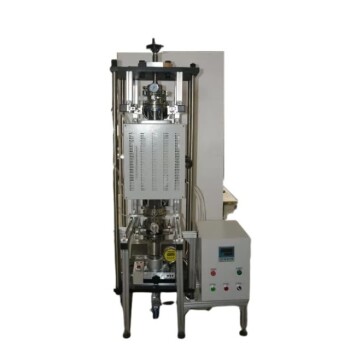
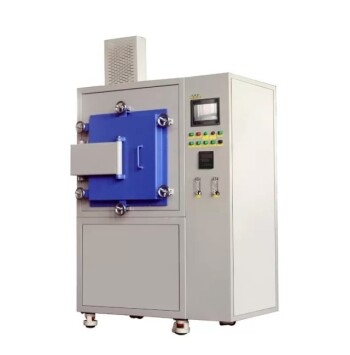
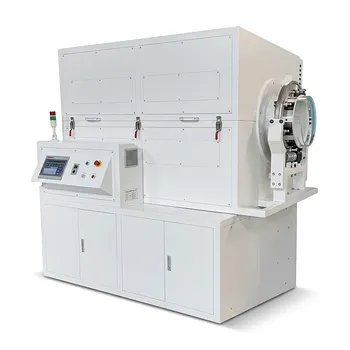
Transitioning to high-efficiency sintering requires the right thermal technology. KINTEK offers a comprehensive range of cutting-edge laboratory equipment and high-temperature furnaces—including muffle, tube, rotary, vacuum, CVD, atmosphere, dental, and induction melting furnaces. All our systems can be tailored and customized to solve your specific material synthesis and sintering challenges.
Ready to enhance your lab's productivity and microstructural precision? Contact KINTEK today for a customized consultation!
Related Products
- Spark Plasma Sintering SPS Furnace
- Small Vacuum Heat Treat and Tungsten Wire Sintering Furnace
- Vacuum Heat Treat Sintering Furnace with Pressure for Vacuum Sintering
- High Temperature Muffle Oven Furnace for Laboratory Debinding and Pre Sintering
- Vacuum Heat Treat Sintering Furnace Molybdenum Wire Vacuum Sintering Furnace
People Also Ask
- Why is it necessary to maintain a high vacuum environment during the SPS of SiC? Key to High-Density Ceramics
- How does the heating mechanism of Spark Plasma Sintering (SPS) function? Enhance TiC/SiC Composite Fabrication
- What are the technical advantages of using an SPS sintering furnace? Elevate Al2O3-TiC Material Performance
- What are the advantages of Spark Plasma Sintering (SPS)? Achieve Superior Microstructures
- What are the steps in the discharge plasma sintering process? Master Fast, High-Density Material Consolidation