Sinter quality is a direct function of its internal architecture. The two critical structural factors—void fraction (porosity) and phase bonding (interparticle necks and liquid-phase bridges)—dictate everything from cold crushing strength to reducibility in the blast furnace. Void fraction controls density and gas permeability, while phase bonding, driven by capillary and compressive forces during liquid-phase sintering, determines the mechanical integrity of the sinter cake. Custom laboratory furnaces allow you to systematically tune peak temperature, hold time, and atmosphere to manipulate both parameters with surgical precision.
The real challenge isn’t just measuring void fraction and bonding phases—it’s using controlled thermal cycles in a lab-to-pilot workflow to engineer the exact pore network and neck geometry that balance mechanical strength with metallurgical performance.
How Void Fraction Drives Sinter Performance
The Link Between Porosity and Mechanical Strength
Void fraction directly scales with load-bearing capability. A lower void fraction—i.e., denser sinter—typically increases compressive strength because there are fewer stress-concentrating pores. However, overly dense sinter resists gas flow, which degrades reducibility in the blast furnace.
Each pore acts as a crack initiation site when external stresses are applied. Specific surface area magnifies this effect: a high density of fine, interconnected pores creates more weak points than a few larger, isolated voids. So, targeting a moderate, uniform void fraction is critical.
Porosity’s Role in Reducibility and Degradation
Reducibility depends on gas access to iron oxide surfaces. A slightly higher void fraction improves reducibility by providing open channels for CO gas. The trade-off is that excessively porous sinter crumbles during handling and transport, generating fines that choke the blast furnace burden.
Degradation behavior during low-temperature reduction (e.g., RDI) is also porosity-sensitive. Interconnected micro-pores allow reduction gases to penetrate deeply, causing anisotropic swelling that induces catastrophic cracking. Isolated, rounded pores are far less damaging.
How Phase Bonding Locks in Sinter Integrity
Liquid-Phase Bonding: The Capillary Engine
Phase bonding in sintering is primarily a liquid-phase process. During high-temperature treatment, low-melting phases (often silicates, ferrites, or calcium ferrites) melt and flow under capillary forces. These liquid bridges wet adjacent solid particles, forming strong necks upon cooling.
The calcium ferrite (SFCA) system is especially important in iron ore sintering. The formation of acicular (needle-like) SFCA phases creates mechanically interlocking networks. This microstructure resists crack propagation far better than a glassy, non-interlocking matrix.
Compressive Forces and Neck Growth
Capillary pressure from the liquid draws particles together. This compressive force accelerates neck growth and pore rounding. The longer the liquid phase persists—controlled by holding time at peak temperature—the more developed the bonding network becomes.
But there’s a limit: prolonged liquid presence can coarsen the microstructure, transforming beneficial fine pores into coarser ones and degrading the specific surface area. The result? A weaker sinter despite more bonding phase volume.
Custom Laboratory Furnaces as Optimization Tools
Precision Thermal Control to Decouple Variables
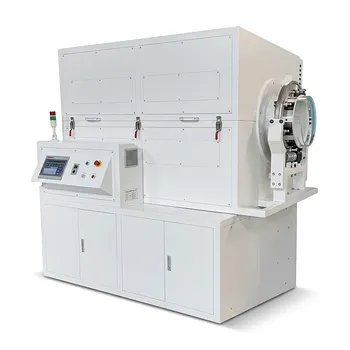
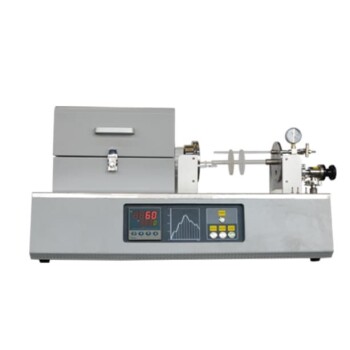
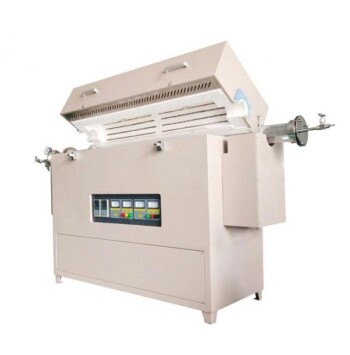
Custom laboratory furnaces—tube, atmosphere, and pot-test designs—let you isolate thermal histories. In a production sinter strand, temperature gradients, gas flows, and cooling rates are intertwined. A lab furnace strips away those confounding variables, allowing you to map a clear relationship between peak temperature, dwell time, and microstructure.
By running systematic arrays of temperature-time profiles, you can identify the critical bonding phase window where liquid volume is just enough to form strong necks without excessive coalescence. A tube furnace with precise atmosphere control, for instance, can replicate the oxygen partial pressure of the sinter bed, while a pot-test furnace mimics the vertical temperature gradient of a strand.
Characterizing Evolution in Real Time
Custom furnaces fitted with viewports or quenching capabilities enable interrupted tests. You can arrest sintering at specific stages to “freeze” the microstructure and measure void fraction and bonding phase development incrementally. This provides a kinetic map: at which temperature does the liquid appear, how fast do necks grow, and when does pore rounding begin to hurt reducibility?
Such data directly feeds into process models. Instead of guessing at an optimal burn-through point, you define it from quantified relationships between thermal parameters and the two structural levers—void fraction and phase bonding.
Scaling from Lab to Pilot
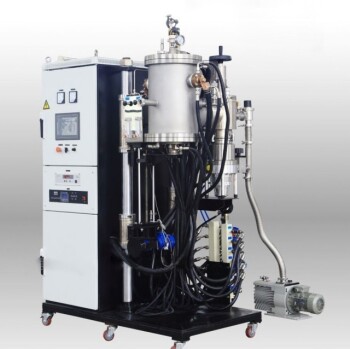
Specialized pot-test furnaces bridge the lab-production gap. A pot-test simulates the entire sintering cycle on a miniaturized burden. You can adjust coke breeze rates, moisture, and suction while precisely measuring the resulting sinter cake’s cold strength and shatter index.
This approach ensures that optimizations discovered in small-scale tube furnace experiments transfer to a realistic agglomeration environment. You can tune peak temperature to maximize SFCA interlocking without over-melting the fines, and adjust cooling rate to lock in the desired pore structure.
Understanding the Trade-offs
Strength vs. Reducibility: You Cannot Have Both Perfectly
Every gain in cold strength can cost reducibility, and vice versa. A denser, well-bonded sinter withstands transport but restricts gas diffusion. A highly porous, open-pore sinter reduces rapidly but disintegrates easily. Custom furnace trials force you to confront this trade-off quantitatively, setting a target void fraction that meets both plant handling limits and blast furnace efficiency goals.
Liquid Volume: Too Little vs. Too Much
Insufficient liquid bonding phase yields weak necks and low shatter resistance. Excessive liquid, however, fills pores and coarsens the structure, creating a brittle, glassy matrix. The optimal liquid volume produces just enough capillary force for neck growth while maintaining a skeleton of solid particles that retains open porosity.
Oversimplified Thermal Cycles Can Mislead
A flat isothermal hold in a tube furnace may ignore critical ramp-rate effects. Real sintering involves a moving flame front with rapid heating and cooling. If you only test equilibrium holds, you risk designing a microstructure that never forms in production. Custom furnaces with programmable multi-step profiles or gradient zones solve this by mimicking dynamic conditions.
Making the Right Choice for Your Goal
Selecting the right laboratory furnace configuration depends entirely on which sinter property you need to optimize and at what scale.
- If your primary focus is optimizing the calcium ferrite bonding network: Use an atmosphere-controlled tube furnace with a quench capability to capture SFCA evolution at different stages and directly correlate bond morphology to peak temperature.
- If your primary focus is tuning void fraction for reducibility without losing strength: Run a matrix of pot-test trials in a custom furnace that replicates strand suction and permeability, then measure the resulting pore size distribution (via micro-CT or porosimetry) to find the porosity ceiling.
- If your primary focus is scaling a proven lab recipe to production: Start with a tube furnace to define the fundamental time-temperature-atmosphere window, then validate robustness in a mini-pot furnace that introduces realistic gradients and coke combustion behavior.
The sintering problem is fundamentally a thermal design challenge. With the right custom furnace, you turn that challenge into a controlled, repeatable engineering process.
Summary Table:
| Structural Factor / Focus Area | Impact on Sinter Performance | Recommended Furnace & Strategy |
|---|---|---|
| Void Fraction (Porosity) | Controls gas permeability & reducibility; excessive voiding reduces mechanical strength. | Pot-Test Furnaces: Simulate bed suction and thermal profiles to balance strength and gas flow. |
| Phase Bonding (SFCA) | Forms interlocking liquid-phase networks that resist crack propagation and boost strength. | Atmosphere Tube Furnaces: Run quench trials under precise $P_{O2}$ to isolate SFCA phase growth. |
| Thermal Profile Scaling | Prevents over-melting fines or coarsening micro-pores during rapid heating/cooling. | Custom Multi-Zone Furnaces: Program dynamic ramp/cool profiles to replicate sinter bed flame fronts. |
Optimize Your Sintering Process with KINTEK Custom Furnaces
Balancing void fraction, phase bonding, and reducibility requires exact thermal and atmospheric control. KINTEK specializes in high-performance laboratory equipment and custom high-temperature furnaces—including atmosphere, tube, and tailored pot-test systems designed to meet your precise metallurgical R&D needs.
Whether you are studying calcium ferrite (SFCA) growth kinetics or scaling thermal profiles from lab to production, KINTEK offers fully customizable furnace solutions tailored to your unique research goals.
Contact KINTEK today to build your custom lab furnace solution!
Related Products
- Laboratory Muffle Oven Furnace with Bottom Lifting
- Laboratory Vacuum Tilt Rotary Tube Furnace Rotating Tube Furnace
- Laboratory Quartz Tube Furnace RTP Heating Tubular Furnace
- 1200℃ Muffle Oven Furnace for Laboratory
- 1700℃ High Temperature Laboratory Tube Furnace with Alumina Tube
People Also Ask
- What function does a muffle furnace perform in Ba0.75Ca0.25TiO3 calcination? Ensure Phase Purity & Synthesis
- What function does a high-temperature lab muffle furnace serve in Ce0.8Gd0.2O2-δ–FeCo2O4 sintering? Enhance Performance
- What is the importance of the calcination process? Master High-Purity Calcium Phosphate Nanopowder Production
- Why is a high-temperature laboratory muffle furnace essential for the alkali fusion process in zeolite synthesis?
- Why is a high-temperature muffle furnace required for FeOx-MOx/TiO2? Engineering High-Performance Nanocomposites