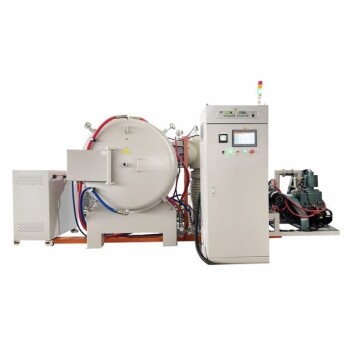
A high-temperature laboratory muffle furnace acts as the primary thermal reactor required to drive solid-state diffusion and microstructural development in $Ce_{0.8}Gd_{0.2}O_{2-\delta}–FeCo_2O_4$ (CGO-FCO) composites. By providing a precisely controlled environment—typically reaching temperatures around 1200 °C—the furnace facilitates the formation of sintering necks between particles and governs the distribution of the spinel and fluorite phases. This thermal processing is the decisive factor in establishing the membrane's final mechanical strength and oxygen permeability.
The muffle furnace provides the thermodynamic energy necessary to transform raw oxide precursors into a dense, dual-phase ceramic framework. It enables the precise management of grain growth and porosity, which directly dictates the functional efficiency of the oxygen transport membrane.
Driving Phase Transformation and Chemical Homogeneity
Facilitating Solid-State Diffusion
The furnace supplies the thermal energy required to break chemical bonds in precursor materials, allowing for the inter-diffusion of atoms across particle boundaries. This process is essential for the raw components to reorganize into the desired cubic fluorite (CGO) and spinel ferrite (FCO) structures.
Removal of Impurities and Volatiles
During the initial heating stages, the muffle furnace facilitates the decomposition of precursors and the removal of volatile impurities. This includes the release of carbon dioxide from carbonate decomposition or the elimination of organic binders, ensuring a high-purity final crystalline phase.
Regulating Oxygen Stoichiometry
The air atmosphere within the furnace helps stabilize the oxygen balance within the composite. This is critical for materials like CGO, where the formation of specific oxygen-deficient structures is vital for high ionic conductivity.
Controlling Microstructural Evolution
Formation of Sintering Necks
As the furnace maintains high temperatures, material transport occurs at the contact points between particles, leading to the formation of sintering necks. This "bridging" is the fundamental mechanism that transforms a loose powder compact into a rigid, dense framework.
Fine-Tuning Phase Distribution
The furnace allows for the precise adjustment of the distribution between the spinel and fluorite phases. Because CGO-FCO is a composite, the spatial arrangement of these two phases—driven by the heating profile—determines how effectively oxygen ions and electrons can move through the material.
Managing Grain Growth and Porosity
By manipulating the heating rate and dwell time, the furnace controls the speed of grain growth and the evolution of residual porosity. Minimizing porosity is generally essential for maximizing the mechanical integrity and gas-tightness of the membrane.
Understanding the Trade-offs
Temperature vs. Grain Size
Higher sintering temperatures generally lead to higher density, but they also trigger excessive grain growth. Over-sintering can reduce the total grain boundary area, which may negatively impact the catalytic activity or mechanical toughness of the composite.
Dwell Time and Phase Segregation
Extended dwell times at 1200 °C can lead to unwanted phase segregation or exaggerated grain growth of one component over the other. This imbalance can create localized stresses or "islands" of a single phase, which disrupts the continuous pathways needed for dual-phase conduction.
Cooling Rates and Thermal Stress
Rapid cooling cycles can introduce significant thermal stresses within the ceramic body due to the different thermal expansion coefficients of the CGO and FCO phases. Controlled cooling in the muffle furnace is necessary to prevent micro-cracking and ensure structural soundness.
How to Apply This to Your Project
Optimizing the Thermal Profile
To achieve the best results with CGO-FCO composites, the thermal cycle must be tailored to the specific geometry and intended application of the membrane.
- If your primary focus is Maximum Oxygen Permeability: Prioritize a sintering temperature and dwell time that maximize densification and ensure a continuous, percolating network of both fluorite and spinel phases.
- If your primary focus is Mechanical Longevity: Focus on a slower heating rate and a moderate dwell time to minimize grain size and prevent the formation of internal micro-cracks.
- If your primary focus is Chemical Stability: Ensure the furnace environment is clean and the calcination stage is sufficient to fully remove all volatile precursors before the final sintering peak.
By mastering the thermal environment of the muffle furnace, you gain direct control over the atomic and microstructural characteristics that define membrane performance.
Summary Table:
| Function | Impact on CGO-FCO Composite | Key Parameters |
|---|---|---|
| Solid-State Diffusion | Facilitates phase transformation and chemical homogeneity. | Sintering Temp (e.g., 1200°C) |
| Microstructure Control | Forms sintering necks and manages grain growth/porosity. | Heating Rate & Dwell Time |
| Phase Distribution | Governs the arrangement of spinel (FCO) and fluorite (CGO). | Thermal Profile |
| Impurity Removal | Ensures high-purity crystalline phases by removing volatiles. | Initial Heating Stages |
Elevate Your Material Research with KINTEK Precision
At KINTEK, we understand that the success of advanced ceramic composites like CGO-FCO depends entirely on precise thermal control. As specialists in laboratory equipment and consumables, we provide a comprehensive range of high-temperature furnaces—including muffle, tube, rotary, vacuum, CVD, and atmosphere furnaces—all of which are fully customizable to meet your unique research requirements.
Whether you are aiming for maximum oxygen permeability or superior mechanical longevity, our equipment delivers the stability and accuracy your project demands. Contact KINTEK today to discuss your customized heating solution!
References
- Liudmila Fischer, Wilhelm A. Meulenberg. Impact of the sintering parameters on the microstructural and transport properties of 60 wt% Ce<sub>0.8</sub>Gd<sub>0.2</sub>O<sub>2−<i>δ</i></sub>–40 wt% FeCo<sub>2</sub>O<sub>4</sub> composites. DOI: 10.1039/d3ma01095c
This article is also based on technical information from Kintek Furnace Knowledge Base .
Related Products
- 1800℃ High Temperature Muffle Oven Furnace for Laboratory
- 1700℃ High Temperature Muffle Oven Furnace for Laboratory
- 1400℃ Muffle Oven Furnace for Laboratory
- 1200℃ Muffle Oven Furnace for Laboratory
- Laboratory Muffle Oven Furnace with Bottom Lifting
People Also Ask
- How does a high-temperature laboratory muffle furnace affect material properties? Transform Anodic Oxide Films Fast
- What is the primary function of a high-temperature laboratory muffle furnace in chemical synthesis? Achieve Precision.
- What is the role of a laboratory high-temperature muffle furnace in iron analysis? Key to Precise Sample Mineralization
- Why is a laboratory high-temperature muffle furnace used for BaTiO3? Achieve Optimal Tetragonal Crystalline Phases
- How is a laboratory high-temperature muffle furnace used to evaluate porous Co-Al materials? Precision Thermal Analysis