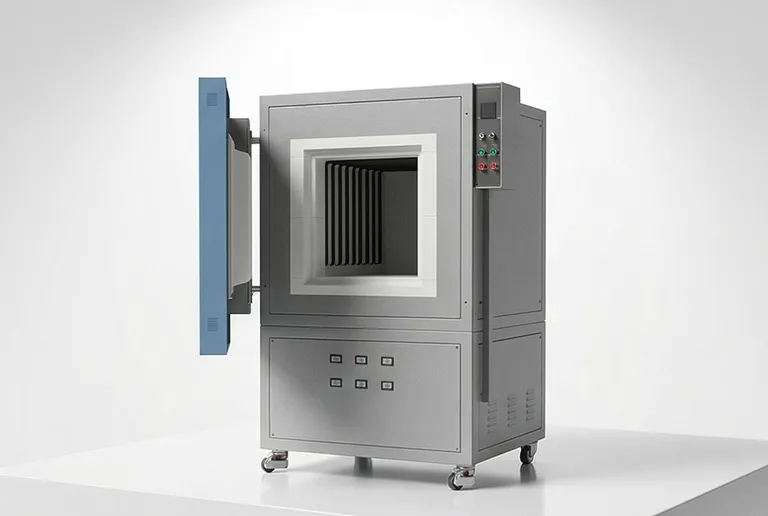
The Invisible Wall in High-Performance Sintering
You have the right powder, the correct temperature profile, and a high-end vacuum furnace. Yet, when the cycle finishes, the result is a disappointment: the bulk material is unevenly dense, the dimensions are slightly off, or worse, the sample has cracked during cooling.
For many lab researchers and materials engineers working with advanced ceramics like AlMgB14 or refractory metals, this "invisible wall" is a common source of frustration. You’ve followed the protocol, but the material physics inside the chamber didn't behave as expected. Often, the missing link isn't the furnace's top temperature—it’s the component holding the powder.
The Struggle of "Trial and Error" Engineering
When densification fails, the instinct is often to increase the "dwell time" at high heat or ramp up the pressure. However, these adjustments frequently lead to a cycle of diminishing returns.
Standard "workarounds" often result in:
- Mechanical Failure: Pushing pressure to 50 MPa or 70 MPa at 1000°C+ can cause substandard molds to deform or shatter.
- Chemical Contamination: Using low-purity containers can lead to unwanted reactions between the mold and the sample.
- Non-Uniformity: If heat isn't distributed perfectly, the core of your sample remains porous while the outer shell is over-sintered.
These aren't just technical hiccups; they are business risks. Every failed sintering run represents days of lost lab time, expensive precursor powders wasted, and delays in bringing new technologies to market.
The Triple Threat: Why the Mold is More Than a "Container"
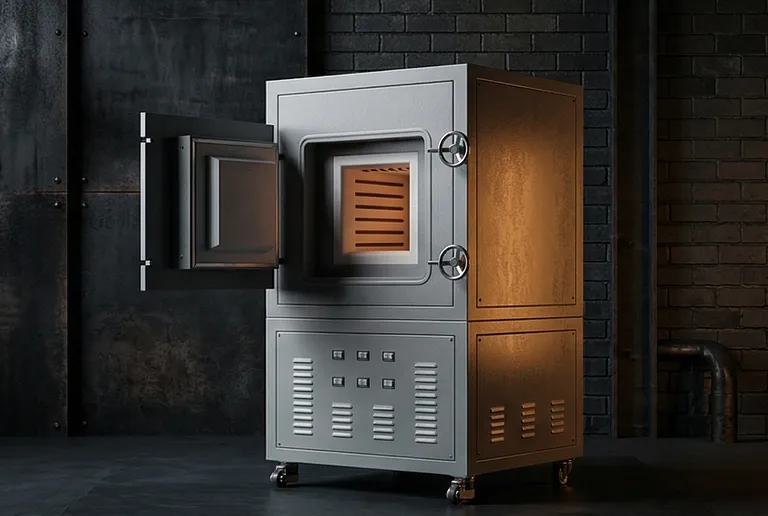
To solve these issues, we must look at the underlying physics of the hot-pressing process. In the production of AlMgB14 and similar high-hardness materials, the graphite mold isn't a passive bucket—it is an active, multi-functional engine.
The secret to successful sintering lies in understanding the three critical roles the graphite mold plays simultaneously:
1. The Resistance Heating Element (Joule Heat)
Unlike standard furnaces where heat radiates from external elements, in many hot-pressing setups, the graphite mold itself acts as the heater. Because graphite has excellent electrical conductivity, passing a current through the mold generates Joule heat. This ensures that the heat is generated exactly where it is needed—directly surrounding the powder.
2. The High-Pressure Transmitter
Sintering requires simultaneous heat and uniaxial pressure. At temperatures where most metals would soften like butter, a high-strength graphite mold must withstand and transmit pressures of 30 to 70 MPa. It must remain rigid enough to define the sample's geometry while being "elastic" enough to transfer the hydraulic system's force directly into the powder bed.
3. The Thermal Highway
Graphite’s superior thermal conductivity ensures that heat doesn't just stay on the surface. It facilitates a uniform transfer of energy to the internal powder, promoting the softening of the matrix and the filling of microscopic gaps. Without this uniform "highway," you end up with a high-density exterior and a weak, porous interior.
Precision Engineering for Extreme Environments
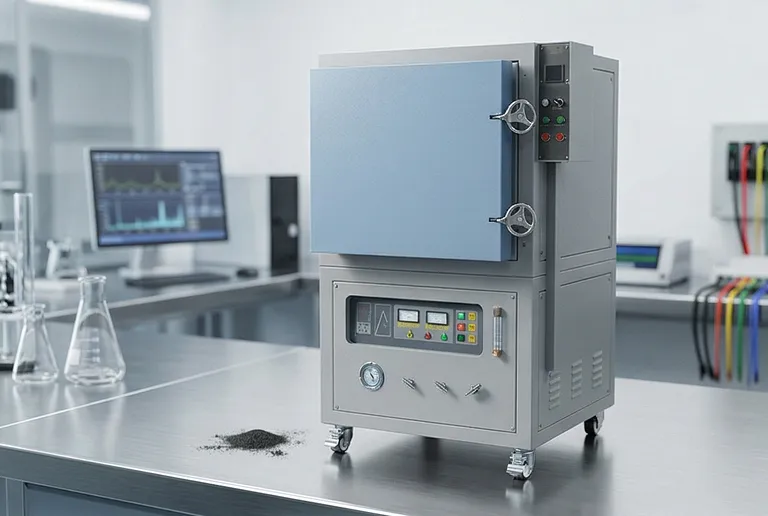
If the mold is the engine of the process, your furnace is the chassis that makes it possible. At KINTEK, we don't just provide "ovens"; we provide integrated thermal solutions designed to handle the intense mechanical and electrical demands of graphite-mold hot pressing.
Our range of vacuum and atmosphere hot-pressing furnaces is engineered to support the precise requirements of advanced material densification. By ensuring stable electrical output for Joule heating and consistent axial pressure delivery, KINTEK systems allow the graphite mold to do its job without compromise.
Whether you are working with AlMgB14, Tantalum Carbide, or Al-Sc composites, our equipment provides the structural integrity and thermal control necessary to turn ultra-fine powders into high-density bulk forms with repeatable precision.
Beyond the Fix: Unlocking New Material Frontiers
When you master the synergy between the graphite mold and the hot press, the "invisible wall" disappears. Solving the problem of inconsistent densification does more than just save time—it opens doors to new possibilities.
Imagine being able to:
- Scale Up Production: Move from small lab pellets to large-scale target materials with predictable structural integrity.
- Experiment with Refractory Alloys: Work with materials that have melting points and hardness levels that were previously considered "unworkable."
- Achieve Near-Theoretical Density: Produce components for aerospace or high-wear industrial applications that meet the most stringent quality standards.
The leap from a "troublesome experiment" to a "stable process" begins with the right tools and a deep understanding of the forces at play inside your furnace.
Are you ready to eliminate the guesswork from your high-temperature sintering projects? Our team of specialists is ready to help you optimize your hot-pressing setup, from furnace selection to custom mold integration. Whether you are facing inconsistent density or mechanical failures in your current process, we can help you engineer a solution that scales. Contact Our Experts today to discuss your specific material challenges and find the right path forward.
Related Products
- 2200 ℃ Graphite Vacuum Heat Treat Furnace
- Vacuum Hot Press Furnace Machine for Lamination and Heating
Related Articles
- Why Your Ti-6Al-4V Parts Crack Under Pressure—The Hidden Science of Vacuum Heat Treatment
- Why Your High-Strength Titanium Biomaterials Are Brittle—and How Vacuum Heat Treatment Fixes It
- The Unseen Failure Point: Why Your Vacuum Furnace's Graphite Is Costing You More Than You Think
- Why Your 3D-Printed Maraging Steel Parts Aren't Performing—And How to Fix the Structural Weakness
- The Art of Absence: How Vacuum Furnaces Forge Material Perfection

