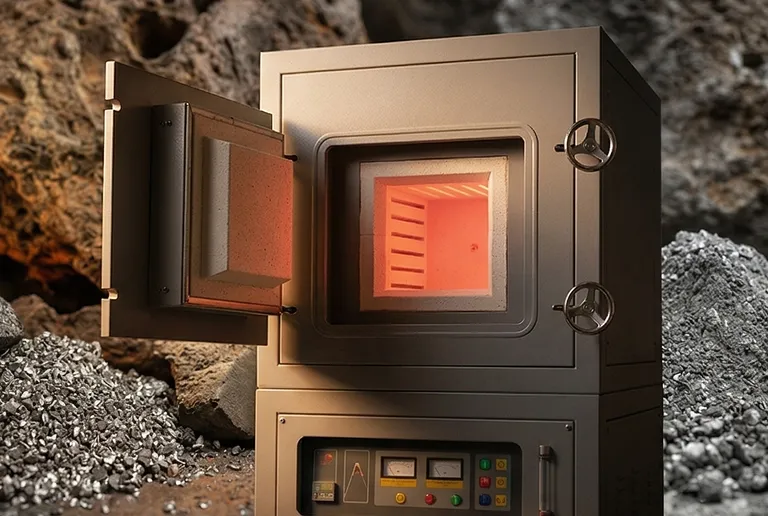
The Frustrating Gap Between Theory and Density
You are working with 80W–20Re (Tungsten-Rhenium), an alloy prized for its incredible heat resistance and ductility in extreme environments like aerospace and nuclear energy. You’ve calculated the parameters, set the temperature, and initiated the Pulsed Plasma Sintering (PPS) cycle. Yet, when the sample comes out, it’s not what you expected. Perhaps there is residual porosity, uneven grain growth, or worse—micro-cracks that compromise the entire batch.
In the world of high-performance metallurgy, the difference between a "good" sample and a "failed" one often comes down to a few percentage points of density. If you’ve optimized your pulse settings and temperature ramps but are still seeing inconsistent results, the problem likely isn't your powder or your program. It is the component you might be treating as a simple "container": the graphite mold.
The Common Struggle: Chasing Parameters While Ignoring the Hardware
When sintering results are inconsistent, the natural instinct is to tweak the software. We increase the "soak" time, ramp up the temperature, or boost the pressure. However, these adjustments often lead to a "diminishing returns" cycle:
- Excessive Grain Growth: Longer hold times at high heat might increase density, but they also cause grains to grow too large, making the 80W–20Re alloy brittle.
- Mold Failure: Pushing pressure higher without a high-strength mold leads to deformation or catastrophic cracking of the graphite itself.
- Thermal Gradients: If the heat isn't uniform, one side of your sample reaches full density while the core remains porous.
These "solutions" treat the symptoms but ignore the fundamental physics of the PPS process. In Field-Assisted Sintering Technology (FAST), the mold is not a passive spectator; it is an active, multi-functional engine.
The Root Cause: The "Triple Identity" of Graphite
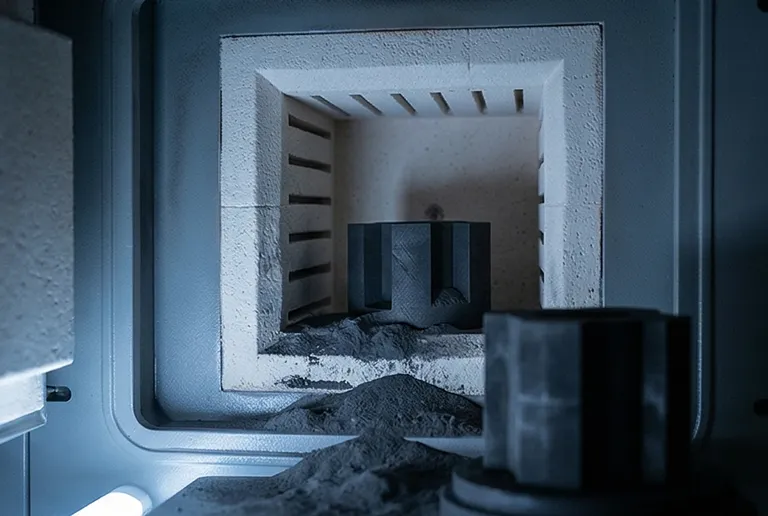
To understand why a standard mold fails where a high-strength mold succeeds, we must look at the underlying science of Pulsed Plasma Sintering. For a difficult alloy like 80W–20Re, the graphite mold must perform three high-stress roles simultaneously:
1. The Electrical Conductor (Joule Heating)
In PPS, the pulsed current doesn't just heat the furnace; it passes through the mold and the powder. High-purity graphite acts as a resistive heating element. If the graphite’s conductivity is inconsistent, you get "hot spots." For an alloy with a high melting point like Tungsten-Rhenium, these temperature fluctuations prevent uniform atomic diffusion.
2. The Mechanical Piston (Pressure Transmission)
Achieving full densification requires axial pressure—often ranging from 50 to 100 MPa. The mold must act as a rigid medium, transmitting this force perfectly to the powder. Low-grade graphite loses its structural integrity at high temperatures, causing the pressure to "leak" or distribute unevenly, resulting in a sample that is denser on the edges than in the middle.
3. The Thermal-Mechanical Coupling
The true "secret" to PPS is the synchronization of heat and pressure. Because 80W–20Re is incredibly hard, it requires the mold to withstand intense mechanical loads while glowing at temperatures exceeding 2000°C. Only high-strength, high-purity graphite possesses the unique property of becoming stronger as it gets hotter, providing the stable environment necessary for rapid densification.
The Solution: Molds Engineered for High-Field Environments
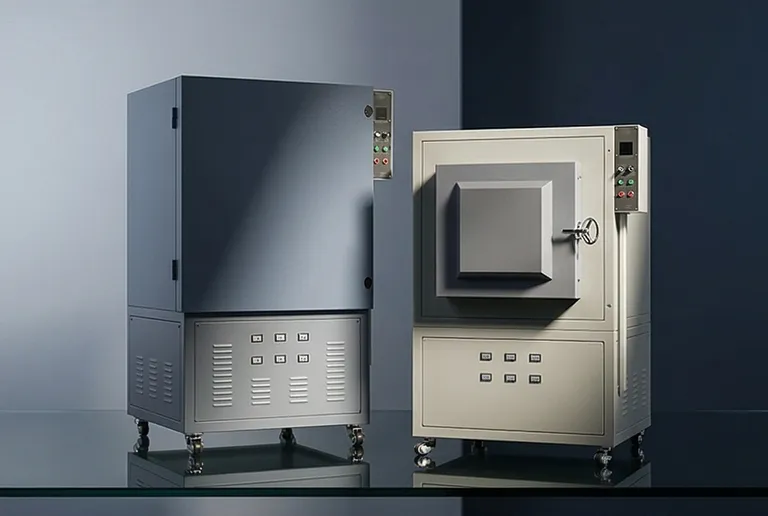
To solve the densification puzzle, you need a mold designed with the same precision as your sintering furnace. KINTEK’s high-strength graphite molds are not just containers; they are precision-engineered tools for field-assisted sintering.
Our molds are manufactured from ultra-fine grain, high-purity graphite that ensures:
- Efficient Current Transmission: Optimized electrical resistivity to convert pulsed current into a uniform thermal field, ensuring your 80W–20Re powder reaches the required temperature simultaneously from core to surface.
- Superior Load Bearing: Designed to withstand axial pressures up to 50 MPa and beyond, even at extreme temperatures, ensuring that the mechanical force required for atomic diffusion is never compromised.
- Chemical Inertia: High purity levels prevent contamination of sensitive alloys, ensuring the integrity of your material properties.
By using a mold that can handle the "thermal-mechanical coupling" of the PPS process, you move from "guessing" your parameters to "controlling" your results.
Beyond the Fix: Unlocking New Material Frontiers
When you master the interaction between the mold and the machine, the "impossible" becomes routine. Solving the 80W–20Re densification problem is just the beginning.
With stable, high-strength graphite tooling, your lab can reliably explore even more challenging frontiers:
- Diamond/Cu Composites: Achieving the tight interface contact necessary for high-frequency thermal management.
- Ceramic-Metal Matrixes: Sintering TiB2 or SiC composites that require hundreds of megapascals to reach full theoretical density.
- Rapid Prototyping: Drastically reducing cycle times from hours to minutes by utilizing the full power of Joule heating without fear of mold failure.
The bottleneck in your research isn't the physics—it's the hardware's ability to keep up with the physics. By choosing the right high-temperature tools, you ensure that every pulse of energy and every bar of pressure contributes to a perfect sample.
At KINTEK, we understand that your research goals extend far beyond just "running a furnace." You are solving complex material challenges that impact your project's timeline and your organization's competitive edge. Whether you are working with refractory alloys like 80W–20Re or developing the next generation of ceramic composites, our team is ready to provide the customized high-temperature solutions your work demands. Contact Our Experts today to discuss your specific sintering requirements and let us help you achieve full densification in every run.
Related Products
Related Articles
- Why Your Ti-6Al-4V Parts Crack Under Pressure—The Hidden Science of Vacuum Heat Treatment
- Why Your High-Strength Titanium Biomaterials Are Brittle—and How Vacuum Heat Treatment Fixes It
- The Unseen Failure Point: Why Your Vacuum Furnace's Graphite Is Costing You More Than You Think
- Why Your 3D-Printed Maraging Steel Parts Aren't Performing—And How to Fix the Structural Weakness
- The Art of Absence: How Vacuum Furnaces Forge Material Perfection
