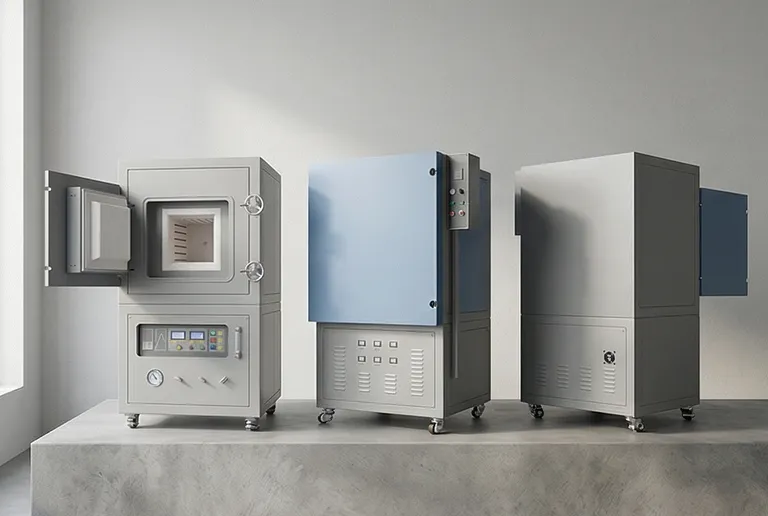
Imagine spending weeks meticulously designing a tungsten-based metamaterial emitter, perfectly engineered to handle extreme heat. You place it in a furnace, ramp the temperature up to 1400°C, and wait for the results. But instead of a stable, high-performance material, you find a destroyed structure and inconsistent data.
For many researchers in the fields of aerospace, energy, and advanced photonics, this scenario is a frustrating "rite of passage." You are pushing the boundaries of what materials can do, yet your experiments seem to hit a wall long before the material’s theoretical limit.
The Frustrating Cycle of Failed Material Tests
When high-temperature materials like metamaterial emitters or 2D heterostructures fail, the first instinct is often to blame the material itself or the temperature accuracy of the furnace. Researchers often try to mitigate these failures by:
- Using standard inert gas environments: Pumping in nitrogen or argon to "shroud" the sample.
- Lowering the test temperature: Avoiding the point of failure, which unfortunately provides no data on the actual thermal limits.
- Frequent recalibration: Assuming the thermal sensor is the culprit for the erratic behavior.
Despite these efforts, the results remain "noisy." This lead to massive project delays, the depletion of expensive custom-fabricated samples, and a fundamental inability to answer the most important question: Is this material actually stable?
The Invisible Culprit: Residual Oxygen
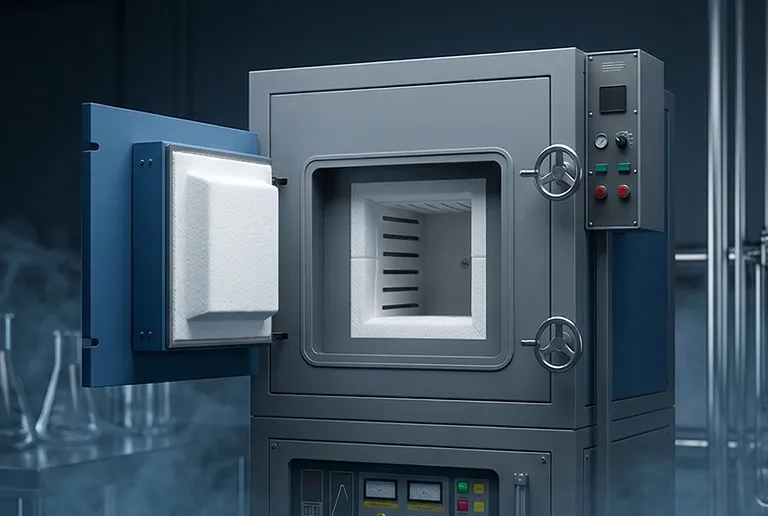
The reason these common workarounds fail is that they address the wrong problem. The enemy isn't just the heat; it is oxidation interference.
In materials science, particularly with refractory metals like Tungsten, the presence of even trace amounts of oxygen at high temperatures is catastrophic. When a Tungsten-based metamaterial is heated, any residual oxygen in the chamber causes the metal layers to transform into volatile tungsten oxide. This oxide doesn't just sit on the surface; it evaporates, physically destroying the multilayer structure of the emitter.
Standard inert gas environments often contain enough "garbage" oxygen to trigger this reaction. To truly see how a material behaves at 1400°C—to observe its intrinsic grain growth or thermodynamic response—you must lower the oxygen partial pressure to a level where oxidation cannot occur. If you don't remove the oxygen, you aren't testing the material; you are testing the material's reaction to a contaminated environment.
The Tool Built for Absolute Thermal Clarity
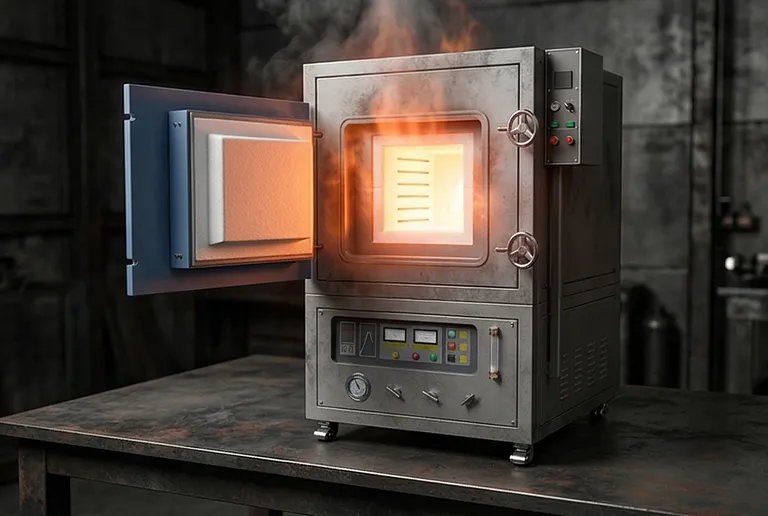
To solve this, researchers require more than just a heater; they need an environment of absolute purity. This is where a High Vacuum Annealing Furnace becomes the essential "lab partner."
By creating an extremely low-pressure environment—typically below 10⁻⁵ mbar—these furnaces evacuate the air and moisture that standard equipment leaves behind. This ultra-low pressure is the only way to:
- Inhibit Oxidation: It prevents refractory metals from turning into volatile oxides, preserving the delicate nanostructures of metamaterials.
- Ensure Interfacial Integrity: For 2D heterostructures (like Graphene or WSe₂), high vacuum drives out impurities between layers, significantly reducing contact resistance.
- Reveal Intrinsic Limits: It allows you to study how a material naturally evolves at high heat (such as phase structure stabilization in Fe-Cr-Al coatings) without the "noise" of environmental interference.
At KINTEK, we design our high-temperature vacuum furnaces specifically to handle these extreme demands. Whether you are simulating the harsh interior of a jet engine or perfecting a semiconductor doping state, our systems provide the precise, high-vacuum control required to ensure your material’s performance is limited by its chemistry, not its environment.
Unlocking the Next Frontier of Material Science
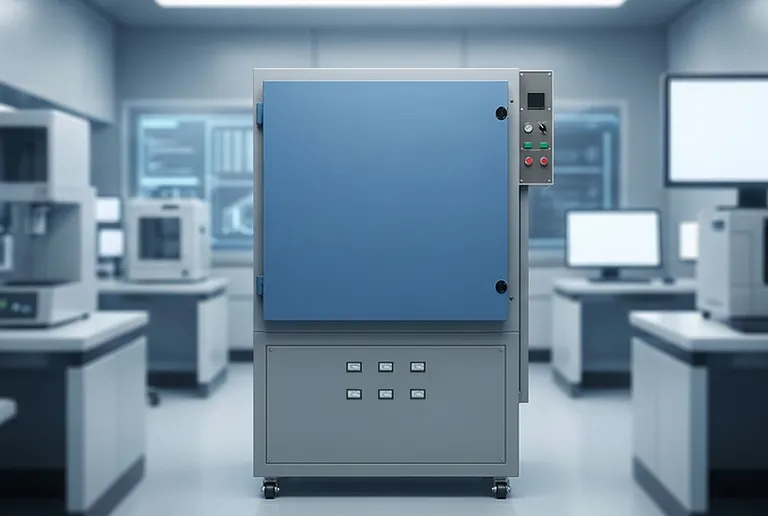
Once you eliminate the "oxidation wall," the focus of your research shifts from "Why did it fail?" to "What can it do?"
With a stable, high-vacuum thermal environment, you can begin to explore possibilities that were previously out of reach. You can simulate the lifetime of gas turbine components with 100% accuracy, optimize the tunneling efficiency of multi-layer devices, and develop thermal shielding that can survive the most brutal oxidative stresses of aerospace flight.
By choosing the right environment, you aren't just buying equipment—you are buying the certainty that your data is real, your samples are protected, and your research is moving forward.
Navigating the complexities of high-temperature vacuum environments requires a partner who understands the physics, not just the hardware. Our team at KINTEK is ready to help you configure a furnace system that meets the specific demands of your most challenging materials projects. Contact Our Experts today to discuss how we can bring absolute clarity to your high-temperature research.
Related Products
- 2200 ℃ Tungsten Vacuum Heat Treat and Sintering Furnace
- High Pressure Laboratory Vacuum Tube Furnace
- 9MPa Air Pressure Vacuum Heat Treat and Sintering Furnace
- 2200 ℃ Graphite Vacuum Heat Treat Furnace
- 1400℃ Controlled Inert Nitrogen Atmosphere Furnace
Related Articles
- Why Your High-Strength Titanium Biomaterials Are Brittle—and How Vacuum Heat Treatment Fixes It
- Why Your Alloy Phase Separation Observations Are Inconsistent—And the "Invisible" Variable You’re Missing
- The Unseen Engine: Why Graphite Dominates High-Temperature Vacuum Furnaces
- Heat, Void, and Control: Designing the Heart of a High-Temperature Vacuum Furnace
- The Paradox of Strength: Why Graphite Dominates High-Temperature Vacuum Furnaces



















