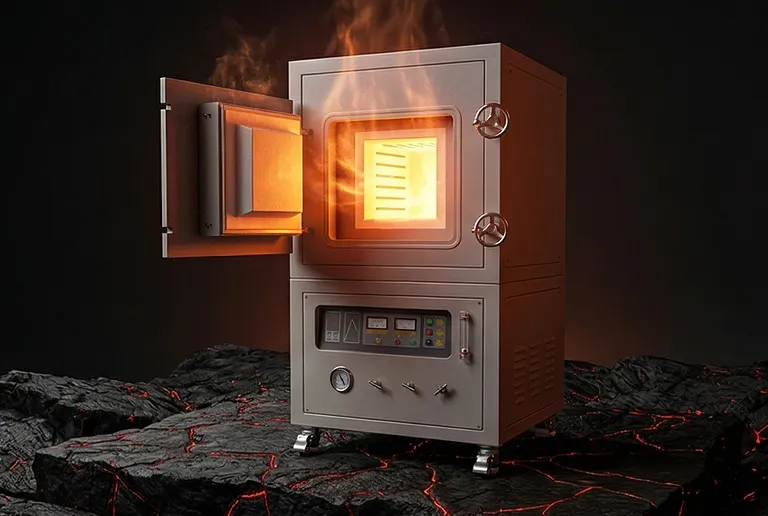
The High-Stakes Barrier to Extreme Performance
In the world of high-performance materials, Silicon Carbide (SiC) fibers are the "holy grail" for industries operating at the edge of the impossible—think aerospace turbines, heat exchangers, and nuclear fusion reactors. However, many engineers and researchers encounter a frustrating plateau: the fibers they produce or source often fail prematurely under extreme thermal or radiation stress.
Despite supposedly being "high-grade," these fibers often suffer from inconsistent mechanical properties or thermal degradation that isn't apparent until they are already integrated into a multi-million dollar project. If you have ever wondered why your SiC-reinforced composites aren't meeting their theoretical performance limits, the answer usually lies not in the material itself, but in the hidden "fingerprints" left behind by the manufacturing process.
The Common Struggle: Why Conventional Methods Fall Short
For decades, the industry has relied on traditional methods like the polymer precursor pyrolysis route to synthesize SiC fibers. While this method is established, it comes with inherent "baggage" that limits the fiber's ultimate potential.
Standard production often leads to:
- Impurity Traps: Residual oxygen or excess carbon that acts as a point of failure at high temperatures.
- Poor Crystallinity: A lack of structural order that makes the fiber susceptible to creeping or "softening" when things get hot.
- Inflexible Ratios: A "one-size-fits-all" chemical composition that cannot be tuned for specific high-stakes applications.
Many teams try to "fix" these issues by adding secondary coatings or post-processing heat treatments. While these steps might mask the symptoms, they rarely solve the underlying problem: a lack of fundamental control during the initial synthesis. This leads to project delays, ballooning R&D costs, and a product that is "good enough" for today, but insufficient for the next generation of extreme engineering.
The Science of Precision: Stoichiometry is the Key
The "secret" to a SiC fiber that can withstand the heart of a nuclear reactor lies in its stoichiometry—the exact numerical relationship between the silicon and carbon atoms.
To achieve near-theoretical strength and thermal stability, the fiber must be as close to a 1:1 ratio (stoichiometric) as possible, with a highly crystalline microstructure. This is where traditional methods fail and where Laser Chemical Vapor Deposition (LCVD) shines.
Unlike traditional bulk heating, LCVD utilizes a focused laser beam to drive the chemical reaction at a molecular level. This provides three critical advantages:
- Direct Nucleation: By building the fiber from the "gas up" (rather than transforming a solid polymer), LCVD achieves ultra-high purity levels, often exceeding 99.995%.
- Crystalline Mastery: The intense, localized energy of the laser allows for the growth of fibers with superior crystallinity, ensuring they remain stable even as temperatures soar.
- The "Silicon Dial": Crucially, LCVD allows researchers to precisely adjust the residual silicon content—ranging from 0% to 6%. This isn't just a technical detail; it is the difference between a standard industrial fiber and a development-grade fiber optimized for the unique requirements of a fusion environment.
The Solution: Precision Engineering for Specialized Labs
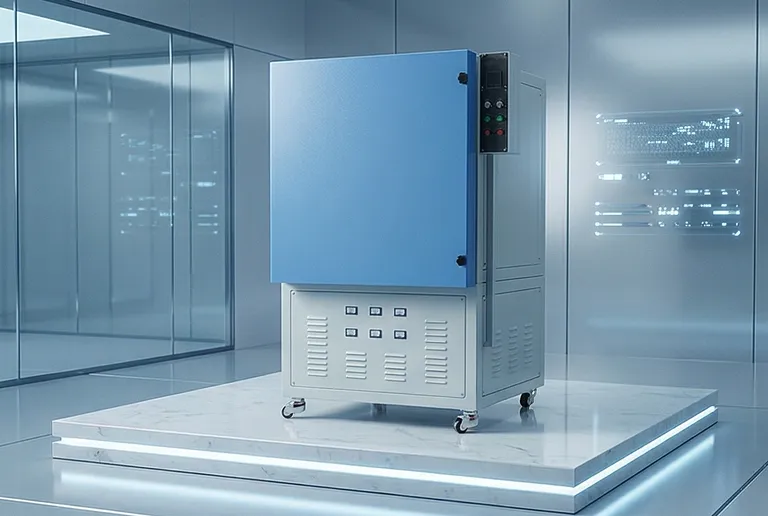
To bridge the gap between "theoretical potential" and "real-world performance," you need a toolset designed for the molecular-level precision of CVD processes. This is where the right infrastructure becomes the enabler of your innovation.
At KINTEK, we understand that CVD is more than just a chemical reaction; it is a delicate balance of thermodynamics, precursor purity, and atmospheric control. Our range of high-temperature furnaces and customizable CVD systems are engineered to provide the stable, ultra-pure environments required for high-performance synthesis.
Whether you are scaling LCVD for SiC fibers or developing new thin-film ceramic coatings, our systems address the root cause of failure: instability. By providing uniform heat distribution, precise gas flow control, and the ability to handle high-temperature demands without contamination, KINTEK tools allow you to focus on the science of the fiber, not the flaws of the machine.
From Fusion to Flight: Unlocking New Frontiers
When you solve the "stoichiometry problem," the ceiling on what your materials can achieve disappears. Effectively leveraging LCVD-processed SiC fibers opens the door to:
- Next-Gen Nuclear: Development-grade fibers that can survive the intense neutron flux of a fusion reactor.
- Aerospace Efficiency: Turbines that run hotter and longer, significantly reducing fuel consumption and emissions.
- Advanced Composites: Materials that maintain their integrity in corrosive, 1,500°C+ environments where others crumble.
By moving beyond traditional manufacturing limitations and embracing the precision of CVD-based synthesis, you aren't just making a fiber—you are engineering the future of high-temperature technology.
Mastering the complexities of high-performance materials requires more than just a formula; it requires a partner who understands the rigors of your application. Whether you are troubleshooting inconsistent fiber yields or designing a new CVD pipeline for advanced ceramics, our team is ready to help you optimize your high-temperature processes and overcome your most persistent technical challenges.
Contact Our Experts to discuss how we can customize a solution for your unique research goals.
Related Products
- Silicon Carbide SiC Thermal Heating Elements for Electric Furnace
- 1400℃ Muffle Oven Furnace for Laboratory
- Dental Porcelain Zirconia Sintering Ceramic Vacuum Press Furnace


