The High-Temperature Paradox: Why Strong Materials Fail Fast
Carbon/Carbon (C/C) composites are the "super-materials" of the aerospace and high-performance industrial worlds, prized for their incredible strength-to-weight ratio at extreme temperatures. However, they possess a fatal "Achilles' heel": oxygen. At temperatures above 500°C, the very carbon that provides strength begins to oxidize and literally vanish into thin air.
To protect them, engineers apply complex ceramic coatings like ZrSi2–MoSi2–ZrB2. Yet, many teams encounter a frustrating plateau. Despite using the right chemical formulas, the coatings often emerge from the furnace porous, brittle, or prone to delamination. If you’ve seen your protective layers flake off under stress or fail to provide a true hermetic seal, you aren't just facing a chemistry problem—you are likely facing a thermal processing problem.
The Common Struggle: Why "Hot Enough" Isn't Good Enough
When a coating fails, the traditional response is to increase the temperature or extend the soaking time. But in specialized materials like C/C composites, the "brute force" approach usually backfires.
Standard atmospheric furnaces, or even basic inert gas setups, often fail to address three critical issues:
- Residual Oxygen: Even "high-purity" argon can contain trace amounts of oxygen that create a thin oxide layer on the substrate before the coating can bond.
- Thermal Gradients: If one side of a component is 10°C cooler than the other, the coating won't flow uniformly, leading to "pinholes" where oxygen can later attack the carbon.
- Trapped Volatiles: During heating, adsorbed gases on the material surface need to escape. If they are trapped by atmospheric pressure, they create internal pores that weaken the coating’s mechanical integrity.
The resulting "failed" coating leads to shortened component lifespans, unexpected maintenance costs, and potentially catastrophic failures in critical applications.
The Science of the "Well": Reaching the Self-Healing State
The secret to a successful ZrSi2–MoSi2–ZrB2 coating lies in achieving a specific physical state: the liquid phase flow.
Within this ternary system, components like ZrSi2 have relatively low melting points. For the coating to work, this phase must melt completely and flow like a liquid into the microscopic pores of the C/C substrate. This creates a "self-healing" dense layer. If there is even a hint of oxidation during this phase, the interface is ruined.
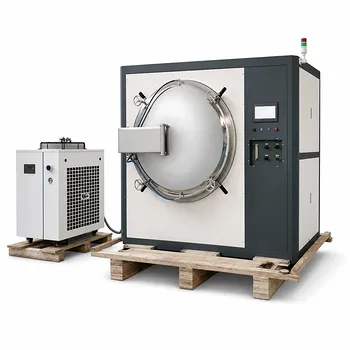
This is where the Vacuum Well Furnace becomes the essential tool rather than just another piece of equipment. By operating at a high vacuum of 0.1–0.2 Pa (or under ultra-high purity argon), the furnace creates an environment where:
- Oxidation is Physically Impossible: The substrate remains pristine, allowing for a pure chemical bond between the carbon and the ceramic.
- Uniformity is Total: The "Well" design provides a surround-heating environment. This ensures that the ZrSi2 melts everywhere at the exact same moment, allowing the liquid phase to "wet" the surface and fill pores evenly.
- Impurity Removal: The vacuum pulls adsorbed gases and volatiles away from the grain boundaries. This prevents the formation of oxide impurities that typically lead to brittle interfaces and low thermal conductivity.
The Solution: KINTEK's Vacuum Well Technology
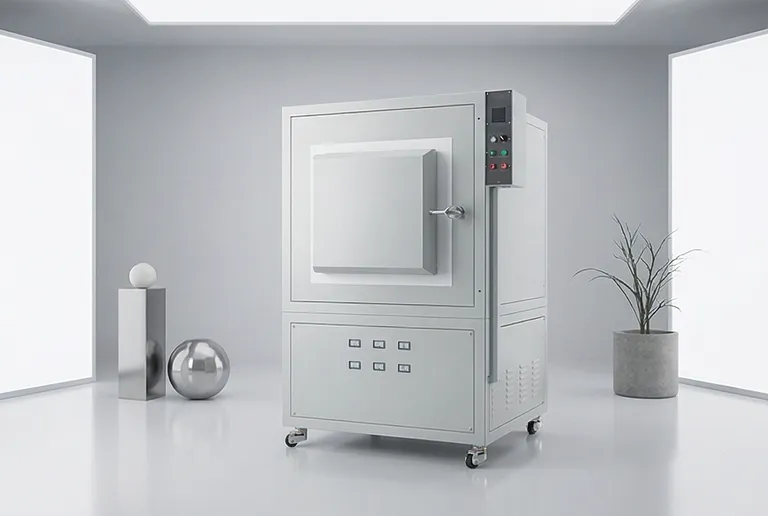
To achieve a coating that actually protects at 1680°C, you need more than a heater; you need a controlled environment that mimics the precision of a laboratory while maintaining industrial scale.
KINTEK’s Vacuum Well Furnaces are engineered specifically to solve the "interface problem." Our systems offer the high-vacuum precision (10^-3 Pa range capability) and the 1680°C thermal ceiling required for advanced ZrSi2–MoSi2–ZrB2 applications. By ensuring a perfectly uniform temperature field, our furnaces allow the low-melting phases to act as a capillary sealant, "healing" micro-cracks and eliminating residual stresses as the material cools.
This isn't just about reaching a temperature; it's about facilitating the diffusion and densification kinetics that separate a mediocre coating from a world-class ceramic barrier.
Beyond the Fix: Unlocking New Material Capabilities
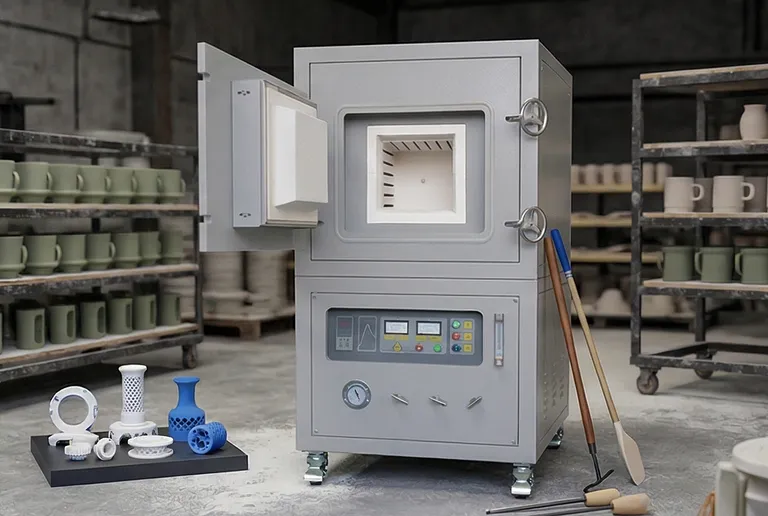
When the hurdle of coating integrity is finally cleared, the scope of your engineering projects changes fundamentally. With a truly dense, self-healing coating, your C/C components can survive longer in oxidative environments, handle higher thermal loads, and maintain structural integrity where others fail.
This reliability allows for the exploration of more precise manufacturing processes—like vacuum hot pressing for even higher densification—and the development of components with significantly higher thermal conductivity and mechanical strength.
Solving the vacuum-thermal equation isn't just about preventing failure; it’s about providing the foundation for your next breakthrough in high-temperature material science.
Every high-performance material project has its own unique set of thermal and atmospheric challenges. Whether you are struggling with coating porosity, interface bonding, or grain coarsening, our team of experts is ready to help you calibrate the perfect thermal environment for your specific needs. Let’s discuss how KINTEK’s customizable vacuum solutions can turn your most difficult material challenges into repeatable successes. Contact Our Experts
Related Products
- 2200 ℃ Tungsten Vacuum Heat Treat and Sintering Furnace
- Vacuum Heat Treat Sintering Furnace with Pressure for Vacuum Sintering
- Vacuum Hot Press Furnace Machine Heated Vacuum Press
- Vacuum Heat Treat Sintering and Brazing Furnace
- Vacuum Heat Treat Furnace with Ceramic Fiber Liner
Related Articles
- Why Your High-Strength Titanium Biomaterials Are Brittle—and How Vacuum Heat Treatment Fixes It
- Why Your Alloy Phase Separation Observations Are Inconsistent—And the "Invisible" Variable You’re Missing
- The Unseen Engine: Why Graphite Dominates High-Temperature Vacuum Furnaces
- Heat, Void, and Control: Designing the Heart of a High-Temperature Vacuum Furnace
- The Paradox of Strength: Why Graphite Dominates High-Temperature Vacuum Furnaces