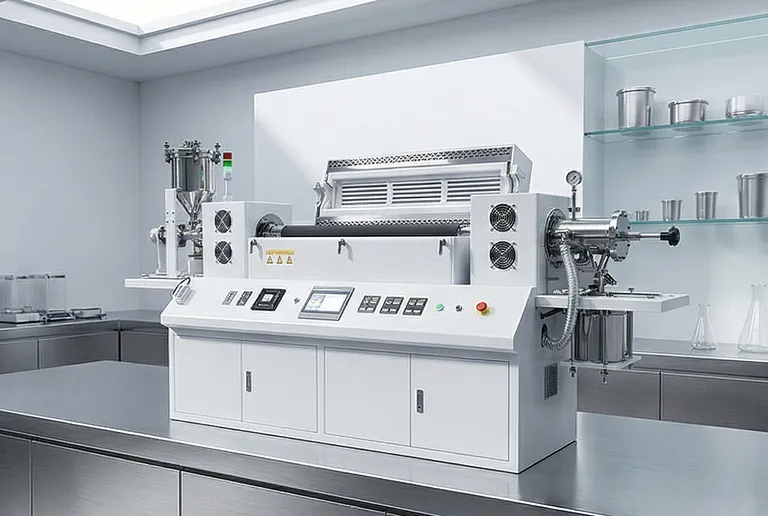
The High Cost of the "Top-Layer" Perfection
Imagine this scenario: you’ve just completed a high-volume batch of precision steel gears. On the surface, the run looks successful. But during quality control, a frustrating pattern emerges. The parts positioned at the top of the charging rack meet every specification for case depth and hardness. However, the parts buried in the middle or at the bottom of the stack fall short—their hardened layers are thin, inconsistent, and ultimately, these parts are scrap.
This "gradient of failure" is a common headache in thermal processing. When your data looks like a roller coaster across a single batch, it doesn't just hurt your yield; it stalls your production schedule and erodes your reputation for reliability.
The Common Struggle: Why More Heat Isn't the Answer
When faced with inconsistent hardening, the natural instinct is often to adjust the most obvious variables. Many operators try to compensate by:
- Increasing the Carburizing Temperature: This risks grain growth and potential distortion of the workpiece.
- Extending the "Soak" Time: While this might help the under-treated parts, it often leads to "over-carbonating" the parts that were already within spec, creating a brittle surface.
- Increasing Gas Pressure: Without a proper path, more gas often just means more waste and soot buildup, not better penetration.
These "fixes" treat the symptoms but ignore the underlying physics. The result is a cycle of trial and error that drains resources and still leaves you with a high rejection rate. The problem isn't necessarily the temperature or the time—it’s the geography of the gas.
The Root Cause: Decoding the "Flow Field"
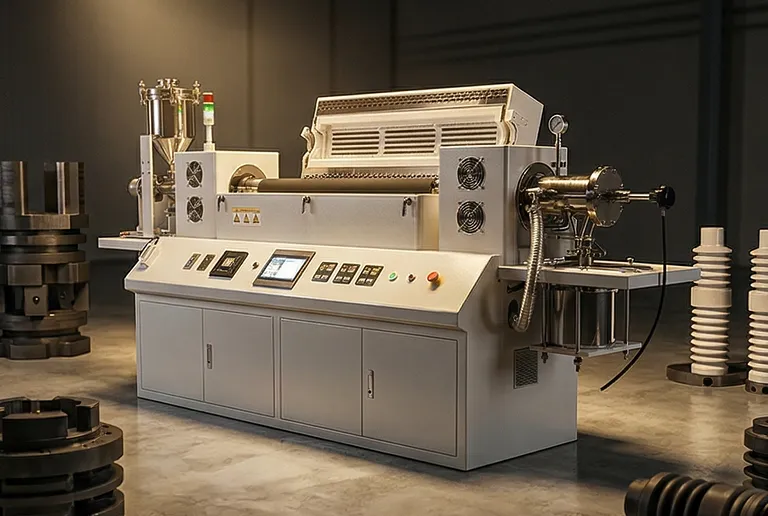
To understand why parts in the same furnace turn out differently, we have to look at how carbon atoms actually reach the metal surface. In a vacuum furnace, heating is primarily achieved through radiation, but the carburizing process depends entirely on the movement of gas.
The secret lies in the distribution of nozzles and the resulting flow field.
When a hydrocarbon gas (like propane) is introduced, it doesn't instantly fill the chamber like a uniform mist. Instead, it creates a high-density zone near the nozzle discharge points. Parts sitting directly in the "line of fire" of these nozzles absorb active carbon atoms significantly faster because they are exposed to a higher concentration of the carburizing agent.
By the time the gas circulates to the center or the bottom of a densely packed rack, the "active" carbon has often been depleted or the flow has become turbulent and weak. This is why proximity is often the enemy of uniformity. If your nozzle layout isn't optimized for your specific load geometry, you are essentially asking the furnace to perform an impossible task.
The Solution: Precision Engineering of the Atmosphere
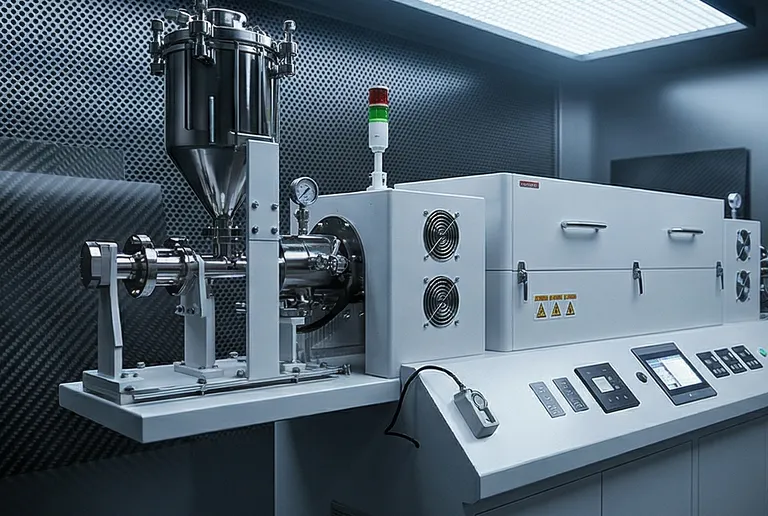
A truly effective carburizing process requires a tool that understands the relationship between gas dynamics and material science. You need a way to ensure that the part at the very bottom of the rack sees the same "active carbon density" as the part at the top.
This is where KINTEK’s customizable vacuum furnace technology changes the game. Our systems are designed not just to "heat," but to "manage":
- Optimized Nozzle Layouts: Rather than a one-size-fits-all approach, we offer customizable nozzle configurations that ensure the flow field is tailored to your specific charging rack and component shapes.
- Adjustable Flow Rates: By precisely controlling the velocity and volume of the gas mixture, our systems compensate for positional differences, "driving" the carbon into even the most crowded batches.
- The All-In-One Transition: KINTEK furnaces allow for a seamless transition from sintering to low-pressure carburizing without breaking the vacuum. This "all-in-one" cycle—debinding, sintering, carburizing, and quenching—ensures that the material remains in a purified state, maximizing carbon absorption efficiency and drastically reducing cycle times.
Beyond the Fix: Unlocking New Production Potential
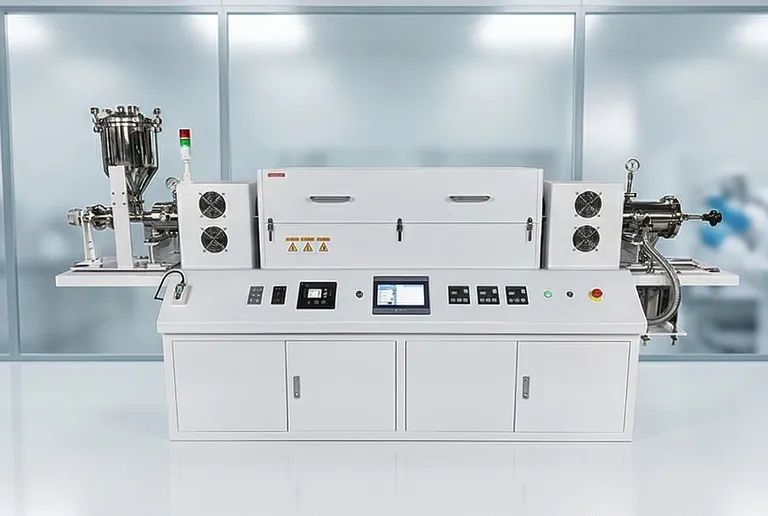
When you solve the problem of inconsistency, you do more than just lower your scrap rate. You unlock a new level of operational freedom.
With a furnace that delivers uniform results every time, you can push the boundaries of your production. You can process larger batches of complex, heavy components with the confidence that the core and the surface will meet exacting standards. You can accelerate your time-to-market by eliminating the "re-run" cycles that plague traditional heat treatment.
Ultimately, vacuum carburizing shouldn't be a game of chance. By mastering the flow field and utilizing equipment built for precision, you turn a technical bottleneck into a competitive advantage.
Consistency in heat treatment is the foundation of high-performance engineering. If you are struggling with uneven case depths or looking to streamline your entire debinding-to-quenching workflow, our team is ready to help. We specialize in tailoring high-temperature solutions to the unique geometries and metallurgical requirements of your most challenging projects. Contact Our Experts today to discuss how we can optimize your thermal process.
Related Products
- Vacuum Heat Treat Sintering and Brazing Furnace
- Vacuum Heat Treat Sintering Furnace with Pressure for Vacuum Sintering
- Vacuum Heat Treat Sintering Furnace Molybdenum Wire Vacuum Sintering Furnace
- Small Vacuum Heat Treat and Tungsten Wire Sintering Furnace
- Vacuum Induction Melting Furnace
Related Articles
- Why 10⁻⁶ mbar Vacuum Isn’t Enough for Perfect Brazing—And the Missing Link to Oxide-Free Surfaces
- Why Your High-Temperature Aerospace Joints Fail—and the Science of the Perfect Vacuum Weld
- Why Your 3D-Printed Maraging Steel Parts Aren't Performing—And How to Fix the Structural Weakness
- Why Your Vacuum Brazed Joints Are Failing—And the Precise Pressure Fix You’ve Been Missing
- Beyond Inert: The Physics and Psychology of Perfecting Joints in a Vacuum Furnace



















