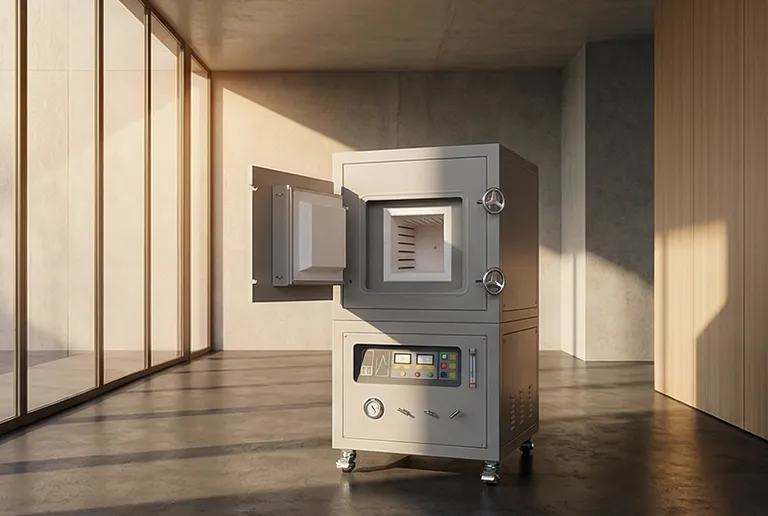
The Frustration of "Missing" Bismuth
You’ve meticulously calculated your alloy ratios, prepared your copper-tin (Cu-Sn) melt, and heated the chamber to the required 1200°C. But when the cooling cycle ends and you analyze the results, the data tells a disappointing story: the bismuth (Bi) concentration is uneven, or worse, significantly lower than your target.
Instead of a high-performance alloy, you are left with a batch that is brittle, oxidated, or chemically inconsistent. In the world of advanced metallurgy, "close enough" isn't an option. For many laboratory teams, this cycle of trial and error leads to weeks of delayed projects and thousands of dollars in wasted materials.
The Common Struggle: Why "Just Adding Argon" Isn't Enough
When faced with oxidation or inconsistent alloy composition, the standard response is to flood the furnace with an inert gas like argon. The logic is simple: remove the oxygen, and you remove the problem.
However, many researchers find that even with a steady flow of argon, the results remain erratic. You might attempt to increase the temperature or extend the soaking time, but these "solutions" often create new headaches:
- Oxidative Burnout: Without a perfectly sealed and regulated environment, trace oxygen still reacts with active metals, forming brittle oxide inclusions that ruin mechanical properties.
- Volatile Loss: At 1200°C, bismuth becomes highly volatile. In a standard furnace, the bismuth vapor simply escapes or fails to infiltrate the melt uniformly.
- Costly Rework: Every failed batch represents not just lost metal, but a significant drain on energy and laboratory throughput.
The Hidden Science: Why Pressure is the Critical Variable
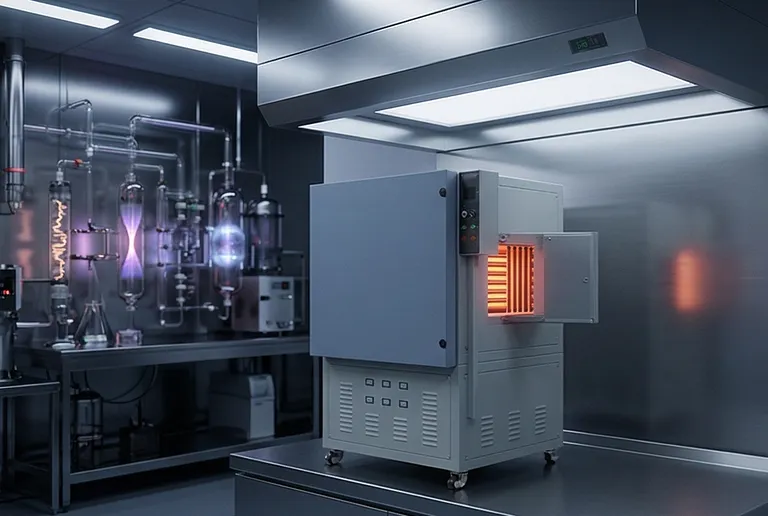
To understand why these attempts fail, we have to look at the underlying physics of the bismuth saturation process.
At 1200°C, you aren't just heating a solid; you are managing a delicate phase equilibrium. Bismuth elements must infiltrate the copper-tin alloy melt as a vapor. If the atmospheric pressure inside the furnace is not precisely regulated, two things go wrong:
- The Saturation Gap: For bismuth to "soak" into the Cu-Sn melt uniformly, the partial pressure of the bismuth vapor must be kept in a specific state of equilibrium. Without argon pressure control, the bismuth vapor disperses unevenly, leading to "hot spots" of high concentration and "dead zones" where the alloy never reaches the desired composition.
- Surface Interference: High-temperature environments make materials like titanium, aluminum, or in this case, copper alloys, hyper-reactive. Even a tiny amount of atmospheric interference can create a microscopic oxide "skin" on the melt surface, acting as a barrier that prevents bismuth atoms from entering the lattice structure.
Traditional furnaces focus on temperature, but for Bi-Cu-Sn alloys, pressure is the "valve" that controls the chemistry.
The Solution: A Controlled Environment for Precision Metallurgy
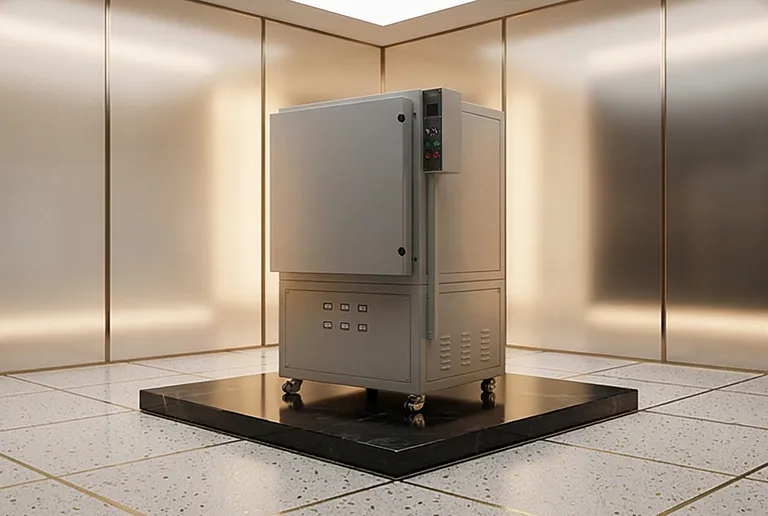
Realizing a successful bismuth saturation process requires a tool designed for more than just heat. It requires an atmosphere-controlled furnace that treats argon as a precision instrument rather than just a shield.
KINTEK’s high-temperature furnaces are engineered specifically to bridge this gap. By integrating precise argon pressure regulation, the furnace creates a stable, high-purity environment that addresses the root causes of failure:
- Inert Shielding: By maintaining a high-purity argon environment, the furnace prevents the formation of oxides and nitrides, ensuring the surface of your melt remains active and receptive to infiltration.
- Vapor Management: The ability to regulate pressure allows you to "lock" the bismuth vapor into the melt. This ensures that the bismuth elements infiltrate the Cu-Sn alloy uniformly, reaching the target composition every time.
- Thermal Stability: Reaching 1200°C is one thing; maintaining it with the stability required for solid-state diffusion is another. Our furnaces provide the constant thermal environment necessary for complex reactions, such as the synthesis of NiTi functional phases or the densification of boron carbide.
Beyond the Fix: Unlocking Advanced Material Research
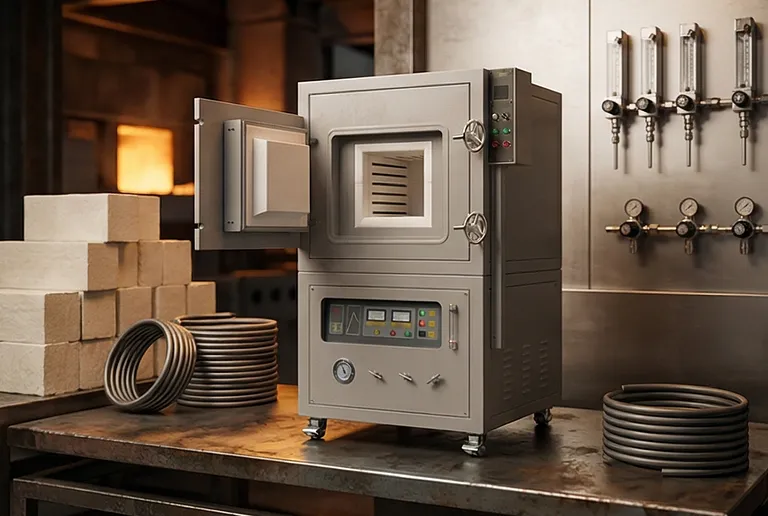
When you solve the problem of atmospheric instability, you do more than just fix a broken process—you open the door to higher-tier research and production.
With precise argon pressure and temperature control, the constraints that once limited your lab disappear. You can move beyond Bi-Cu-Sn alloys to explore:
- MAX Phase Synthesis: Preventing the oxidation of active materials like titanium and aluminum to ensure correct lattice structures.
- Sintering Gradient Alloys: Achieving successful solid-state diffusion in NiTi/HA alloys without interference from nitrogen or oxygen.
- High-Yield Carbon Structures: Maintaining the integrity of porous carbon skeletons by preventing oxidative burnout at 900°C.
By mastering the environment, you ensure that your experimental data is a true reflection of your science, not an artifact of atmospheric interference.
Take Control of Your Thermal Processing
Whether you are struggling with bismuth saturation or looking to stabilize a complex sintering cycle, the right equipment makes the difference between a failed batch and a breakthrough. Our team at KINTEK understands the nuances of high-temperature chemistry and the critical role of atmospheric control. Let’s discuss how we can customize a furnace solution that meets your specific research demands and eliminates the variables holding your projects back.
Related Products
- 1200℃ Controlled Inert Nitrogen Atmosphere Furnace
- 1200℃ Split Tube Furnace Laboratory Quartz Tube Furnace with Quartz Tube
- 1200℃ Muffle Oven Furnace for Laboratory
- 1700℃ Controlled Inert Nitrogen Atmosphere Furnace
- 1400℃ Controlled Inert Nitrogen Atmosphere Furnace
Related Articles
- The Invisible Contaminant: Why Your Furnace Atmosphere is Sabotaging Your Results
- Why Your High-Temperature Materials Fail: The Hidden Enemy in Your Furnace
- Why Your Galfenol Sheets Fail to Recrystallize—And How Precise Atmosphere Control Unlocks High Performance
- The Hidden Flaw in Your Heat Treatment: It’s Not the Temperature, It’s the Air
- Why Your High-Temp Experiments Fail: It’s Not the Heat, It’s the Atmosphere



















